
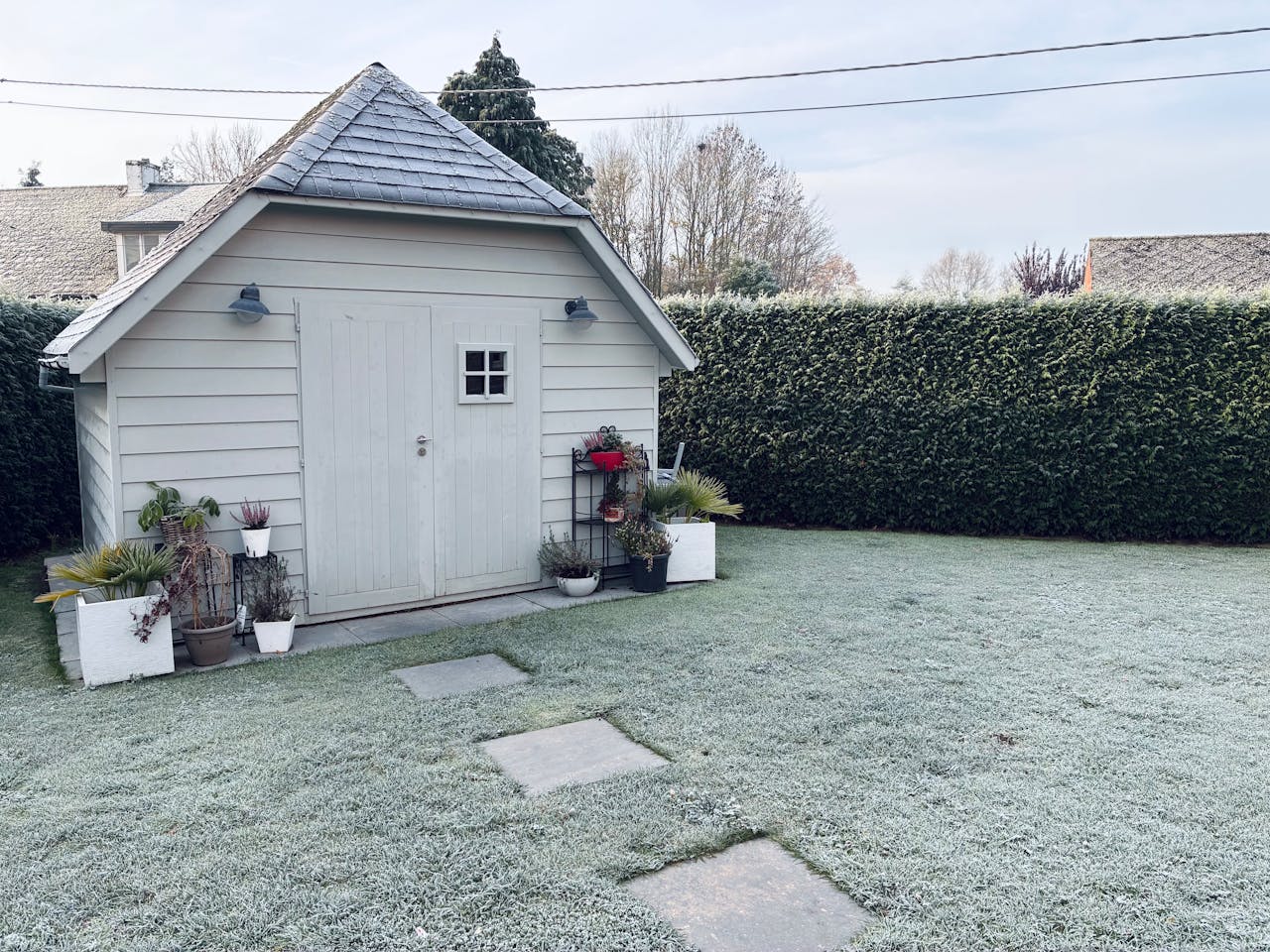
A garden shed can look harmless, even charming, tucked into the corner of a yard under a gray winter sky. But behind that simple door, a biological drama may already be unfolding. Cold air collides with trapped moisture, wood absorbs dampness, and organic debris piles up unnoticed. Give that mix a few weeks of neglect, and you have the perfect environment for mold to take hold and spread.
Winter does not kill mold. It often fuels it. When temperatures drop, sheds stay closed, airflow disappears, and condensation forms along walls and ceilings. That moisture feeds mold spores that float through the air all year long. Those spores need only water and a food source to grow, and a typical shed offers both in abundance.