Get all your news in one place.
100's of premium titles.
One app.
Start reading
Times Pets
Times Pets
Deepak Rajeev

Why Your Dog Acts Crazy When You Come Home

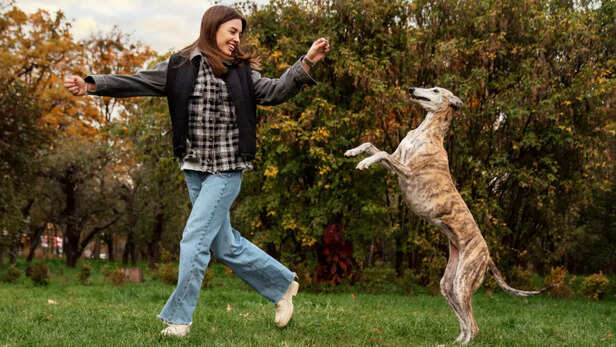
Few everyday moments feel as universally heartwarming as opening your door and being greeted by a dog that seems completely overwhelmed with excitement. Jumping, spinning, barking, tail wagging at full speed, sometimes even “zoomies” across the room. To a human, it can look like pure chaos. But from a behavioral science perspective, this reaction is one of the clearest expressions of attachment, emotional memory, and social bonding in the animal world. What looks like “going crazy” is actually a complex mix of joy, relief, anticipation, and instinctive pack behavior that has been shaped over thousands of years of domestication.

The Brain Chemistry Behind Your Dog’s Excitement

When your dog sees you after a period of separation, its brain experiences a rapid release of feel-good chemicals, especially dopamine and oxytocin. Dopamine is associated with reward and anticipation, while oxytocin is closely linked to bonding and affection. In simple terms, your return is not just a routine event for your dog. It is interpreted as a powerful emotional reward. This is why even short absences can trigger an outsized reaction. The emotional “high” your dog experiences is genuine, and in many ways, similar to human excitement when meeting someone deeply loved after time apart. Studies in animal behavior have shown that dogs form strong attachment bonds with their owners that resemble infant-caregiver relationships in humans. This is one of the key reasons their emotional response to reunion is so intense and immediate.

You Are Your Dog’s Emotional Anchor

Dog Human Bond

Dogs are social animals by design. In the wild, their ancestors depended on pack structure for survival, coordination, and safety. Even though modern dogs live in domestic environments, that instinct has not disappeared. Instead, it has been redirected toward human companionship. To your dog, you are not just an owner. You are the center of its social world. Your presence provides stability, predictability, and emotional security. When you leave, there is a subtle disruption in that emotional balance. When you return, everything resets. This is why the greeting is not calm or subtle. It is a full emotional reset response. Your dog is essentially saying, in its own way, that the pack is complete again.

Time Feels Different for Dogs Than for Humans

One of the most misunderstood aspects of this behavior is how dogs perceive time. While they do not understand time in a human sense, they do experience patterns, routines, and emotional expectations. Your scent, your schedule, and your past behavior create a strong internal expectation of when you should return. When that expectation is met, it produces excitement and relief. Even short separations can feel significant because dogs live much more in “emotional time” than chronological time. This is also why your dog may act just as excited after a 10-minute absence as after a longer one. The emotional contrast between absence and return is what matters most.

The Role of Scent and Memory in the Reaction

Before you even open the door, your dog often knows you are coming. Their sense of smell is extremely advanced, and they can detect familiar scents in the environment long before visual confirmation. Your clothing, your shoes, and even subtle air changes around you carry familiar chemical signatures. When you finally appear, your dog is not experiencing a surprise in the same way a human would. Instead, it is the culmination of a buildup of sensory information that confirms what it already expected. This combination of recognition and confirmation intensifies the emotional reaction. It is not confusion or randomness. It is anticipation meeting reality.

Why the “Crazy” Behavior Is Actually a Healthy Sign

Although it may seem overwhelming at times, this enthusiastic greeting is generally a sign of a healthy emotional bond. Dogs that feel secure, attached, and emotionally balanced are more likely to express excitement openly when their owners return. Jumping, barking, tail wagging, and even spinning are natural release behaviors. They help regulate the emotional surge your dog experiences in that moment. Over time, with training, this excitement can become more controlled, but the underlying emotion usually remains the same. At its core, this behavior is not about lack of discipline. It is about connection.

The Real Meaning Behind the Doorway Chaos

When you step back and look at it closely, your dog’s “crazy” reaction is not chaos at all. It is one of the purest emotional responses in the animal kingdom. It combines instinct, memory, biology, and deep attachment into a single moment of reunion. Your dog is not reacting to the door opening. It is reacting to you returning. And in that instant, all the waiting, sensing, and anticipation collapses into one simple truth in your dog’s world. The most important person has come back.

Celebrate the bond with your pets, explore Health & Nutrition, discover Breeds, master Training Tips, Behavior Decoder, and set out on exciting Travel Tails with Times Pets!

Sign up to read this article
Read news from 100's of titles, curated specifically for you.
Already a member? Sign in here
Related Stories
Top stories on inkl right now
One subscription that gives you access to news from hundreds of sites
Already a member? Sign in here
Our Picks
Fourteen days free
Download the app
One app. One membership.
100+ trusted global sources.