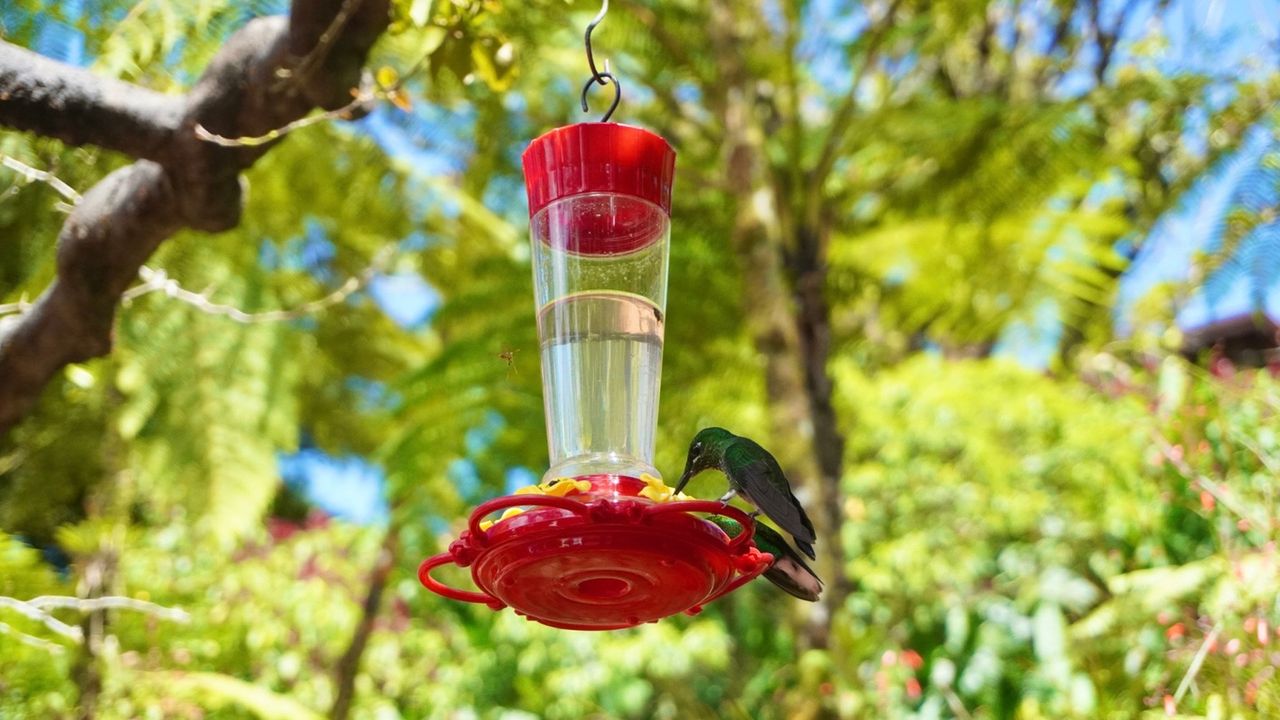
With temperatures soaring, homeowners are being urged to keep bird feeders free from bacteria to protect wildlife from disease. The warning comes as the risk of disease increases with rising temperatures.
The parasitic disease trichomonosis, which spreads through saliva and contaminated food and water, can be lethal to many bird populations.

Kym Barlow, commercial director at sustainable furniture company TDP, advises anyone with a bird table or feeder to keep it clean to prevent the spread of disease.
How to protect the birds
“During the summer months, busy bird feeders become hotspots for disease as more birds gather, while warmer temperatures help the parasite to survive longer without a host,” says Barlow.
And she adds, “Trichomonosis is a serious threat to garden bird populations, and contaminated feeders are one of the primary ways it spreads. But it’s easy to underestimate how quickly they can become a health hazard.”
Barlow says taking a few minutes to clean a bird feeder can make a real difference to the birds visiting your yard, helping to protect local wildlife.
She recommends following guidelines to clean bird feeders at least once a week, using hot soapy water, making sure you clear away any old food or droppings from around the feeders, while disinfecting surfaces with non-toxic or mild solutions.
Cleaning wooden and plastic feeders
The material of your feeder can play a significant role in hygiene, with traditional wooden feeders, in particular, being susceptible to bacterial growth.
“Wooden feeders are more porous and can harbor bacteria in cracks and crevices, making them harder to thoroughly clean and disinfect, while also attracting pests,” explains Barlow.
And she advises, “If you have a standard wooden or plastic feeder, take a close look for any wear and damage. You might not realize until you’re up close that there are small cracks and crevices which could be harboring harmful bacteria.”
According to Barlow, although standard plastic feeders are easy to wipe down, they can degrade under prolonged UV exposure. For this reason she recommends using a recycled plastic feeder, which she considers to “combine smooth, easy-clean surfaces with superior waterproofing and durability.”
Bird baths we love