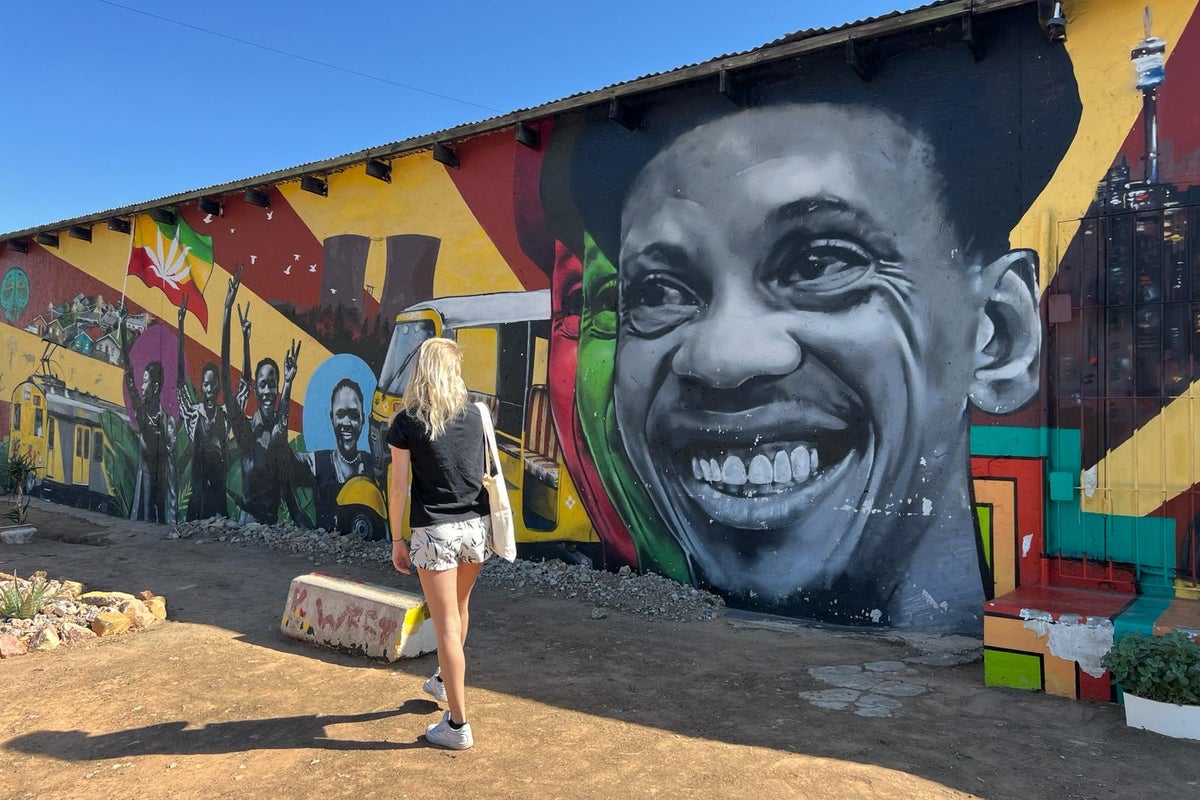
Most days in Soweto you’ll see tourist buses rolling through the streets. People peer out of the windows at local neighbourhoods, stop off to visit Nelson Mandela’s home, and possibly browse a few stalls on Vilakazi Street. And it’s no wonder the visitors keep coming. This township in Johannesburg, home to roughly a third of the population of the city, holds huge cultural and historical significance. Nelson Mandela, Archbishop Desmond Tutu, Walter Sisulu and Zeph Mothopeng all lived here. It was where South Africa’s Freedom Charter was signed in 1955; it helped foster the Black Consciousness Movement in the 1970s; and was the site of the bloody Soweto uprising in 1976, a major turning point in the fight against apartheid.
But after an hour or two, most of which is confined to the inside of a bus, these tourists will leave the suburbs and trundle back to Johannesburg city – then likely head out to Kruger National Park for a safari, perhaps fly down to Durban for a beach break, or maybe make their way to Cape Town to drive out to the beautiful Winelands.