It’s sometimes grim up north. Take it from a Northerner. But for every dreary, cement-filled metropolis, there is a city proud of its industrial past and unapologetic party-going present.
Hull (officially Kingston-upon-Hull) has more often been in the spotlight for its flaws than for its feats. And yet, one of its citizens helped bring about the abolition of slavery. It’s also been a historic route in the migration west, with its tidal waters deciding the fates of billions of people. It even has the “sexiest accent in the UK”, if you ask actor Timothée Chalamet.

All that explains how Hull, for years known as Britain’s “crap town” and endlessly disparaged as the “worst city in Yorkshire”, became UK City of Culture in 2017.
Today, almost 10 years and a hefty £50m renovation later, the city is ready to live up to the title. Under the lottery-funded Hull Maritime project, five heritage sites reopen in 2026, and new openings promise to bring a fresh buzz to the city.
As soon as I step off the platform, Hull’s maritime pride engulfs me. Waves of blue and gold swirling around compass routes on the foyer’s ceiling give the four walls a cinematic quality; something that is echoed in the tongue-in-cheek “Hullywood” mural that adorns the station’s entry, a nod to the city doubling as Victorian London in dozens of movie and TV productions.
The Maritime Museum's silhouette is among the city’s most photogenic features. And after a six year closure and a £20m renovation, the exhibits inside match the building’s splendour.
The exhibits present Hull’s human stories alongside thousands of maritime artefacts, from the world’s largest scrimshaw collection (beautifully etched whalebone), to an enormous baleen skeleton floating mid-air among preserved oars, sailors’ clothes and other seafaring paraphernalia.
Read more: Why Newcastle should be your next weekend city break in the UK
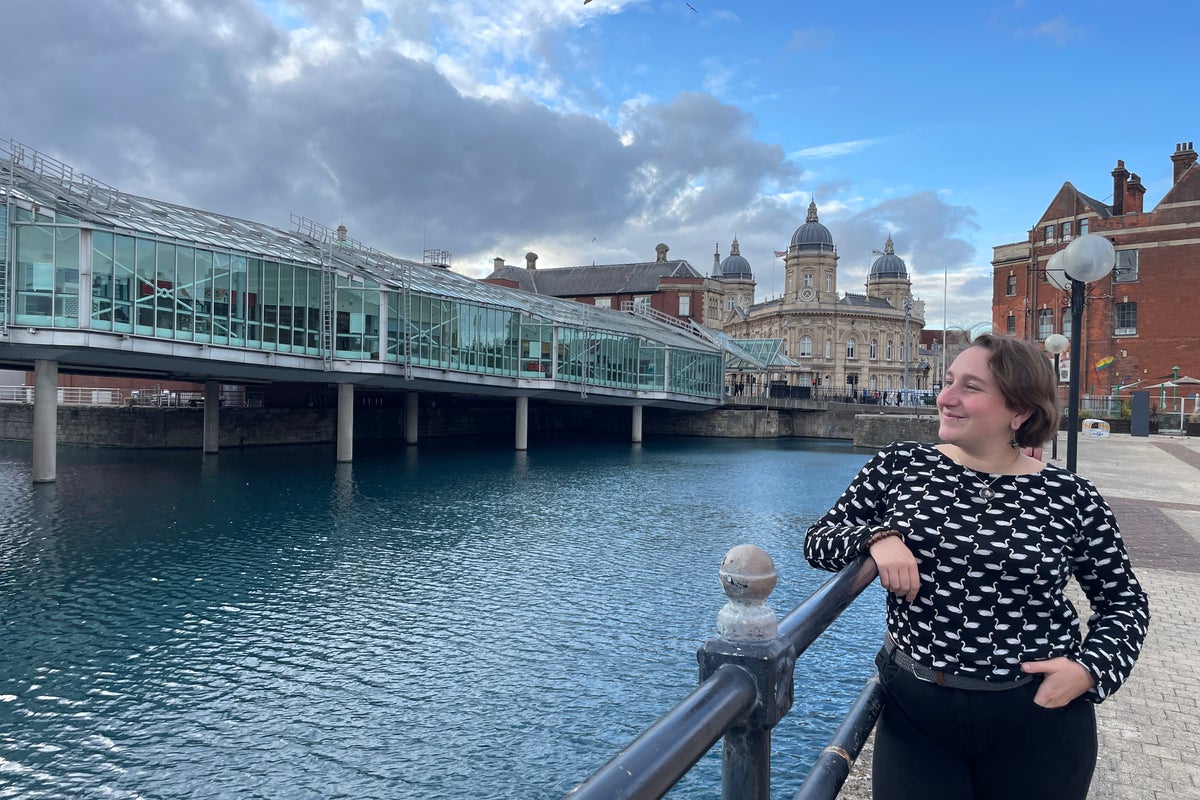
For a whiff of the water, just stick your nose out. A few paces away from the museum, past the Ferens Art Gallery (worth a visit as one of the finest collections in the North East), the Princes Quay docks glisten in deep turquoise water. From the buzzing urban centre of town, I am suddenly catapulted to a peaceful promenade, with small restaurants on one side and the beautiful Humber Dock Marina on the other.
While the museums and sites may be new or revamped, the city's glimmer has always been there. And yet, not many people have it on their radar for a weekend away.
“We have the goods, but we’re not very good at telling people about it”, says Gillian Osgerby, Hull Maritime’s project director. That’s where the project’s main aim comes in, bridging a gap between “the amazing sites we look after” and “the vital stories that haven’t been told”, according to Osgerby.
Testing one of the project’s features, I hop on the free Hull Maritime Guided walking tour, running every Thursday and Saturday. Following local guide Jane Foster, I get a glimpse of the Wharf and Northern Shipyard, where the Arctic Corsair – the Northern twin sister of London’s Cutty Sark – will soon be docked.
In between historic sites, modernity abounds. We cross the Mary Murdoch bridge, built in 2021, its shape resembling a majestic whale skeleton. Mary was no whale, however, but the city’s first woman GP, and was famed among her fellow citizens for “driving fast like the devil”. Although she achieved eternal glory despite her driving record, other women pioneers did not enjoy the same fate.
Read more: 17 best pubs with rooms for cosy autumn breaks in the UK
After the 1968 Triple Trawler Disaster, a group of four women whose husbands worked in the docks started campaigning for better working standards. The Headscarf Revolutionaries, as they came to be known, changed the fishing industry not just in the UK, but worldwide. An entire room in the Maritime Museum is dedicated to the legacy of Lillian Bilocca, Christine Smallbone, Mary Denness and Yvonne Blenkinsop.
As a thank you for their indomitable work, they were ostracised. Their husbands were never given work on a ship again, their acquaintances were marred by their closeness, and only a dozen people attended their funerals when they died.
The industry and city could be unforgiving, as I’m reminded when visiting Wilberforce House, one of three sites in the Museums Quarter. While Hull was not directly involved in the transatlantic slave trade due to its position, it still traded in sugar, coffee and rum – all direct products of slavery. Now relegated to a footnote in history, William Wilberforce was MP for Hull and Yorkshire from 1780 to 1814, and made abolishing slavery his life’s work.
Read more: This underappreciated UK town is ideal for a surprising staycation
Hull’s reputation as a raucous party town often overshadows its cultural offerings. But you can easily enjoy both aspects. You can party at The Welly until 3am on a Saturday, then find yourself pondering the intricacies of jellyfish life at The Deep, Hull’s world-class aquarium, 10am on a Sunday morning.
Hull’s urban renaissance is on full display on Humber Street. A former “dodgy dockside”, this hip cobbled street now has an independent art gallery, artisan micro-bakery, Spanish tapas restaurant and the lively Social club.
Grab an indulgent pollen and tangerine bake from Flour & Feast for breakfast, but save room for lunch at Humber Fish Co., where nearly every layer of the majestic three-tiered Skipper’s lunch is sourced fresh and local.
Humber Street hosts many of the city’s youth-led, independent festivals, from the upbeat Folk & Maritime Festival (July) to Humber Street Sesh (August), which is dedicated to emerging local artists. With nothing like a good folk jig to inspire my appetite, I head to the independent local chain Ambiente Tapas for a sherry flight and a selection of Spanish tapas.
My time to say goodbye to Hull is signalled by the sun setting on the tiny but mighty Spurn Lightship – very aptly, as this is the last thing ships coming into the harbour would have seen as they approached or left the city. That, and the almost mystical picture of “Dead Bod” – Hull’s version of a cave painting, but on corrugated iron sheet and memorialising a sailor’s beloved bird.
Surreal, spirited, surprising: the stories go on. It’s never dull in ‘Ull.
Rory’s trip was supported by Visit Hull and East Yorkshire
How to get there
Hull Trains operates multiple services, including daily from London with journey time of 2 hours 45 minutes starting from £60. Hull is also served by LNER.
Where to stay
Self-catered apartments at The Hideout start from £100 per night for two people. It’s located between the historic town and the rowdy clubs (earplugs provided).
Read more: The North is in ascendancy – here are the places to visit this summer