We open this episode of the Cyberlaw Podcast with some actual news about the debate over renewing section 702 of FISA. That's the law that allows the government to target foreigners for a national security purpose and to intercept their communications in and out of the U.S. A lot of attention has been focused on what happens to those communications after they've been intercepted and stored, with some arguing that the FBI should get a second court authorization—maybe even a warrant based on probable cause—to search for records about an American. Michael J. Ellis reports that the Office of the Director of National Intelligence has released new data on such FBI searches. Turns out, they've dropped from almost 3 million last year to nearly 120 thousand this year. In large part the drop reflects the tougher restrictions imposed by the FBI on such searches. Those restrictions were made public this week. It has also emerged that the government is using the database millions of times a year to identify the victims of cyberattacks. That's the kind of problem 702 is made for: some foreign hackers are a national security threat, and their whole business model is to use U.S. infrastructure to communicate (in a very special way) with U.S. networks. So it turns out that all those civil libertarians who want to make it hard for the government to search the 702 database for the names of Americans are actually proposing ways to slow down and complicate the process of warning hacking victims. Thanks a bunch, folks!
Justin Sherman covers China's plans 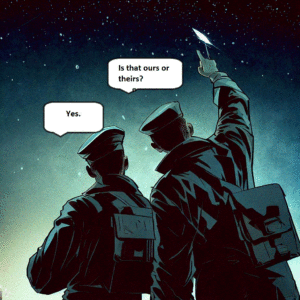 to attack and even take over enemy (i.e., U.S.) satellites. The story is apparently drawn from the Discord leaks, and it has the ring of truth. I opine that DOD has gotten a little too comfortable waging war against people who don't really have an army, and that the Ukraine conflict shows how much tougher things get when there's an organized military on the other side. (Again, credit for our artwork goes to Bing Image Creator.)
Adam Candeub flags the next Supreme Court case to nibble away at the problem of social media and the law. The Court will hear argument next year on the constitutionality of public officials blocking people who post mean comments on the officials' Facebook pages.