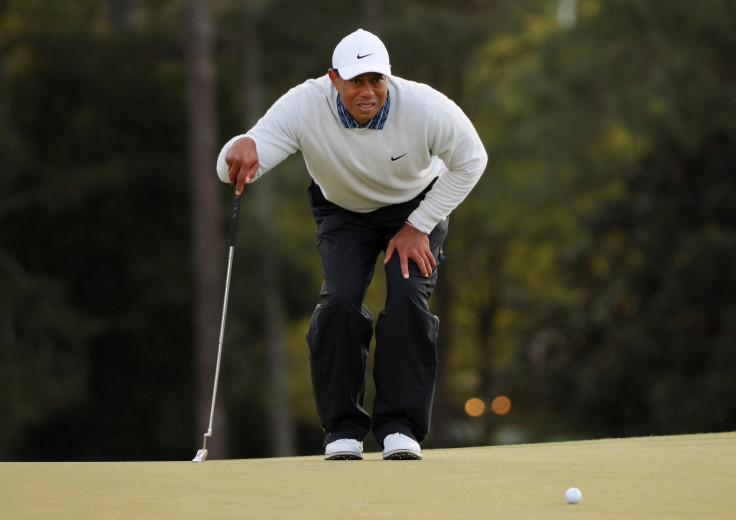
Tiger Woods was arrested in Florida on Friday following a rollover crash on Jupiter Island. The golfer faces misdemeanour charges of DUI, property damage and refusal to submit to a lawful test after declining to provide a urine sample, according to the sheriff's office.
The charges followed a crash at about 2 p.m. in which Woods, who was alone in the vehicle, reportedly attempted to pass a vehicle towing a trailer at speed before clipping it and overturning his SUV. Authorities said Woods was uninjured and the other driver also escaped without harm.
Tiger Woods and the Test He Refused
The arrest did not involve alcohol, which appears straightforward. Sheriff John Budensiek said officers at the scene were not focused on drink driving, and that remained the case when Woods took a breathalyser at the jail, registering 'triple zeros.'
The case shifted because Woods refused to provide investigators with a second test. Budensiek told reporters that Woods had shown signs of impairment, that roadside assessments were carried out in depth, and that a refusal to provide a urine sample left officers to proceed with the charges now listed against him.
That is significant because it leaves a gap at the centre of the story. Police have suggested that medication or another substance may have been involved, but without the urinalysis there is no definitive public confirmation of what, if anything, caused the impairment they reported. In simple terms, the allegation is serious, the charge is real, and the exact explanation remains unverified.
Budensiek's remarks were notably blunt. He said Woods was 'cooperative' but also 'not trying to incriminate himself,' which is a carefully chosen way of saying the golfer did not make the job easy for investigators while still staying within his rights. It is the kind of phrasing police use to signal compliance without suggesting candour.
A Familiar Public Reckoning
The sheriff was equally direct about handling a celebrity suspect. 'It doesn't matter who you are. If you break the law, we're going to follow the law,' Budensiek said, emphasising that Woods' profile would not earn him special treatment in the criminal case.
That firmness continued after the arrest. Under Florida procedure, Woods was required to remain in custody for at least eight hours before posting bond, and the sheriff said he would be kept out of general population for his own safety. Budensiek put it in stronger language than most officials would, saying Woods would 'pay the price' but would not be left vulnerable to other inmates who might try to exploit the situation.
There is also an unmistakable public spectacle, whether authorities intended it or not. A high-profile athlete crashes near home, passes the alcohol test, refuses the urine test and is then processed through the same legal procedures as anyone else. Police appeared eager to stress the routine nature of the process, perhaps because the name involved is anything but ordinary.

What remains striking is how little room Woods left himself by declining the urinalysis. The sheriff's account suggests officers had already concluded he was impaired, and after the refusal they were not going to dismiss the matter simply because the breathalyser showed 0.00. If anything, the reading only sharpened the focus on what officers believed they were witnessing.