Get all your news in one place.
100's of premium titles.
One app.
Start reading
The Conversation
The Conversation
Stephan Blum, Research Associate, Institute for Prehistory and Early History and Medieval Archaeology, University of Tübingen

Why was an Egyptian mummy stuffed with a fragment of Homer’s Iliad?

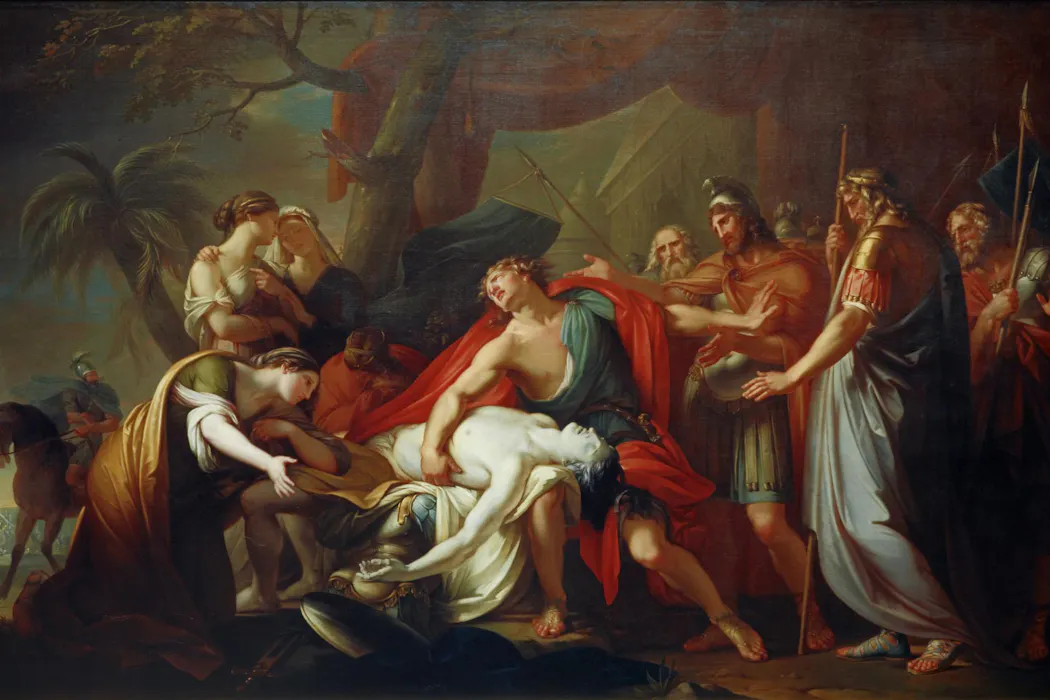
Achilles Lamenting the Death of Patroclus by Gavin Hamilton (1760-1763). National Galleries of Scotland Collection

Archaeologists have found something unexpected inside a 1,600-year-old Roman-era Egyptian mummy: a fragment of Homer’s Iliad. It wasn’t placed beside the body, but inside the mummy’s abdomen. But the real surprise isn’t just where the fragment was found. It’s how it got there. To understand, we must go back – to the Iliad itself, and to what it became in the Roman world.

In The Iliad, a poem shaped in the 8th century BC and attributed to Homer, the Trojan war does not end in triumph or renewal. It ends in devastation. The poem closes at the edge of collapse, with Troy reduced to a landscape of heroic ruin. And yet, this is not where the story ends.

Sign up to read this article
Read news from 100's of titles, curated specifically for you.
Already a member? Sign in here
Related Stories
Top stories on inkl right now
One subscription that gives you access to news from hundreds of sites
Already a member? Sign in here
Our Picks
Fourteen days free
Download the app
One app. One membership.
100+ trusted global sources.