
Get all your news in one place.
100's of premium titles.
One app.
Start reading
The Conversation
The Conversation
Lifestyle
Claire Gilmour, Museum Curator | Lecturer | PhD Candidate, Anthropology and Archaeology, University of Bristol

Why Tutankhamun’s curse continues to fascinate, 100 years after his discovery

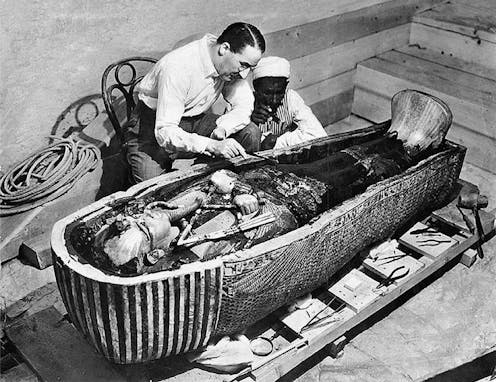
Howard Carter examining the sarcophagus of Tutankhamun. IanDagnall Computing/Alamy

The discovery of Tutankhamun’s tomb in 1922 was a monumental event for archaeology. It was the first largely intact ancient Egyptian royal tomb to be found and hence provided major insights into the burial practices of royalty. It also gave a glimpse of what other undiscovered, lost or robbed tombs of pharaohs might have been like.

Tutankhamun was a relatively minor pharaoh. He died young and did not get the chance to leave a larger legacy, so such a lavish funerary provision for him implied even greater treasures in other tombs of more accomplished pharaohs.

Sign up to read this article
Read news from 100's of titles, curated specifically for you.
Already a member? Sign in here
Related Stories
Top stories on inkl right now
One subscription that gives you access to news from hundreds of sites
Already a member? Sign in here
Our Picks
Fourteen days free
Download the app
One app. One membership.
100+ trusted global sources.







