Get all your news in one place.
100's of premium titles.
One app.
Start reading
The Conversation
The Conversation
Richard Newton, Lecturer in Aquaculture, University of Stirling

Why the salmon on your plate contains less omega-3 than it used to – and how the industry can address that

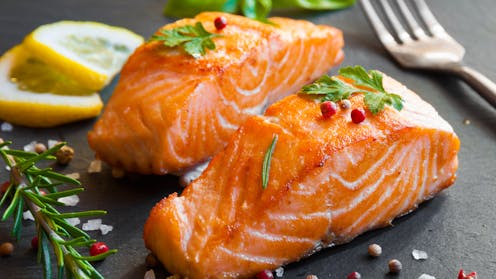
Maria_Usp/Shutterstock

Farmed Atlantic salmon has become one of the most highly traded food commodities in the world, enjoyed for its versatility as much as for its health benefits. It has long been known that eating oily fish such as salmon is the best way to consume long-chain omega-3 fatty acids. These are essential for brain development, mental health and cognition.

In salmon, omega-3 fatty acids must come from the fish’s diet. For farmed fish, this means fishmeal and fish oil – so–called “marine ingredients” made from ground-up wild fish such as anchovy and fish by-products.

Sign up to read this article
Read news from 100's of titles, curated specifically for you.
Already a member? Sign in here
Related Stories
Top stories on inkl right now
One subscription that gives you access to news from hundreds of sites
Already a member? Sign in here
Our Picks
Fourteen days free
Download the app
One app. One membership.
100+ trusted global sources.