Get all your news in one place.
100's of premium titles.
One app.
Start reading
The Economic Times
The Economic Times

Why scientists are worried about Antarctica's 'Doomsday Glacier': How dangerous could disintegration of 'Great Britain-sized' ice shelf be for Earth and humanity?

The vast Thwaites Glacier in West Antarctica, often called the "Doomsday Glacier", is once again making headlines after scientists warned that its eastern ice shelf could break apart in the near future. While the name may sound alarming, experts stress that the glacier will not disappear overnight.

According to Live Science, the immediate concern is the possible collapse of the glacier's floating eastern ice shelf, a development that could speed up the loss of ice from Antarctica and contribute to rising global sea levels over the coming decades and centuries.

What is the Doomsday Glacier?

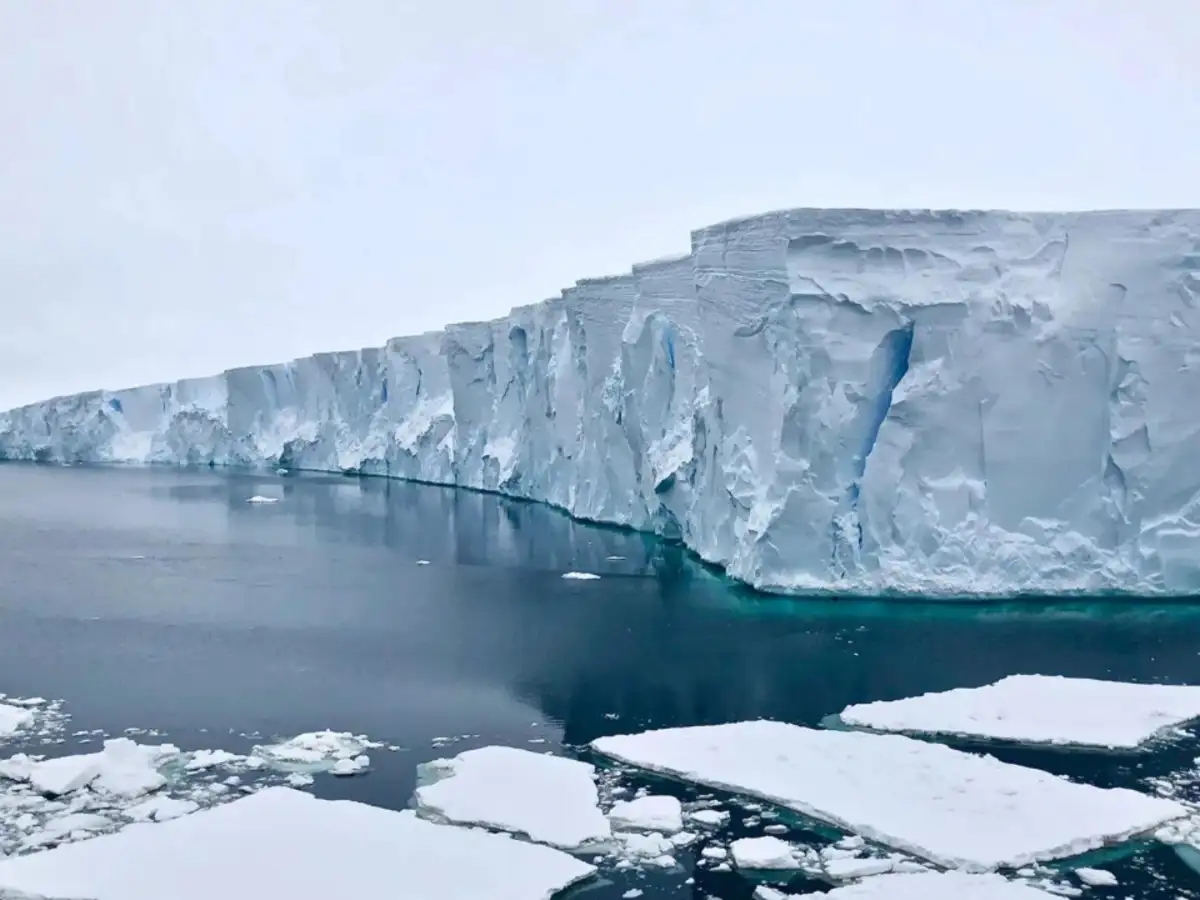
Thwaites Glacier is the widest glacier on Earth, stretching across an area roughly the size of Great Britain. Located along the coast of West Antarctica, it plays a crucial role in holding back a massive portion of the West Antarctic Ice Sheet.

Scientists have nicknamed it the "Doomsday Glacier" because of the enormous amount of ice it contains and the potential consequences if it becomes unstable.

For more than four decades, warm ocean water has been melting the glacier from below. According to researchers, Thwaites has retreated by more than 20 kilometres (around 12 miles) since the early 1990s.

Why is the eastern ice shelf so important?

The biggest concern is not the glacier itself but its floating eastern ice shelf. The shelf acts like a natural barrier, slowing the movement of ice from the land into the Southern Ocean. If this protective layer breaks apart, the glacier could begin flowing into the sea much faster.

According to the International Thwaites Glacier Collaboration, warmer ocean water driven beneath the ice shelf is causing large cracks to spread. Satellite observations show the shelf is weakening rapidly and may be approaching a critical breaking point.

Will sea levels rise immediately?

According to Live Science, the collapse of the floating ice shelf alone would not cause an immediate rise in sea levels because the shelf is already floating on the ocean. The real danger comes afterwards.

Without the ice shelf acting as a brake, Thwaites Glacier could accelerate, releasing increasing amounts of land-based ice into the sea. Over time, that additional ice would contribute directly to global sea-level rise.

Scientists estimate that if Thwaites Glacier were eventually lost, it could raise global sea levels by around 65 centimetres (2.1 feet).

What do scientists say?

According to a report by New Scientist, recent satellite images indicate that the eastern ice shelf is close to detaching from the main glacier.

Researchers say the shelf is cracking where it remains attached to a ridge on the seabed, while sections of ice are breaking away at nearly twice the rate observed last year.

Robert Larter, a glaciologist with the British Antarctic Survey and the International Thwaites Glacier Collaboration, told New Scientist:

"The last bit of ice shelf in front of the glacier is poised to disintegrate. We don't know exactly how it will break up, but it's definitely going to go."

Why is Thwaites Glacier melting?

Scientists believe changing ocean conditions linked to climate change are driving warmer, saltier water beneath the glacier's ice shelf.

According to New Scientist, changing wind patterns across the Southern Hemisphere are helping push deep ocean water underneath the floating ice.

Larter explained: "There's debate about the details, but there's little doubt that human-driven climate change is a big part of what we're seeing."

What happens if the glacier eventually collapses?

Scientists stress that the complete collapse of Thwaites Glacier would take a very long time—possibly decades or even centuries.

However, if the glacier eventually becomes unstable, it could trigger further collapse across neighbouring glaciers within the West Antarctic Ice Sheet.

In the worst-case scenario, this chain reaction could eventually contribute more than 3.3 metres (over 10 feet) to global sea levels, dramatically reshaping coastlines around the world.

Researchers are continuing to refine their models, but one recent study suggests Thwaites could be losing as much as 200 billion tonnes of ice every year by 2067.

Which countries could be affected?

Although Antarctica feels remote, the consequences of continued ice loss would be felt worldwide.

Low-lying countries such as Bangladesh, the Maldives and many Pacific island nations would face increased flooding, coastal erosion and saltwater intrusion into freshwater supplies.

Major coastal cities including Miami, New York, Shanghai, Jakarta and Mumbai could experience more frequent flooding and stronger storm surges, while even countries with advanced flood defences, such as the Netherlands, would face growing challenges.

Scientists say there is still uncertainty

Researchers emphasise that significant uncertainties remain.

Even if the eastern ice shelf breaks apart soon, the complete collapse of Thwaites Glacier is not expected to happen immediately. Scientists are continuing to study how the glacier and the wider West Antarctic Ice Sheet will respond in the coming decades.

Nevertheless, experts agree that every new fracture and every increase in ocean temperatures provides another reminder of how closely connected Earth's climate systems are, and how changes in Antarctica could eventually affect millions of people living thousands of kilometres away.

Inputs from TOI

Sign up to read this article
Read news from 100's of titles, curated specifically for you.
Already a member? Sign in here
Related Stories
Top stories on inkl right now
One subscription that gives you access to news from hundreds of sites
Already a member? Sign in here
Our Picks
Fourteen days free
Download the app
One app. One membership.
100+ trusted global sources.