
Get all your news in one place.
100's of premium titles.
One app.
Start reading
Space
Space
Science
Robert Lea

Why puffy exoplanets often dance with perfect rhythm

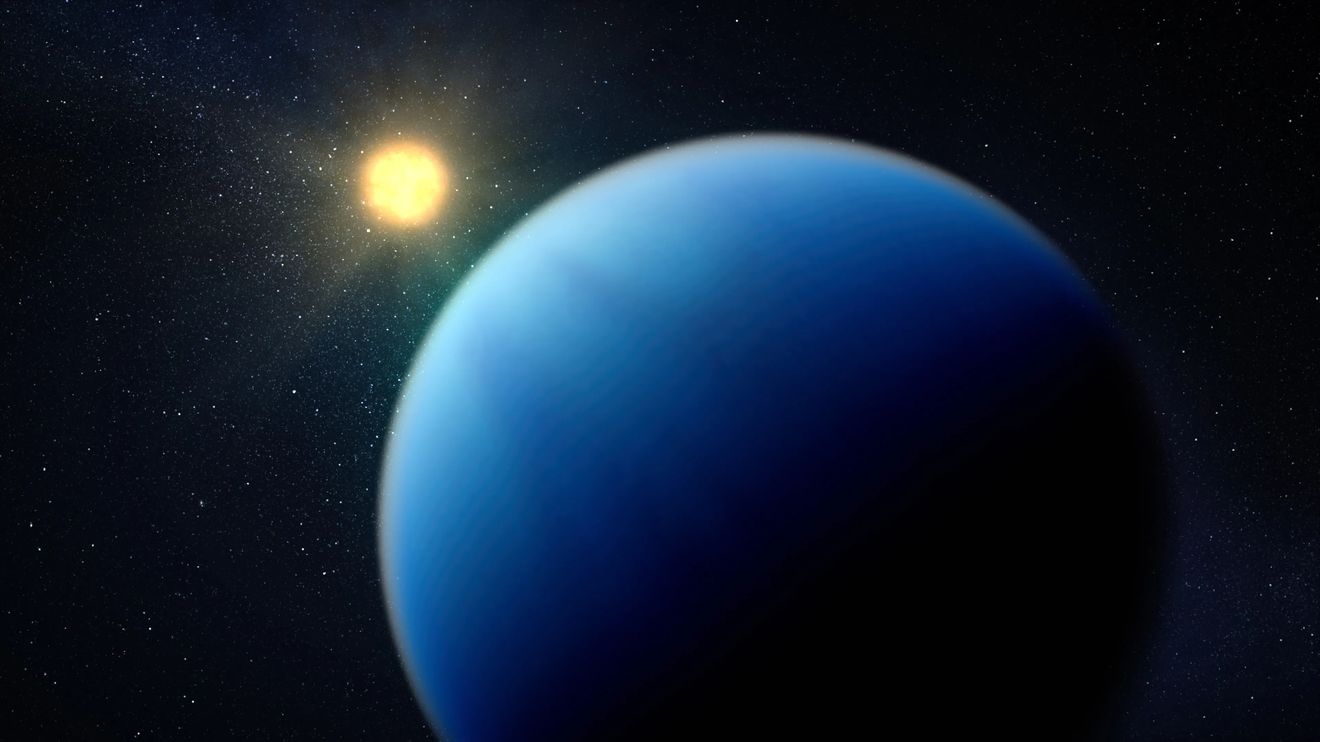
An artist's illustration shows a bright blue planet in the foreground with a yellow, glowing star in the background.

Sub-Neptune planets that dance in time with the rest of their planetary systems are less dense than those that don't, planetary scientists have found.

Though notably absent from the solar system, the most common planets in the Milky Way are known as "sub-Neptunes," or worlds with sizes between those of Earth and the ice giant Neptune. It is estimated that between 30% and 50% of sun-like stars are orbited by at least one sub-Neptune — but despite these worlds' ubiquity, scientists studying extrasolar planets, or exoplanets, have traditionally had difficulty measuring sub-Neptunes' densities. 

Sign up to read this article
Read news from 100's of titles, curated specifically for you.
Already a member? Sign in here
Related Stories
Top stories on inkl right now
One subscription that gives you access to news from hundreds of sites
Already a member? Sign in here
Our Picks
Fourteen days free
Download the app
One app. One membership.
100+ trusted global sources.