US President Donald Trump claims to have pressured French President Emmanuel Macron to raise drug prices in France, arguing that Americans are overpaying while other countries undercharge. The assertion – flat out denied by France – points to a broader effort to boost US pharmaceutical companies at Europe’s expense.
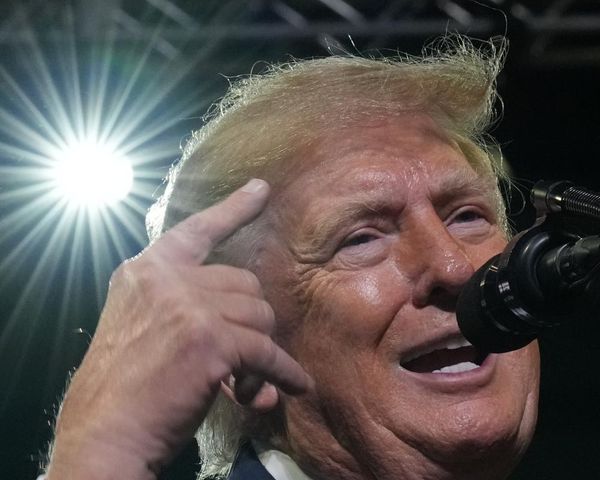
"Emmanuel, you've been taking advantage of the United States for the last 30 years," Trump said at the World Economic Forum in Davos in January, referring to a discussion with Macron in which he allegedly convinced him to raise the price of medications in France.

Trump had made a similar claim a few weeks earlier during an address in which he imitated Macron allegedly agreeing to triple the price of drugs in France after Trump threatened tariffs.
The French presidency rejected the claim, posting an image of Trump and the words "fake news" on social media, saying that drug prices in France are negotiated and regulated by the public health system, not set by presidential decree.
“Anyone who has set foot in a French pharmacy knows this,” the post said.
Price negotiations
Drug prices in the US are nearly three times higher than in other wealthy countries, according to a study by the Rand Corporation, an American policy think tank.
One key reason for this discrepancy is structural. France has a single negotiator, the public healthcare system or Assurance Maladie, while the US system is fragmented among many private insurers, each negotiating on their own.
Two independent public bodies are involved in the process of negotiating prices in France: the National Health Authority (HAS), which assesses a drug’s efficacy, and a committee linked to the finance ministry which negotiates prices within a budget approved annually by parliament.
"Technically, and in theory, the French government has no say in the price of this or that drug," explains Théo Bourgeron, a sociologist at the University of Edinburgh who studies the politics of the pharmaceutical industry.
Listen to this story on the Spotlight on France podcast:

Bourgeron argues that Trump’s focus on prices for patients is a way of deflecting from his real objective: pushing foreign governments to pay more for US-made drugs, while lowering prices on the American market.
"It’s more about creating an asymmetry in the way that corporations are treated in the US and other countries that is part of a broader mercantilist project," he said.
Boosting 'big pharma'
European and US drug companies have been pitted against each other for decades. In the 1980s and '90s, France increased drug spending to help support local companies and build a competitive European pharmaceutical industry.
Drugmakers on both sides of the Atlantic received a boost in 1994 with the World Trade Organization's TRIPS agreement, which introduced 20-year global patents on medicines.
The agreement favoured US companies, which already dominated the industry, and allowed them to charge higher prices by delaying the development of generics.
GlaxoSmithKline to stop seeking patents in world's poorest countries
While the US pays more for drugs than elsewhere, Bourgeron points out that prices are rising everywhere.
“The responsibility for high prices lies with pharmaceutical corporations and their tendency to use their monopoly over drugs to redistribute a lot of money to shareholders,” he said, pointing to research showing that the industry pays out most of its profits in dividends and share buybacks.
“It's very profitable and this money doesn't go to research, innovation. It goes mostly to asset managers, to investors.”
European concessions
As Trump has been bragging about supposedly pressuring Macron, his administration has been negotiating with European pharmaceutical companies – which are scrambling to counter Trump's threats to impose tariffs on exports to the US, their largest market.
In December executives from several companies went to the White House and agreed to invest more in the US and to lower prices on some drugs for Medicaid, the public insurance programme for low-income Americans.
Although Medicaid is only a small part of the US drug market, and many of the most profitable medications are not part of these agreements, lowering costs will impact the companies’ bottom line.
Drugmakers could seek to offset the loss by raising prices in other large markets, such as Europe – helping to explain Trump’s pressure on Macron and other European leaders.
Bourgeron says French drug prices could go up, but only within limits.
Increasing overall pharmaceutical spending would require a vote in parliament, which would be difficult given the current budget crisis. Tripling prices, for example, would push drug spending from 1.4 percent of GDP to 4.2 percent, requiring “an unprecedented austerity policy”, Bourgeron says.
More radical changes, like dismantling France’s public healthcare system to introduce more private insurance, are politically untenable.
“There is no way people would vote for this; it would require a new political regime,” Bourgeron says, adding that could well be Trump’s aim.
Drugs shortage sees France restart local production
New technologies
The spotlight on drug prices in the US has exposed flaws in the global pharmaceutical system, in which worldwide patent monopolies force states to negotiate with companies for access to essential medicines.
Bourgeron says the current system is relatively recent, and could be revised to give the public sector a larger role, while still rewarding innovation.
New drug technologies, such as personalised immunotherapy – often used in cancer treatment, and based on patients’ own cells – are putting intellectual property rules to the test, he noted.
“There are discussions over whether these new processes can be patented,” Bourgeron said.
Adapting opens up a way to challenge the status quo, “to promote a system which would be more based on commonality, based on state funding, and less on multinational private corporations having monopolies”.
Listen to this story on the Spotlight on France podcast, episode 139.