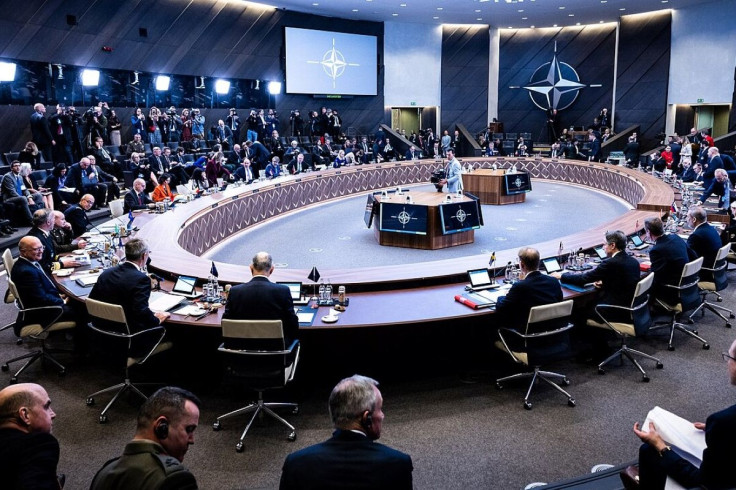
Why artificial intelligence has become one of the most closely watched topics ahead of NATO's summit in Ankara has little to do with chatbots and everything to do with military power. As leaders prepare to meet on 7 and 8 July, the United States arrives with a technological advantage that many of its allies do not possess.
American companies OpenAI and Anthropic now control some of the world's most advanced frontier AI models, giving Washington influence over who can use technology that could transform cyber defence and national security.

That position has become even more important after the Trump administration tightened access to its most capable AI systems, leaving European governments concerned about relying on technology they cannot fully control.
Those concerns are now feeding into wider conversations about defence cooperation, strategic independence and the future balance of power within the NATO alliance.
American AI Control Raises NATO Questions
The annual NATO summit in Ankara takes place against the backdrop of continuing disagreements between the United States and Europe over access to advanced artificial intelligence.
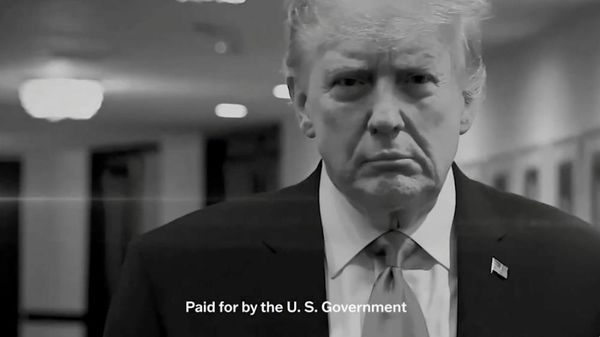
President Donald Trump is expected to arrive with what many see as a powerful advantage. The United States currently possesses some of the world's most advanced AI technology and has the ability to determine which allies can gain access to it.
That influence has grown after American companies Anthropic and OpenAI introduced increasingly sophisticated AI models capable of identifying and exploiting security flaws at a level that reportedly exceeds most human experts. While these systems can strengthen cyber defences, they can also be used to help launch cyberattacks on a much larger scale.
Anthropic's Claude Mythos reportedly uncovered vulnerabilities in classified US systems within hours during a government test. The performance of advanced AI systems also prompted members of the Five Eyes intelligence-sharing alliance to urge global leaders to 'swiftly' improve protections against AI-powered cyber threats.
Despite their capabilities, access to these models has become increasingly restricted.
Under instructions from the Trump administration, American AI companies have limited the availability of their most advanced systems because of concerns that the technology could be misused to cause widespread destruction.
In early June, export controls were imposed on Anthropic's cyber-focused Mythos and Fable models, preventing access by foreign nationals and overseas governments. At the same time, the White House limited the release of OpenAI's newest cutting-edge model to a small group of approved US companies.
Those decisions have not been welcomed across Europe. Several European countries, including Germany, have sought access to Anthropic Mythos since it was announced in April, although only a limited number of countries, including the United Kingdom, were initially permitted to test it.
Earlier this month, Anthropic expanded access through partnerships with 150 organisations across 15 countries, including members of the European Union. Even so, European governments remain concerned about relying on AI systems whose availability could change depending on decisions made in Washington. As with other American software, there are worries that access could ultimately be withdrawn if political priorities shift.
Europe Pursues Defence AI Alternative
Those concerns are helping drive Europe's effort to build its own defence AI capability rather than depending entirely on American technology.
A key part of that strategy is the partnership between Helsing and Mistral, two of Europe's leading technology startups, which agreed last year to work together on military AI systems.
Helsing, a German defence technology company founded in 2021, develops software for weapons, military vehicles and operational planning. According to the companies, its systems have already been used in battlefield simulations as well as fighter jets and drones operating in Ukraine.
Mistral, based in France, has emerged as Europe's closest competitor to OpenAI and has attracted growing support from investors across the continent in recent months.
Together, the two companies intend to integrate AI models into defence platforms. They say the partnership is designed to improve decision-making, strengthen environmental awareness and enhance communication between military systems and their operators.
The agreement comes at a time when European governments are placing increasing attention on defence investment. Concerns surrounding Russia's imperial ambitions, combined with Donald Trump's threats towards NATO, have contributed to rising military budgets across Europe.
Against that backdrop, Europe's investment in home-grown AI is not simply about supporting its technology sector. It also reflects a desire to reduce dependence on American companies whose products remain subject to decisions taken by the US government.
As NATO leaders gather in Ankara, artificial intelligence is likely to remain one of the less visible but most influential issues surrounding the alliance. The United States continues to hold an advantage through companies such as OpenAI and Anthropic, while Europe is attempting to strengthen its own position through partnerships including Helsing and Mistral.
The outcome of that competition could shape not only future cybersecurity capabilities but also the balance of technological influence among NATO allies in the years ahead.