Get all your news in one place.
100's of premium titles.
One app.
Start reading
The Conversation
The Conversation
John Lowrey, Assistant Professor of Supply Chain and Health Sciences, Northeastern University

Why only 13% of surplus food gets donated by US supermarkets and other retailers to help hungry people – and how food pantries are trying to gather more

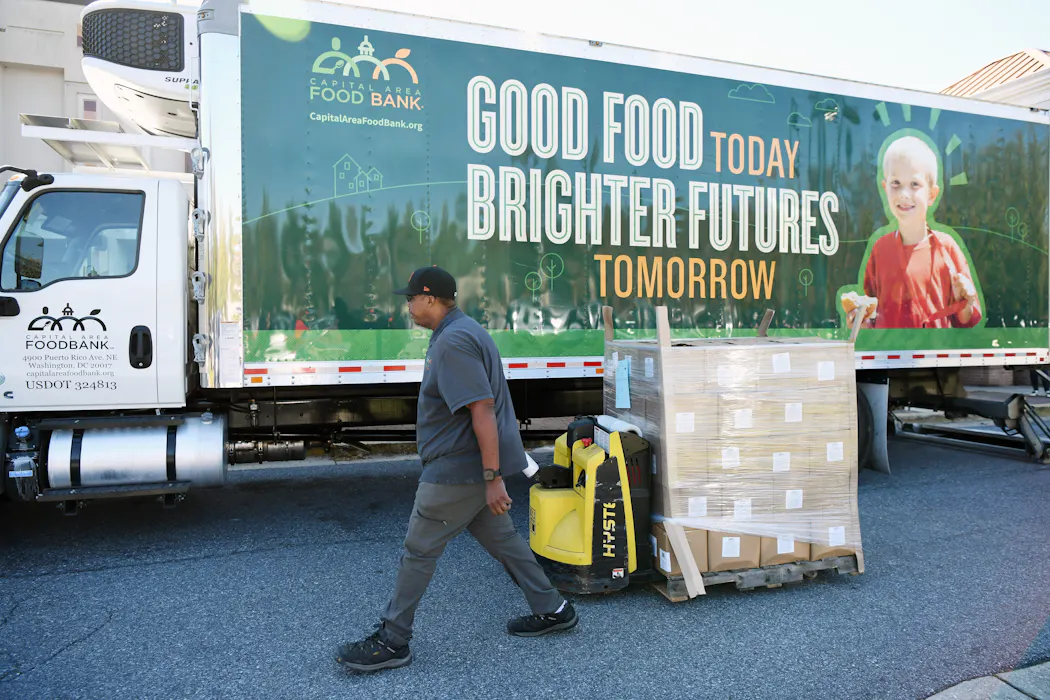
Food banks tend to be large and have lots of special equipment that increases their efficiency. Li Rui/Xinhua via Getty Images

Low-income Americans need more help getting enough to eat, but not much of the food retailers that sell groceries could potentially donate is given away. Only 13% of it ends up at food banks, according to a 2026 report produced by ReFED, a nonprofit that studies and tries to prevent food waste.

The rest is composted; turned into animal feed, biofuels and other industrial products; sold at a deep discount shortly before its use-by date; or disposed of in landfills and incinerators.

Sign up to read this article
Read news from 100's of titles, curated specifically for you.
Already a member? Sign in here
Related Stories
Top stories on inkl right now
One subscription that gives you access to news from hundreds of sites
Already a member? Sign in here
Our Picks
Fourteen days free
Download the app
One app. One membership.
100+ trusted global sources.