As someone whose shopping-related screen time (scrolling through websites in the name of research), is embarrassingly high, I’ve developed a photographic-like memory for “product”, an entirely useless skill unless you want to know where something’s from analogue-style (i.e. without the internet). So when something eludes this specialised brain function of mine, it tells me something—it’s encouragingly under-the-radar.
This happened last year on the Eurostar. My very chic seat-mate, French obviously, was carrying a handbag that, annoyingly, I couldn’t place. It vaguely pricked my subconscious, but a lack of logo or obvious branding meant that, by the time we pulled into Gare du Nord, I was still none the wiser.

To be clear, this isn’t a design flaw but, increasingly, a selling point. In fact, there’s been a noticeable rise in handbags that keep bells and whistles to a sparing minimum —and certainly don’t go in for “logomania” unless you count a discretely embossed brand name. It’s a trend that’s been solidified into style lore by The Row, whose anonymous yet, ironically, very recognisable leather totes or suede bowling bags fast became the definition of “quiet luxury”. The difference is that, instead of commanding a four-figure price tag, the latest minimal handbag labels are pleasingly mid-price, positioning themselves in the “contemporary” space as opposed to aiming for designer.

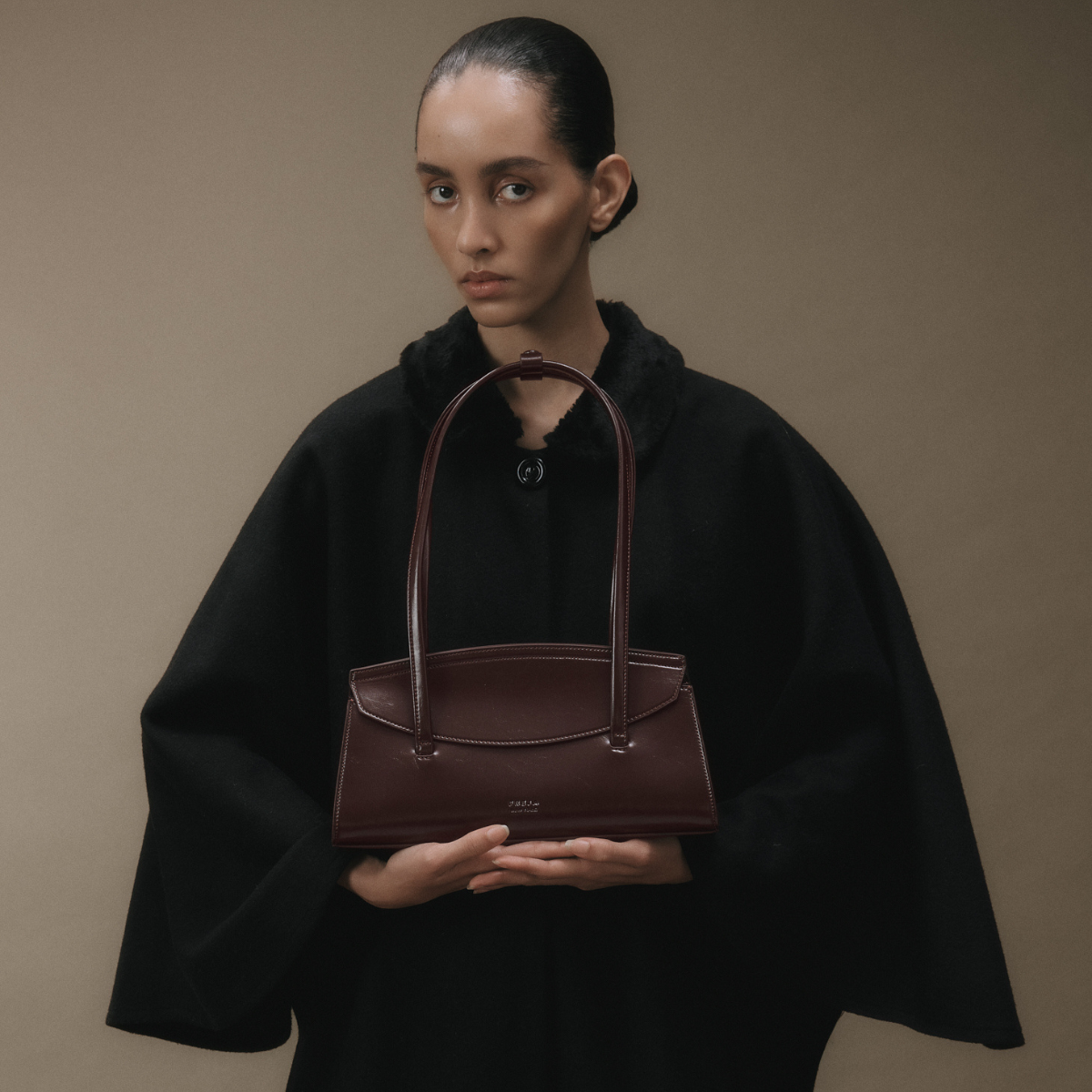
New York-based Freja is one such brand, whose latest collection dropped this month with prices starting from a reasonable £118 for a travel pouch and stretching to £378 for a slouchy "hobo" style. Jenny Lei, its founder, initially wanted to fill a gap in the market for considered work bags—"I wanted something thoughtfully designed, ethically crafted with a transparent supply chain, and grounded in a narrative-driven brand origin," she tells Marie Claire—but, seven years later, is seeing customers simply wanting a bag that doesn't fit an occasion but what she calls their "life rhythm": "That’s why we’re designing fewer single-purpose styles and shifting toward occasion-agnostic, season-less pieces," she says, adding, "Our customer has a strong point of view, and she doesn’t need to be told how, when, or where to wear something. We want to design bags that never ask her to overthink."
The spring 2026 offering, which marks the brand's first complete seasonal collection, includes beautifully conceived shoulder bags, structured top-handle bags and fold-over clutch bags in black, "espresso" and "raisin", a glossy brown which feels like a delicious alternative to last season's ubiquitous chocolate.

Like other brands in the mid-price bracket, Freja swerves trends, placing emphasis on shades, materials and even silhouettes that will still be considered as timeless in 10 years as they are now. "Our goal is to design pieces that people instinctively reach for. Our bags should not only serve a purpose, but also be a pleasure to wear and experience. Aesthetically, that means fresh yet timeless proportions, architectural design that feels interesting without relying on hardware, and easy versatility in our colour range," confirms Lei.
That doesn’t mean, however, that these labels don’t have a finger on the pulse of what’s happening. Polène's bags have a cachet that's less cult than IYKYK, with details such as delicately knotted straps or twisted metallic buckles. Liffner’s belted suede bucket, meanwhile, merges several trend flashpoints, all while making a bag that’s entirely its own (the slight excess of suede creating a dimple under the buckle, for example).
Interestingly, quite a few work of these brands on a pre-order model. Freja is one, seeing particular interest in the Miro, the Sylvie, and the Alma Tall, the most expensive of which is £358, as is Verafied, whose philosophy has been adopted to make production as mindful as possible. "Since its founding, Verafied has operated with a zero-waste mindset," says founder Vera C. Wang. "Our pre-order model allows us to produce intentionally and responsibly, matching supply directly to real demand."

As for why the mid-price market is expanding, Wang says today's shopper is more switched-on. "They value considered designs, longevity, and personal connection over mass-produced trends driven by large luxury groups."
Shop The Best Minimal (And Mid-Price) Handbags
Freja's Sylvie bag has received plenty of pre-orders and, with its curvaceous silhouette not to mention perfectly-proportioned interior, it's not hard to see why.
Plenty of brands have tuned into the belt-on-bag trend, but this bucket version, with its considered dimple that adds character, is our favourite.
With its organic shape, Polène manages to put a spin on the black shoulder bag while maintaining its credentials—classic with carry-anywhere potential.
Suede bags are still trending, with the butter-soft fabrication suiting a silhouette that's slouchy rather than sleek. ATP Atelier does it best; this bag scrunches perfectly under the arm while still having enough room for all your essentials.
Polished and encapsulating all the best angles, Verafied's slender bag is a 24/7 plus one that will go with everything in your wardrobe.
Mansur Gavriel's handbags are known for their decided simplicity, with its buckets almost as famous as its ballet pumps.
Yuzefi manages to marry a sense of minimalism with a personal design language—note the knotted pieces of leather on either side of this bag—that has won it a loyal fan base.
St Agni's handbags, unsurprisingly, mirror the brand's clothing aesthetic, which is palette-cleansingly minimal and yet polished.
Elleme's minimal shoulder bag will pair with all your wardrobe personalities, whether you're wearing tailoring or a T-shirt.