
Get all your news in one place.
100's of premium titles.
One app.
Start reading
Tom’s Guide
Tom’s Guide
Technology
Kaycee Hill

Why marigolds are the best companion flower for a pest-free vegetable garden (especially tomatoes)

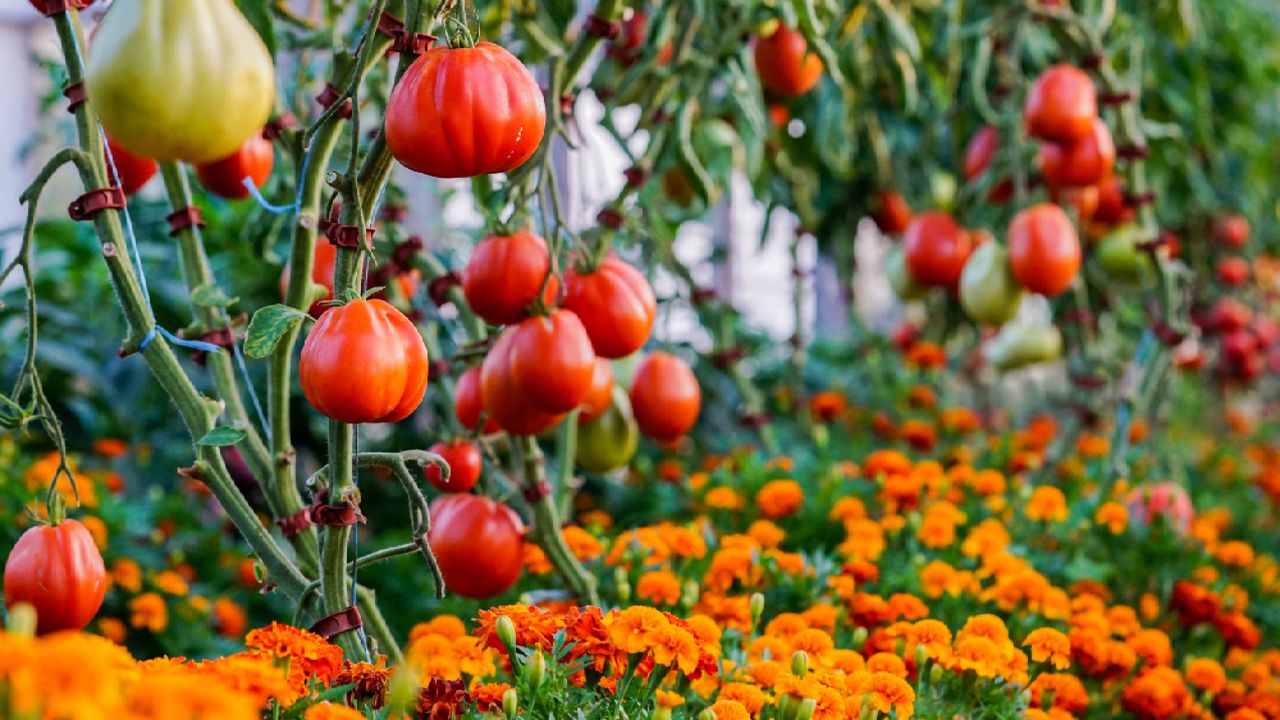
Marigolds next to tomatoes in vegetable garden.

If you're like most gardeners, your tomatoes are taking off right now, which means the pests are on their way. Whiteflies, hornworms, root-knot nematodes, and spider mites are already hunting for tender tomato foliage and juicy fruit.

Fortunately, you can defend your entire vegetable garden with a single companion plant: marigolds.

Marigolds aren't just pretty flowers. They're pest deterrents, root protectors, and pollinator magnets that work double duty protecting both your tomatoes and surrounding vegetables.

Here's how to use them strategically throughout your garden for maximum pest protection and yield.

1. Mask vegetable scents to confuse pests

Marigolds produce a distinct odor which masks the smell of your vegetables. Pests like whiteflies use scent to locate plants, they smell tomato foliage and navigate straight to it. Marigolds disrupt this process by creating olfactory confusion.

Plant marigolds around the perimeter of your tomato patch and interspersed among other vegetables like squash, peppers, and cabbage. The marigold scent overwhelms the vegetable scents, making it harder for pests to find their preferred targets.

Whiteflies are especially susceptible to this trick. They arrive looking for soft tomato leaves to feed on, but the marigold odor throws them off the trail. Research shows strong-smelling companion plants reduce whitefly damage by up to 50% on tomatoes.

2. Protect roots from underground threats

Root-knot nematodes are a tomato grower's underground nightmare. These microscopic roundworms burrow into roots, causing severe swelling that chokes off water and nutrients, leading to stunted growth and ruined yields.

While gardening lore often claims just a single marigold can create a protective barrier, the real science is a bit more nuanced: marigolds don't actually repel nematodes from a distance, but rather act as a "trap crop."

Because of this trap-crop mechanism, the golden rule of marigold protection is density. Planting just one or two lonely marigolds leaves too many unprotected gaps where nematodes can still find your vulnerable tomato, pepper, or squash roots.

To build an effective underground defensive web, plant as many French marigolds as you can pack into the bed, surrounding your vegetables in a dense, continuous ring of golden blooms.

3. Attract beneficial insects

Marigold flowers attract ladybugs, lacewings, and other beneficial insects that prey on common garden pests. These natural predators feed on whiteflies, spider mites, and aphids, which are all major tomato threats.

Ladybugs are especially valuable. A single ladybug eats 5,000 aphids in its lifetime. By planting marigolds, you're essentially hiring free, 24/7 pest control.

Plant marigolds in clusters near your tomato cages and vegetable beds. The flowers attract beneficials which then patrol your vegetables looking for pests. This creates a self-sustaining pest management system without chemical intervention.

4. Boost yields through increased pollination

Marigolds attract bees relentlessly. More bees mean better pollination of tomato flowers, which directly translates to heavier fruit production. Gardens with marigolds consistently produce juicier, heavier tomatoes than gardens without them.

The pollination boost extends to squash, peppers, and other vegetables which rely on bees. More pollinators visiting your garden means better fertilization across all your crops and significantly higher yields overall.

Plant marigolds near tomato flowers so bees visiting marigolds also visit nearby tomato blooms. Even modest increases in pollination activity result in noticeably better fruit set.

5. Position marigolds strategically

Location matters. Marigolds thrive in full sun, just like tomatoes. But plant them too close and they'll compete for sunlight, water, and nutrients.

Plant marigolds 1-2 feet away from tomato cages so they don't get shaded by your tomato plants as they grow taller. This spacing keeps both plants in full sun while maintaining the pest-deterrent benefits.

Space marigolds around the perimeter of your vegetable garden and between plants in beds. This creates layers of protection—pests encounter marigolds before reaching your tomatoes and other vegetables.

You can also create visual interest by planting different marigold varieties. Marigold African Tall reaches 3 feet and creates height variation. Signet marigolds stay compact at one foot and work between closer plantings.

Having a mix of varieties not only provides aesthetic appeal to your yard, but functional coverage too.

Got a secret weapon or hack for dealing with your garden struggles? Drop it in the comments below!

(Image credit: Future)

More from Tom's Guide

Sign up to read this article
Read news from 100's of titles, curated specifically for you.
Already a member? Sign in here
Related Stories
Top stories on inkl right now
One subscription that gives you access to news from hundreds of sites
Already a member? Sign in here
Our Picks
Fourteen days free
Download the app
One app. One membership.
100+ trusted global sources.







