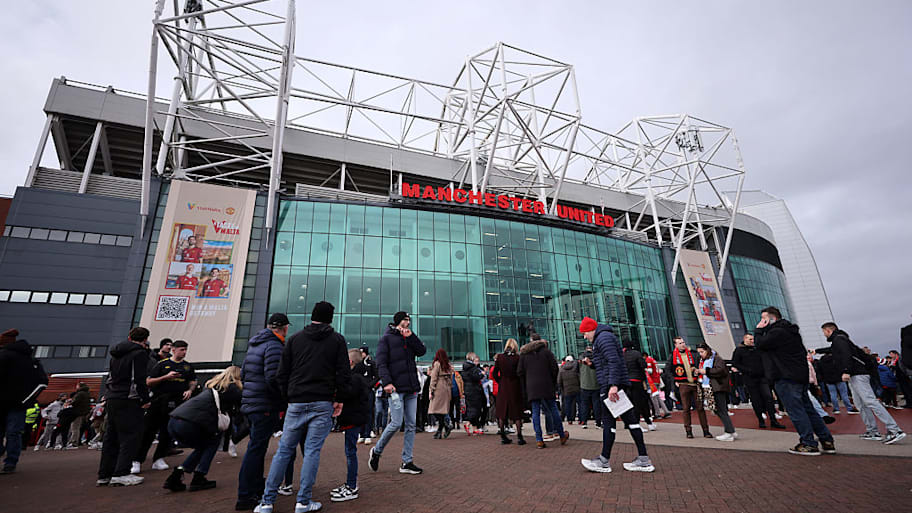
Manchester United intend to privately finance a new Old Trafford stadium, which could inflate the club’s already enormous overall debt up to $4.5 billion (£3.4 billion). But the club is openly optimistic about investors already wanting to be part of the project.
Building a ‘Wembley of the north’ has been an ambition of co-owner Sir Jim Ratcliffe since he completed his initial minority buy-in at the start of 2024. The proposed stadium, for which concept plans as part of a wider urban regeneration vision were unveiled a year ago, will hold 100,000 people to become the largest such venue anywhere in the U.K.

Not much has been said publicly since, but plenty has been happening behind the scenes and chief operating office Collette Roche gave an informal update laying out a rough timeline only last week.
Ratcliffe had initially expressed hope the project might be publicly funded. That was never a realistic idea given that the stadium is primarily for the use and benefit of a private company, but there also wasn’t an alternative funding route proposed. It was always assumed United would need to raise funds privately to build the new Old Trafford, yet only now has that position been stated on record.
A club spokesperson at this month’s fans’ forum, quoted by the Manchester Evening News, said: “Our proposed new stadium will be financed privately, and we continue to have positive conversations with potential investors and all stakeholders.”
Man Utd in Ongoing Talks With New Old Trafford Investors
On Tuesday, Roche appeared on a special episode of the club’s Inside Carrington podcast, declaring that United have “done a lot” of work in terms of exploring investment for the stadium.
“I am delighted to say we've had a lot of interest,” she said. “There’s a lot of people and organizations that want to invest, not just in the stadium but also in the wider stadium district. Those conversations are naturally going to be behind closed doors.”
The other side of the coin is what financing a new stadium might do to the club’s accounts.
United’s latest financial figures revealed that debt has already climbed to $1.8 billion. That burden is made up of ‘legacy debt’ existing from the controversial leveraged buyout that gave the Glazer family control of the club in 2005, as well as other ‘liabilities’ which are primarily outstanding transfer fees owed. The latter by itself accounts for more than $668 million. If a new stadium on the Old Trafford site costs a widely estimated $2.7 billion, it could take United’s debt to $4.5 billion.
United could earn considerably more revenue from a new larger stadium with state of the art facilities and matchday experiences, while improved performances on the pitch look set to restore Champions League football to the season schedule next season. But it looks like it will be a very long time before the Red Devils, debt-free for almost 70 years until 2005, will be in that position again.
READ THE LATEST MAN UTD NEWS, ANALYSIS AND INSIGHT FROM SI FC
- ‘I Don’t Like It’—Benjamin Sesko’s Agent Hits Out at Man Utd Role
- Transfer News, Rumors: Man Utd Approach Real Madrid Defender; Isak Demands Barcelona Move
- Man Utd’s Approach to Manager Search Makes the Job Michael Carrick’s to Lose
- ‘100%’—Man Utd Preparing to End Transfer Nightmare This Summer
This article was originally published on www.si.com as Why Man Utd’s Debt Could Soon Climb to $4.5 Billion.