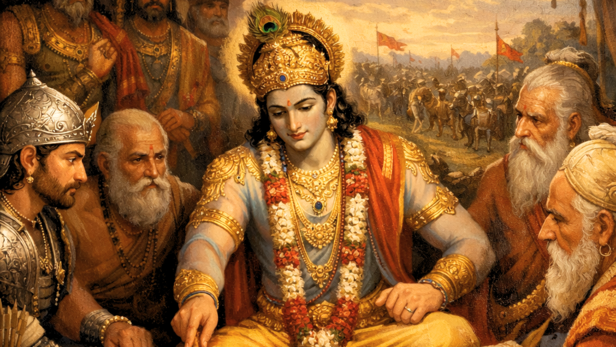
There is something deeply unsettling about the Bhagavad Gita when you truly sit with it, not as a religious text, not as a cultural inheritance, but as a raw moment of human crisis unfolding on the edge of a battlefield where brothers are about to kill brothers, teachers are about to fall to their students, and an entire civilisation stands on the brink of irreversible destruction. The question that quietly disturbs many minds, even today, is not just why the war happened, but why Krishna- God himself, standing right there- did not stop it.
At first glance, it feels almost cruel. Arjuna collapses in despair, his body trembling, his bow slipping from his hands, his mind overwhelmed by grief and moral confusion as he looks at the faces of those he must fight- his own family, his beloved Guru Dronacharya, the grandsire Bhishma- and in that moment, what he seeks is not victory, not power, but escape. He does not want to fight. He does not want blood. He wants the war to end before it begins.