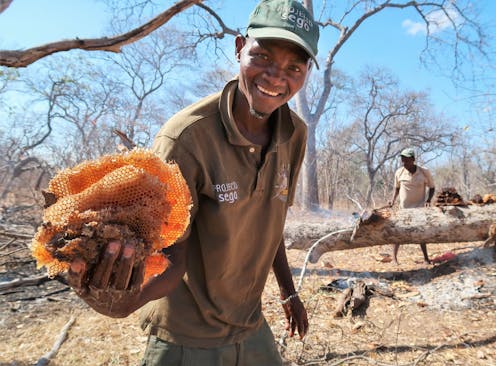
In parts of Africa, a small bird called the Greater Honeyguide (Indicator indicator) helps people search for honey. It approaches people and chatters and flies in the direction of a wild bees’ nest, urging the person to follow. When bird and human reach the nest together, the human honey-hunter knows just what to do: they subdue the bees and harvest the honey with smoke and tools. When that’s done, the little bird feeds on the beeswax and larvae left behind.
This scene has been playing out in Africa for thousands of years. It may even date back to up to 1.5 million years ago when hominins are thought to have gained control of fire. This unique human-bird partnership is a remarkable example of cooperation between people and wild animals that has arisen through natural selection. Today, human-honeyguide cooperation is becoming scarcer because of changing cultures and deteriorating habitats.