
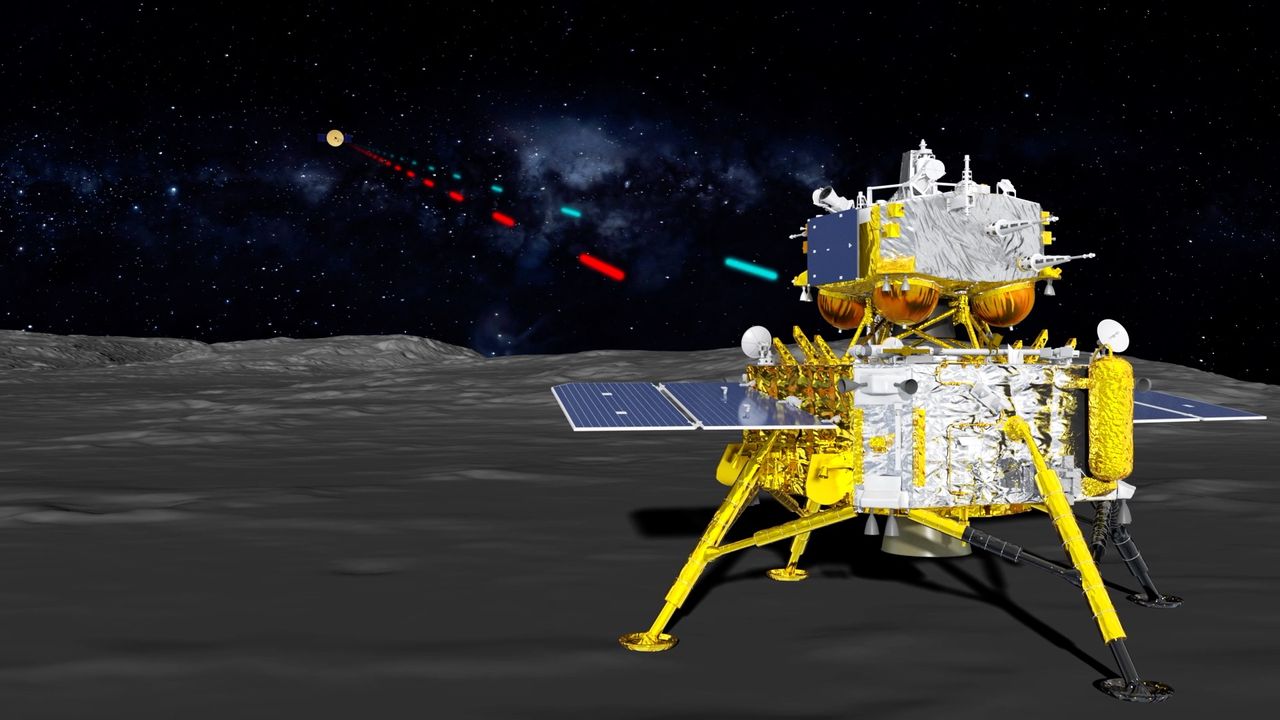
The origin of the strange differences between the near and far sides of the moon are a step closer to being solved, thanks to new findings from China's Chang'e 6 mission that returned samples from the South Pole-Aitken (SPA) basin.
The near side of the moon is familiar to us as the only side that we can see from Earth. Dark regions called maria are vast lava plains filling lowland impact basins, and give us the pattern of the "man in the moon." Yet the far side of the moon, which can only be seen by orbiting spacecraft, has barely any maria and is covered by craggy, cratered and ancient highlands. That's not the only difference between the two hemispheres; the thickness of the moon's crust is thinner on the near side, volcanic activity appears to have occurred at different points in time, and the mantle beneath the far side seems heavily depleted in certain elements compared to the near side.