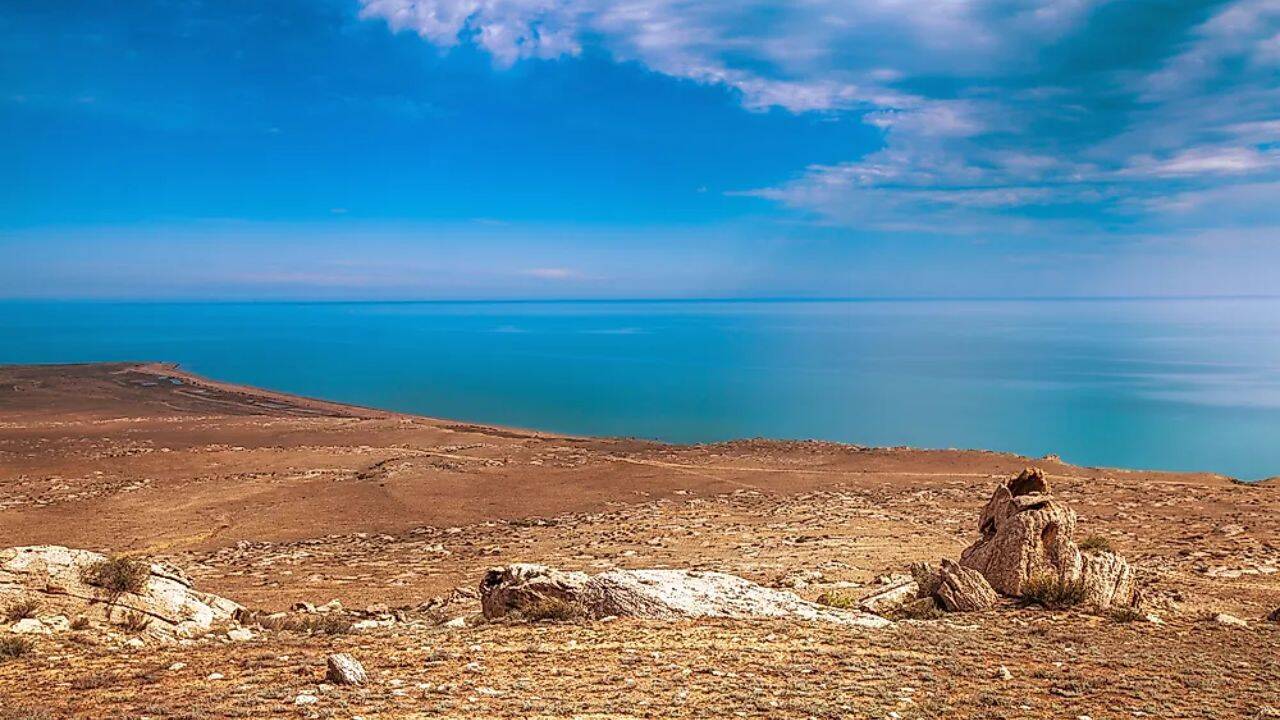
The Caspian Sea occupies an unusual place on the map. It carries the name of a sea, stretches beyond the horizon in every direction from many points along its shoreline, and contains salt water rather than fresh. Yet geographers generally place it in a different category altogether. Despite its immense size and maritime appearance, the Caspian is usually regarded as a lake. Covering an area of roughly 371,000 square kilometres, it is the largest enclosed inland body of water on Earth. Its shores touch five countries, and its waters support distinctive wildlife, major fisheries and extensive oil and gas reserves that contribute to its global importance.
At first glance, that sounds like a technical distinction with little significance outside geography textbooks. In reality, the question has influenced international negotiations, resource ownership, fishing rights and border arrangements among the five countries that surround it. The Caspian sits between Europe and Asia and remains one of the most unusual bodies of water on Earth, largely because it does not fit comfortably into ordinary definitions.