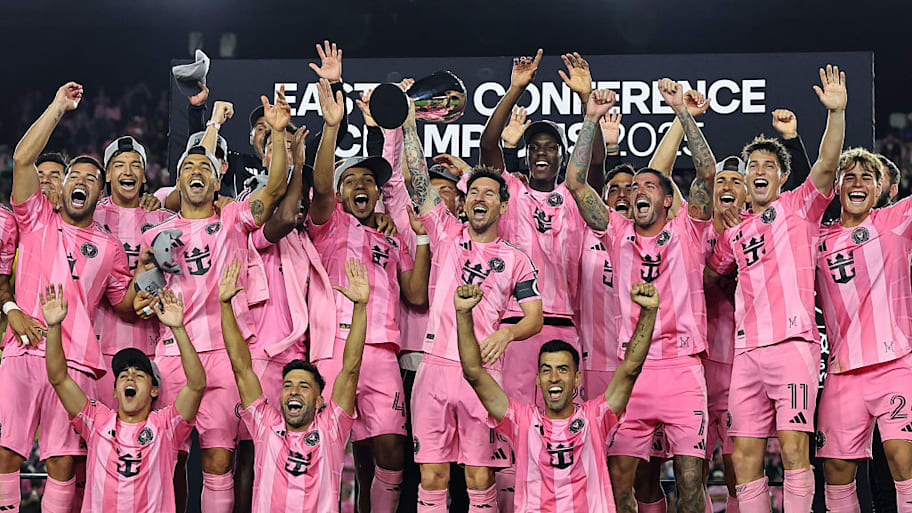
Inter Miami will host the Vancouver Whitecaps in the MLS Cup final on Saturday, despite being the lower seeded team in the MLS Cup playoff bracket.
While the Whitecaps are the Western Conference No. 2 seed and Miami the Eastern Conference No. 3, the Herons earned hosting rights by having a greater points total in the regular season Supporters’ Shield standings. Conference seeding only plays a role in determining home field advantage up until the MLS Cup final.
The Herons amassed 65 points over their 34-match schedule, trailing only the Supporters’ Shield-winning Philadelphia Union and FC Cincinnati.
Vancouver put together a club-record 63-point season, good enough to tie San Diego FC for the top of the Western Conference, but lost out on the top spot because of the total wins tiebreaker. As such, the Herons will host the final at Chase Stadium on Saturday, Dec. 6.
Miami and Vancouver have not met in MLS action this season, but faced each other in a two-legged series in the Concacaf Champions Cup semifinals. Vancouver won each leg 2–0 and 3–1 respectively to advance over the Herons.
How Many Games is the MLS Cup Final?
The MLS Cup champion will be decided in a single match. Should the teams be tied after 90 minutes, the final would include two 15-minute halves of extra time before penalties if the extra periods failed to produce a winner.
Although MLS Cup has always been a one-match showdown since the first edition in 1996, the hosting formats have changed. From the inaugural MLS Cup through to 2012, the league hosted the match at a predetermined neutral venue. Since then, home field advantage has been given to the highest remaining team in the Supporters’ Shield table.
In MLS history, a team playing on their home pitch has won 12 of 16 times, swaying the odds in Inter Miami’s favor.
Should Vancouver come away as champions, they would be the fourth club in MLS history to win either the U.S. Open Cup or Canadian Championship and MLS Cup in the same season.
READ THE LATEST MLS NEWS, TRANSFER RUMORS AND GOSSIP
This article was originally published on www.si.com as Why Inter Miami Are Hosting MLS Cup Final Despite Seeding Discrepancy.