Get all your news in one place.
100's of premium titles.
One app.
Start reading
The Conversation
The Conversation
Stephan Blum, Research Associate, Institute for Prehistory and Early History and Medieval Archaeology, University of Tübingen

Why Indiana Jones is the best and worst thing to happen to archaeology

When Egyptian archaeologists announced the discovery of a “lost golden city” near Luxor, Egypt, in 2021, headlines erupted around the world: Treasure. Revelation. A once-in-a-century find.

For archaeologists, however, the most notable feature was not the gold that had yet to materialise, but how quickly the story became framed as adventure. Years of survey, stratigraphic mapping and ceramic analysis barely registered.

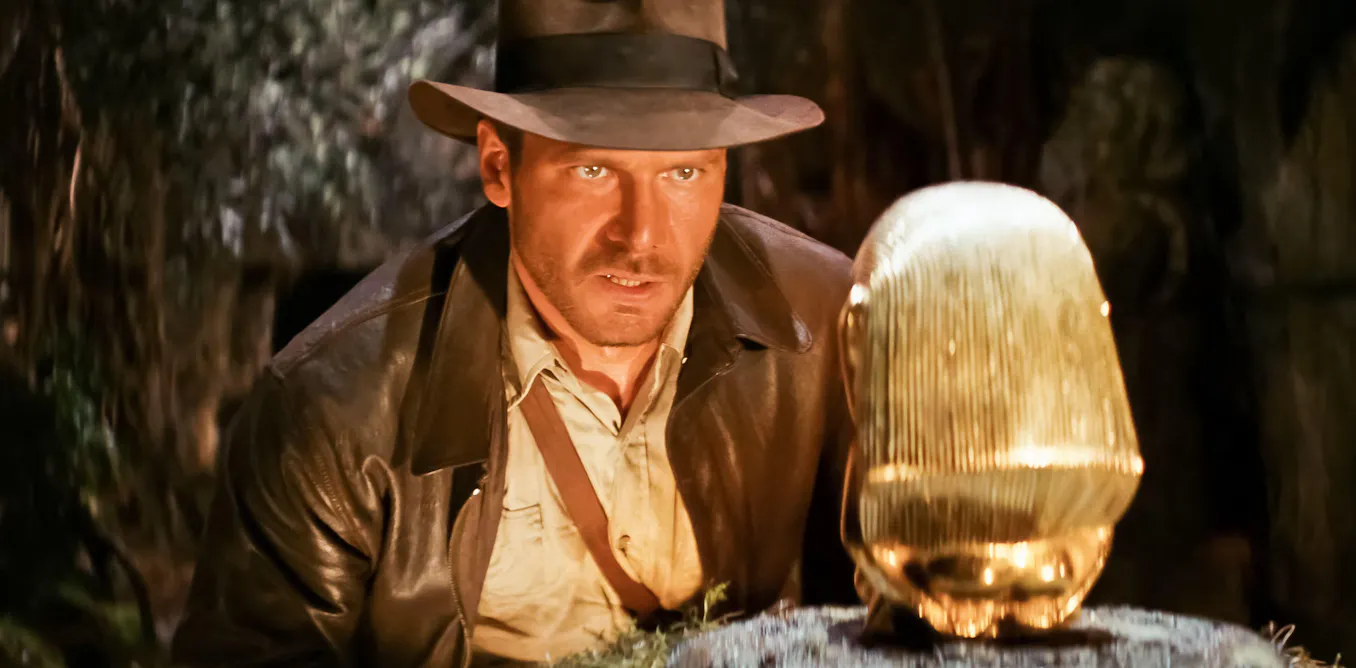
Archaeology is one of the rare disciplines where popular culture does not simply reflect public understanding, but actively produces it. Many people encounter archaeology not through excavation reports or museum catalogues, but through a man in a fedora cracking a whip in a torchlit tomb.

In my discussions on archaeology and popular culture at the University of Tübingen, this becomes immediately clear. Students rarely arrive with expectations shaped by site reports or specialist literature – they arrive with Indiana Jones.

Archaeology as adventure

The idea of archaeology as adventure predates the discipline itself. It grew from 19th-century colonial exploration, when the past was treated less as knowledge than as loot. Ancient sites were framed as reservoirs of exotic objects to be extracted and displayed. Even earlier, in the 17th century, travellers like Cornelis de Bruyn returned from the Levant as minor celebrities.

Victorian adventure literature – most influentially H. Rider Haggard’s King Solomon’s Mines (1885) – presented distant landscapes as backdrops for hidden wealth and lost civilisations. Even as archaeology became an academic discipline, it remained entangled in this narrative. Museums displayed artefacts as spectacular fragments of vanished worlds, frequently detached from their archaeological context.

Popular writing extended this logic. C.W. Ceram’s Gods, Graves and Scholars (1949) translated archaeological research into a sequence of dramatic discoveries. He invited readers to experience excavation as a series of moments of revelation. In doing so, he helped stabilise a particular narrative form: archaeology as heroic encounter with the past, driven by exceptional individuals and spectacular finds.

Cinema has amplified and standardised this. From The Mummy (1932) to Raiders of the Lost Ark (1981) and later Tomb Raider (1996) and Assassin’s Creed (2007), archaeology became a recognisable genre defined by hidden chambers, booby traps and solitary heroism.

The persistence of the adventure narrative is not difficult to explain. Archaeology deals in inherently compelling material: objects, ruins, human remains. Popular media selects its most cinematic moments – the uncovered tomb, the deciphered inscription, the glittering artefact – and presents them as the story itself.

In the Indiana Jones films, knowledge arrives through revelation. A hidden chamber opens. A mystery resolves. The past appears to have been waiting to be discovered. But real archaeology works almost in reverse.

Beyond Hollywood

Years spent documenting crumbling walls, fragile ceramic shards and faint traces of settlement rarely produce moments of spectacle. Fieldwork often takes place under difficult conditions, in heat, dust or mud and proceeds through measurement, recording and interpretation. Knowledge constructed, not discovered, and then argued over, revised and sometimes abandoned. The adventure narrative erases this process.

The so-called “lost golden city” of Aten illustrates this tension. Announced as one of the most significant discoveries in Egypt in decades, it generated global headlines before substantial analysis had been published. The “golden” label itself remained unexplained. The revelation circulated widely; the knowledge production that followed remained slow and ongoing.

The adventure model also carries ethical implications. Questions of ownership, restitution and Indigenous heritage sit uneasily within a framework that treats artefacts as objects to be found rather than evidence embedded in living cultural and political contexts. The figure of the lone western excavator recovering lost pasts has a colonial genealogy that contemporary archaeology continues to confront.


Read more: Returning looted artefacts will finally restore heritage to the brilliant cultures that made them


Digital platforms intensify these dynamics further. Instagram and TikTok privilege visual immediacy and reward moments of uncovering over long-term interpretive labour. Algorithmic visibility tends to favour spectacle, not process.

And yet the adventure myth is not simply an error to be corrected. To dismiss it entirely would be to misunderstand its cultural function.

Archaeology and the public imagination

Without Indiana Jones, many people would rarely think about the deep human past at all. Museum attendance, research funding and student interest are all, in part, sustained by a cultural imagination in which archaeology matters enough to be exciting.

In teaching, this dynamic is familiar. Students often arrive drawn by cinematic archaeology, but many leave engaged by something else entirely: the realisation that the most unassuming fragment of a broken pot or worn object can reshape historical understanding.

There is also a reflexive dimension to this story. Archaeologists themselves participate in constructing the narratives that circulate about their work. Press releases announcing “lost cities” or “once-in-a-century discoveries” are not authored by Hollywood. The tension between public communication and scholarly precision is internal to the discipline.

Most people will never read an excavation report. Their understanding of archaeology is shaped through stories, not technical documentation.

Indiana Jones would struggle to obtain a modern excavation permit. Most archaeological breakthroughs occur far from collapsing temples – in comparative analysis, in computational reevaluation of legacy datasets, in the slow refinement of scholarly consensus. But accuracy alone does not determine cultural influence.

The adventure myth compresses a complex, distributed and often invisible process into a narrative that can be recognised at a glance. It obscures much of what archaeology is, but it also sustains its place in public imagination.

The more difficult question is what archaeology chooses to do with the attention it generates – and what kinds of stories it tells once the door has been opened.

This article was originally published on The Conversation. Read the original article.

Sign up to read this article
Read news from 100's of titles, curated specifically for you.
Already a member? Sign in here
Related Stories
Top stories on inkl right now
One subscription that gives you access to news from hundreds of sites
Already a member? Sign in here
Our Picks
Fourteen days free
Download the app
One app. One membership.
100+ trusted global sources.