Get all your news in one place.
100's of premium titles.
One app.
Start reading
The Economic Times
The Economic Times
Hardeep S Puri

Why India stayed resilient through the Hormuz crisis

When the Strait of Hormuz closed at the end of February, GoI chose a single priority from which everything else would follow- that the citizens of our country, specially those who are the most vulnerable, had to be protected from the unprecedented supply and price disruptions. This instinct of Prime Minister Narendra Modi has held through almost four months of the largest energy disruption in modern history.

The verdict on India had been written even before the facts were in: a country importing more than 85% of its crude, the argument ran, could not survive the closure of Hormuz through which more than 20-30% of the world’s hydrocarbons moves. Pumps would run dry within days, prices would run wild (as they did in many other nations) and the economy would crumble.

Today the stocks are full, the pumps are open, and the Indian consumer has paid less for energy through this crisis than any consumer in the world. It is worth setting out, plainly, how that was done, and the false narratives that had to be countered along the way.

The strikes on Iran on 28 February shut the single most important chokepoint on the global energy map, and for India it was LPG that presented the sharpest test as US and West Asia are the only two major LPG exporters in the world. Nearly 60% of India’s LPG consumption used to be supplied from West Asia, and much of that supply went, almost overnight, to zero. Then began a war room operation on both supply and demand side to track cargo by cargo, refinery by refinery, bottling plant by bottling plant so that flame keeps glowing in every kitchen in the country.

On supply side, LPG Control Order was passed on 8 March, which mandated all refineries to divert all their C3-C4 carbon streams to maximise LPG production. Refineries that had never made cooking gas were reconfigured within a few days and production was raised from 35 TMT a day to 54 TMT a day.

Also Read: No real spike in petrol, diesel prices in India despite global crude oil market volatility: Hardeep Singh Puri

At the peak of war, when no vessel was moving out of Hormuz, over 12 Indian LPG vessels were quietly moved out of Hormuz without paying any tolls--he largest number for any country. Cargos were secured and ship to ship transfers were done from Yanbu and Fujairah ports down the Red Sea route.

Empty vessels were sent even as cargoes were being secured from the US, vessels were sent inside Hormuz to get new cargos and fresh supply lines were opened with several countries such as Algeria, Japan and Canada. Every producer we had ever dealt with, inside the Gulf and outside it, stood with us.

Supply, though, was only half of the effort, because demand also had to be prioritized. Cooking gas going to homes was protected in full and digital authentication code was made mandatory to prevent diversion of this precious supply by black marketers. 25 days and 45 days limit was imposed so that every citizens gets cylinders when he needs it but no one is able to hoard cylinders.

As commercial cylinders are not regulated and any one buyer could have bought entire supplies available at once, it was routed through industry associations and state civil supplies departments so that everyone gets enough but no one can hoard. Industry was moved onto piped natural gas, large kitchens and establishments were encouraged to fall back on other fuels wherever possible and household piped gas and CNG were kept in the no-cut category.

Entire government came together to enable shift to piped gas connections through faster municipal permissions. As many genuine users including migrants also used to buy cylinders from agents who could not now procure due to DAC requirement, a 5 kg free trade cylinder was made available across the country until its offtake had roughly doubled.

Doomsdayers started spreading false rumours and circulating fake videos to create a perception of shortage, panic and anarchy even as GoI took multiple path breaking steps everyday in a war room mode to ensure that there was no real supply disruption anywhere in the country.

Also Read: Indian companies willing to deepen presence in Venezuela, says Minister Hardeep Singh Puri

Behind all of it stood the resolve of Prime Minister Modi that the Indian citizen would be shielded whatever the cost to the exchequer, through the energy crisis after the Russia-Ukraine conflict and life threatening COVID challenge. Between February and June, the international benchmark for cooking gas, Saudi CP, rose by nearly 50%, and yet a cylinder that would cost more than ₹1,600 at that import-linked rate still reaches an Ujjwala home at ₹642.

GoI absorbs roughly ₹900 loss on each Ujjwala cylinder, and close to ₹600 on every cylinder going to every other household, so that all Indian families are today paying much less for their cooking gas than households in Pakistan, Bangladesh, Nepal, Spain or France.

A very courageous and bold central excise cut of ₹10 a litre in March absorbed substantial part of the price shock as crude had nearly doubled and PSU oil companies absorbed daily losses running to over Rs 500-Rs 1000 cr every day through this quarter.

Across those same months, petrol at an American pump rose by more than 40% and in Britain by close to 20%, with double-digit increases across much of Europe, while at an Indian pump the rise was held to around 7%.

Another narrative was that the wider economy would be swept away, that foreign reserves would drain and our economic prospects darken.

The reserves answer for themselves, standing near $690 bn, down only modestly from the all-time high recorded in the very week the conflict began and Indian economy grew at 7.8% last quarter.

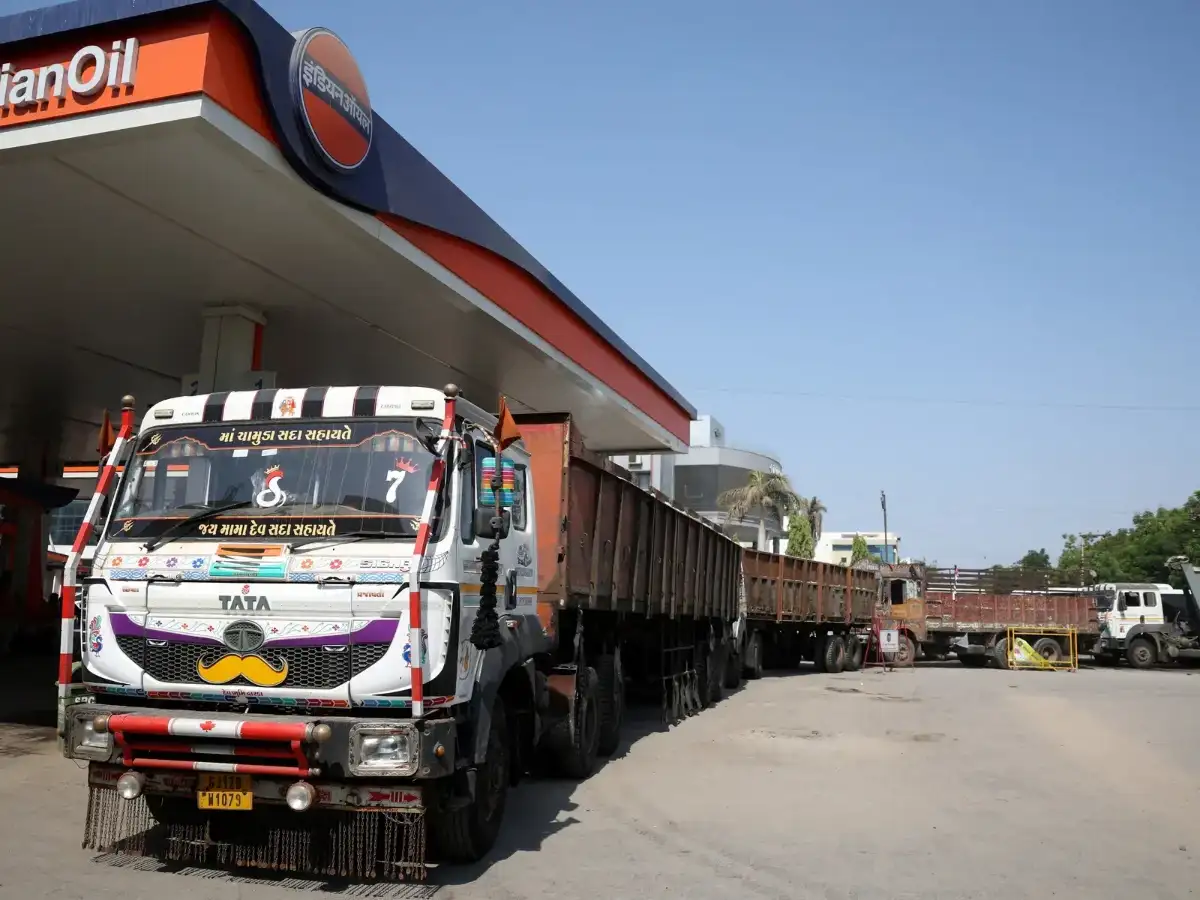
It was said that India held only 8-9 days of stock and had no real capacity to hold more, a claim that misunderstands how a large energy economy of 1.5 bn people actually works. You do not run a country off a few caverns, because energy locked underground earns nothing and costs a great deal to hold. You run it instead through a system of import terminals, depots, pipelines, refineries and storages spread across the country, and India today has 24 refineries, more than 47,000 km of oil and gas pipelines, and over 1 lakh petrol pumps that serve nearly 8 cr people every day.

The honest test of that system is not a figure on a slide of a doomsday predictor. It is whether, almost four months into the largest energy disruption of modern times, the country has had to force rationing on its people, ration fuel by odd and even number plates, send its offices home or shut its pumps at 5pm everyday. India had to do none of these things.

All of this was possible only because the ground had been prepared in the years before. The widening of our crude basket from 27 countries to 41, the doubling of our import terminals, and the pipelines and reserves built across a decade under Modi were not abstractions when the strait finally closed; they were the very reason the lights stayed on.

A crisis of this magnitude shows a country its real mettle. India endured the closure of Hormuz and supplied itself through it without any shortages anywhere in the country. Learning from this experience, we will build additional capabilities to strengthen our energy resilience but when the history of this conflict comes to be written, one line, deserves to survive: the largest energy shock in living memory reached our shores and 150 crore Indian citizens were shielded.

The author is minister for petroleum & natural gas, GoI

Sign up to read this article
Read news from 100's of titles, curated specifically for you.
Already a member? Sign in here
Related Stories
Top stories on inkl right now
One subscription that gives you access to news from hundreds of sites
Already a member? Sign in here
Our Picks
Fourteen days free
Download the app
One app. One membership.
100+ trusted global sources.