
Home decorator Lara Winter is one of Ideal Home's new Open House contributors, sharing her thoughts on revamping a 200 year old cottage to make it right for modern family life. See the rest of her articles here.
It took me years to realise this, but my decorating sweet spot isn’t minimal… and it definitely isn’t maximal. I love colour too much to live in a sea of beige, but I also don’t want my house to feel like it’s shouting at me from every corner. What I finally landed on is what I now call 'calm colour': spaces that feel soothing and grounded, with joyful pops of colour layered in thoughtfully.

If that sounds like your vibe – colour-loving but craving calm – here’s how I do it.
Step One: I start with a soft, warm base
Calm colour always begins with the background. Walls set the emotional tone of a room, so I keep them neutral or softly coloured but warm. Think creamy whites, gentle pastels, muted greens, or butter yellows rather than anything stark or icy.
These colours work like a gallery wall backdrop: they quietly hold everything together and let the fun stuff shine. A deep green wall can feel cocooning rather than dramatic, and a butter yellow can glow without overpowering the room. The key is warmth. Cool greys tend to drain a space; warm neutrals make everything else feel intentional.

Step Two: I add colour where I can change it
Here’s where the joy comes in. Once the walls are calm, I add colour through things I can move, swap, or repaint. Art is my favourite place to go bold – colourful prints, unexpected frames, slightly clashing combinations. Against a neutral wall, they feel curated rather than chaotic.
Furniture is another great playground. A red shelf. A painted picture frame. Even a velvet orange sofa (yes, really). When the room itself is calm, these moments feel like personality, not noise.
I always ask myself: 'If I get bored of this in five years, can I change it without repainting the whole house?' If the answer’s yes, I’m in.
Step Three: Joyful, not maximal
I love colour, but I don’t want it everywhere at once. Calm colour is about restraint, not fear. You can absolutely mix shades and tones, just give your eye somewhere to rest.
Instead of ten bold things fighting for attention, choose two or three moments to shine. Let the rest be supportive. It’s the difference between a room that feels playful and one that feels… busy.
If you're interested in becoming one of our Open House creators, sign up to learn more here and we'll be in touch with more details very soon.
Step Four: Bedrooms should feel layered and calm
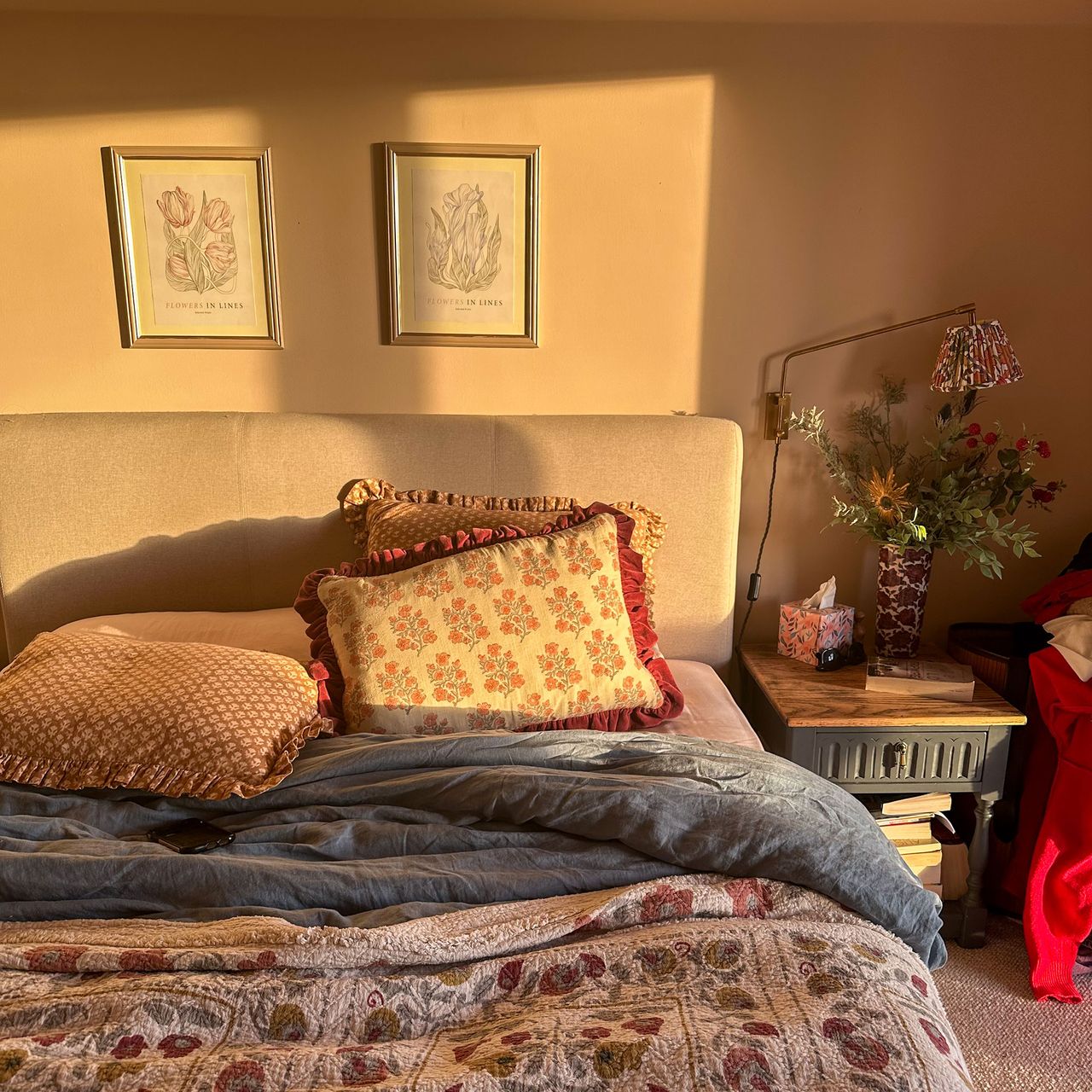
Our bedroom is the perfect example of this balance. The walls are painted in Farrow & Ball's Setting Plaster – a warm, subtle pink that feels soft and grounding rather than sweet.
From there, I layer in interest: patterned bedding, a contrasting throw, a coloured lampshade, maybe a slightly mismatched cushion or two.
Nothing is screaming, but nothing is flat either. Texture and gentle contrast do a lot of heavy lifting here. The result is a space that feels cosy and collected but still restful enough to actually sleep in.

Step Five: Bathrooms need restraint (with one twist)
Bathrooms are where calm colour really shines. I keep walls and tiles neutral (soft whites, warm stone tones) but then add one confident element. In our case? A terracotta checkered floor.
That single hit of colour and pattern brings so much personality, but because everything else is simple, it still feels spa-like rather than busy. If you’re nervous about colour, this is a great place to start: one bold choice, surrounded by calm.
Step Six: I think in “pops”, not palettes
I don’t sit down and plan a strict colour palette. Instead, I think in pops. Where can I add something unexpected? Where can I repeat a colour quietly – a cushion here, a frame there – so it feels intentional without being obvious?
Your brain loves repetition, even when you don’t consciously notice it. That’s the magic of calm colour.

So, what’s the takeaway?
Calm colour isn’t about playing it safe. It’s about creating a peaceful foundation and then layering in the things that make you smile. Colour doesn’t have to be loud to be joyful, and calm doesn’t have to mean boring.
If you love colour but crave a home that feels restful, start with warm, gentle walls. Then add personality through art, furniture, textiles, and little moments of surprise. Let your home feel happy but not shouty.
Trust me: your nervous system will thank you.