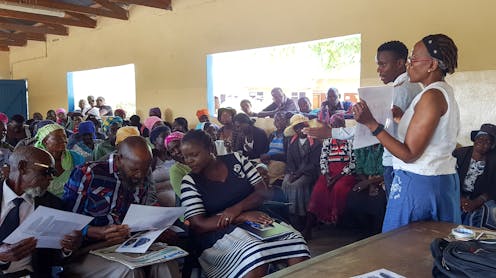
“You know what’s wrong with scientific power? It’s a form of inherited wealth. And you know what assholes congenitally rich people are.” That’s how filmmaker Michael Crichton put it in Jurassic Park nearly 30 years ago. The problem of scientific colonialism has not, however, gone away.
Researchers sometimes carry out fieldwork with minimum local engagement, dropping in and extracting their data like the well-trained crew of a military Chinook. So-called “helicopter research”, where research teams rarely enable local collaborators to steer research-design and often fail to involve local communities or provide local access to data, was a recent topic of debate at a conference on academic integrity. Scientists and ethicists agreed that field research falls short when it comes to academics from high-income countries carrying out field research in places that lack resources.