Get all your news in one place.
100’s of premium titles.
One app.
Start reading
Sports Illustrated
Sports Illustrated
Sport
Eva Geitheim

Why Hall of Fame Voters Made the Right Choice Leaving Eli Manning Out

The Pro Football Hall of Fame voting committee took a big hit to its credibility when it egregiously did not elect Bill Belichick into the Hall on first ballot, but it did make the sound choice by leaving Eli Manning out of Canton for the second straight year.

On Tuesday, The Athletic reported that Manning did not make the Hall of Fame in his second year of eligibility. A finalist for the honor, Manning was correctly passed up for the second straight time.
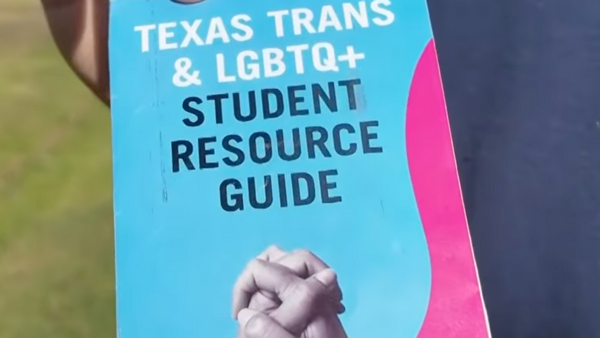
To be clear, Manning had a great career that any football player would be proud of. He won two championships, played for 16 years and avoided missing significant time due to injury. However, that is not enough to make him a Hall of Famer or one of the best players in the history of the game.

As Manning’s credentials for the Hall of Fame continue to be debated, here are three clear reasons he should not be inducted into Canton.

His Super Bowl wins aren’t enough

The best argument for Eli Manning to make the Pro Football Hall of Fame is that he won two Super Bowls. While an incredible accomplishment that makes him exceptionally worthy of entering the Giants Hall of Fame and having his jersey retired by the franchise, an honor he received in 2021, it does not make him worthy of a bust in Canton.

The narrative that “Manning beat Brady and Belichick” in two Super Bowls also undermines the efforts the Giants defense played in winning two rings—particularly in their first Super Bowl matchup. Through three quarters, Manning only led the Giants to a single field goal. Thanks to the Giants defense sacking Brady five times and the second-highest scoring offense in NFL history to just 14 points, Manning had the opportunity to lead New York on two touchdown drives in the fourth quarter to win the game 17–14. Over both Super Bowl appearances, Manning combined for 551 yards, three touchdowns and one pick.

Manning’s Super Bowl performances were not of the caliber of Steve Young tossing six touchdowns vs. the Chargers, Doug Williams throwing four touchdowns to beat the Broncos, or even fellow Giants legend Phil Simms completing 22-of-25 passes in his Super Bowl victory in 1986–87. Manning was exceptionally clutch, but it’s not like he single-handedly torched the Patriots in either game. Even Nick Foles threw for 373 yards and scored four total touchdowns to defeat Brady and Belichick in a high-scoring affair.

Manning’s Super Bowl résumé is better than most, but that doesn’t make him a Hall of Famer. Both Jim Plunkett and Simms also won two Super Bowls and are not in the Hall of Fame (though Simms was injured when the second Super Bowl took place.)

Two rings do not make up for the fact that for much of his career, Manning was not a consistent winner. No, winning does not solely fall on the quarterback, but Manning’s .500 career record is well below what the vast majority of Hall of Famers were able to accomplish. Over the final eight years of his career, he made the postseason just once. The best quarterbacks in the NFL are able to consistently lead the teams to the playoffs over their careers, and Manning couldn’t. Manning’s lack of consistent winning over his entire career should outweigh a couple great playoff runs when it comes to Hall of Fame honors.

His statistics are overrated

One of the primary arguments in favor of Manning making the Hall of Fame is that he ranks 11th all-time in passing yards and 11th all-time in career passing touchdowns. While ranking highly in major statistics is important, ranking 11th in two major statistics shouldn’t be as strong of an argument for the Hall of Fame, especially given the context of Manning’s numbers.

For one, counting stats for quarterbacks are often overrated. Twenty-three of the quarterbacks currently in the Pro Football Hall of Fame played all or significant parts of their career before the NFL moved to a 16-game schedule in 1978. This means they were either playing in 12-game or 14-game seasons, automatically lowering their abilities to put up the numbers that Manning did.

Beyond that simple fact, boosting the importance of Manning’s numbers when he played in a favorable passing era is misguided. The quarterbacks who played before the advent of the 16-game schedule also played before the “Mel Blount Rule” was installed in 1978, which limits the amount of contact defensive players could have on receivers. Rules have only become more advantageous for quarterbacks and receivers over the years and in turn, opened up the passing game.

When taking a closer look at where Manning lands on these two all-time lists, it makes clear that he ranks below his top peers in both categories. Outside of Dolphins great Dan Marino and Brett Favre, who overlapped with Manning at the start of his career, all nine passers above Manning spent the majority of their careers in the same era Manning did. When comparing his career to the other quarterbacks at the top of these lists, they reflect that Manning was not the same caliber of player as a number other quarterbacks that played in the same era.

Here’s a look at the all-time leaders in passing yards and touchdowns

Quarterback Passing Yards Passing Touchdowns Years
Tom Brady 89,214 649 (1st) 2000 to 2022
Drew Brees 80,538 571 (2nd) 2001 to 2020
Peyton Manning 71,940 539 (3rd) 1998 to 2015
Brett Favre 71,838 508 (5th) 1991 to 2010
Aaron Rodgers 66,274 527 (4th) 2005 to 2025
Matthew Stafford 64,516 423 (7th) 2009 to 2025
Ben Roethlisberger 64,088 418 (9th) 2004 to 2021
Philip Rivers 63,984 425 (6th) 2004 to 2025
Matt Ryan 62,792 381 (10th) 2008 to 2022
Dan Marino 61,361 420 (8th) 1983 to 1999
Eli Manning 57,023 366 (11th) 2004 to 2019

That leads us to this final point ...

He wasn’t one of the best quarterbacks of his era

There are five quarterbacks who saw their careers largely overlap with Manning that are expected to make the Hall of Fame, or have already been inducted—Tom Brady, Peyton Manning, Drew Brees, Aaron Rodgers and Ben Roethlisberger.

Not only do all five of them rank higher on the all-time passing yards and passing touchdowns list, but they are all more accomplished than Manning, from the number of awards they’ve won to their superior records.

Here’s a closer look at how Manning falls short of his contemporaries in multiple categories.

Accolades Tom Brady Peyton Manning Drew Brees Aaron Rodgers Ben Roethlisberger Eli Manning
Super Bowl wins 7 2 1 1 2 2
Super Bowl MVPs 5 1 1 1 0 2
NFL MVPs 3 5 0 4 0 0
Offensive Player of the Year awards 2 2 2 0 0 0
All-Pro selections 3 first-team, 3 second-team 7 first-team, 3 second-team 1 first-team, 4 second-team 4 first-team, 1 second-team 0 0
Seasons as passing TD leader 5 4 4 2 0 0
Seasons as passing yards leader 4 3 7 0 2 0
Playoff trips 20 15 10 13 12 6
Career Win % .754 .702 .601 .636 .670 .500

Outside of the numbers, win percentage and major league awards, Manning was not often considered one of the very best quarterbacks during his playing days. The Hall of Fame is meant to showcase the greatest players of the game, and Manning wasn’t one of the greatest of his era. In comparison to Brady, Brees, Rodgers and his own brother Peyton, he wasn’t even near the same tier.

Bonus: the “story of the NFL” argument is overrated

To close out, it’s important to mention that one of the top arguments used in favor of Manning—“you can’t tell the story of the NFL without him”—is another overrated narrative. The story of the NFL can also not be told without Dwight Clark or David Tyree, and neither are Hall of Famers. On the contrary, the story of the NFL can certainly be told without Larry Wilson and Marcus Allen, but both rightfully earned their spots in the Hall. Manning had some epic moments on the gridiron, but that is not enough to make him one of the greatest football players in the history of the game—especially when he is far from being one of the greats of his own era.


More NFL on Sports Illustrated


This article was originally published on www.si.com as Why Hall of Fame Voters Made the Right Choice Leaving Eli Manning Out.

Sign up to read this article
Read news from 100’s of titles, curated specifically for you.
Already a member? Sign in here
Related Stories
Top stories on inkl right now
One subscription that gives you access to news from hundreds of sites
Already a member? Sign in here
Our Picks
Fourteen days free
Download the app
One app. One membership.
100+ trusted global sources.