There is no let-up for Stephane Ratel and his working group, who have recently been grappling with the issues facing the GT3 platform.
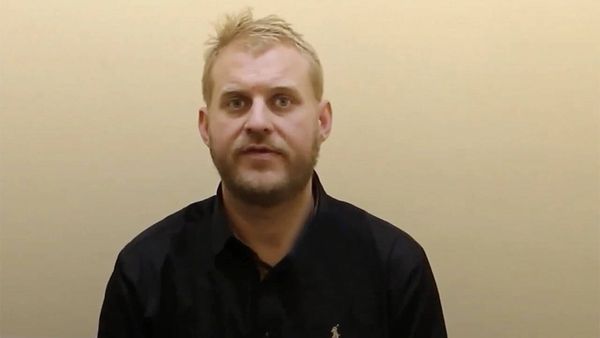
The grids in every championship built around GT3 machinery remain healthy and, on the surface at least, there appears to be little risk of declining participation. Yet SRO Motorsports Group founder and CEO Ratel caused quite a stir during the Spa 24 Hours when he warned that spiralling costs are threatening the long-term future of the category.
Those comments were aimed at manufacturers developing ever more extreme GT3 cars, moving away from the road-first philosophy that has long underpinned the category in favour of bulding prototypes that are subsequently turned into street models.
At GT World Challenge's Misano too, Ratel was asked what reactions had come from manufacturers and industry insiders after he’d dropped the so-called bombshell.
“Well… I haven’t really dropped any bombshells; it’s simply the reality of the situation,” Ratel said.
“The important thing is that the key parties involved have an agreement and that they meet with the relevant governing body. We hold meetings with the GT Commission and we always discuss it.
"Of course, I’m involved too, because I created the GT3 category myself; as for the FIA championships, we share the promotion with them. Whilst for GT2 and GT4, as SRO, we do as we please, for GT3, we need the FIA by our side.’
Ratel clarified that having the FIA as a strategic partner is an added bonus, but that it is not compulsory for all sportscar championships to use GT3 cars.
“I have put the points for discussion on the table; I think they should be taken into consideration and acted upon. If this is not done, GT3 will certainly go ahead, but with far fewer teams involved," he said.
"We don’t want a new GTE that lasts for five years and then disappears because the costs become unsustainable and the manufacturers pull out.
“The same thing happened with GT1, where the cars were built and managed by the manufacturers for major events, with full grids right from the start, but which then began to run into problems over time because the manufacturers pulled out due to the costs. It always happens like that.
“Before that happens, my proposal is to relaunch the GT3 by rethinking the category with a new platform. The best example comes from our friends at the ACO, who have already laid the foundations for the new Hypercar category in 2030. The ACO and the FIA have acted well in advance, so as to give the manufacturers time to design the cars."
On the subject of the upcoming GT3 cars, he added: "As far as I’m concerned, if they want to create a new GT1 category to run alongside GT3, that’s fine.
"If the manufacturers agree and want to do it – following technical regulations that specify the construction of a certain number of road-going-based cars, clearly defining what it means to compete in GT1 and homologating them – then let them go ahead. But we need dedicated regulations because these are special cars. Full stop!"
'The FIA must decide what to do'
The Frenchman stressed that the quality of a championship and its vision for the future are what ultimately matter most, particularly because it is better to address problems early than wait until they become critical.
“I’ll say it again, I’m not at all opposed to this; I believe there are fantastic and suitable cars on the market, just as there have been in the past," he explained.
"But let’s also look at the prices of those cars, such as the Mercedes-AMG GT1 or the Maserati MC12. You need to know exactly what you want to achieve.
“The FIA must decide, together with the manufacturers, what to do, bearing in mind that we’re talking about two different markets with their own objectives. It may be that some people genuinely want a new GT1; there are excellent cars such as the Pagani or the Aston Martin Valhalla, and so on.
"As far as I’m concerned, they’re perfectly free to do as they please; they’d be brilliant at Spa, but the GT World Challenge will continue to feature GT3 cars. Let’s not forget that GT1 and GT3 are categories governed by FIA homologation, whilst GT2 and GT4 are governed by SRO, in collaboration with the Belgian Motor Sport Federation.
"Today, however, we are at risk, and a governing body must be able to make predictions and look to the future, taking decisions in advance. We cannot risk going down the same path as the DTM, which found itself at a dead end with Class 1.
“Governance also means saying no, if necessary. And I said this many times when we represented around 80% of the GT3 market and was presented with car projects unsuitable for our category. Quite a few walked away very annoyed, but in doing so I ensured further years of success for GT3.
“Unfortunately, today we’ve dropped to 50% of the market and I’m probably no longer in the same position to say no. I know some are coming in, like Toyota, whilst others might return, like Audi. But the truth is that we don’t need 11 or 12 brands involved; things can work just as well with fewer manufacturers, we’d simply have more cars from the same manufacturer and different teams.”
Ratel also outlined his vision for the future of the grid, stressing that the priority is to maintain long-term stability and healthy competition rather than chase inflated entry numbers driven by short-term enthusiasm.
"For years, the DTM has carried on with just three manufacturers on the grid, so I think it’s better to have 7–8 different [manufacturers] that guarantee a solid presence on the grid, rather than 12, but with fewer cars," he said.
He added that grid sizes are ultimately determined by the strength of a championship's overall package, including its media exposure, spectator interest and the level of professionalism among its teams and drivers.
"If we look at the WEC, there are some very promising young drivers in the Hypercar class and the manufacturers are investing in their careers," he said. The more situations like that there are, the better – that’s why I say we need to rethink the fundamentals. When you then have figures like Valentino Rossi or Ferrari involved, it’s clear that interest grows across the board. And that’s important for the sport."