Get all your news in one place.
100’s of premium titles.
One app.
Start reading
The Free Financial Advisor
Brandon Marcus

Why Good Credit (670–739 Score) Gets You 21%–24% APR in 2026

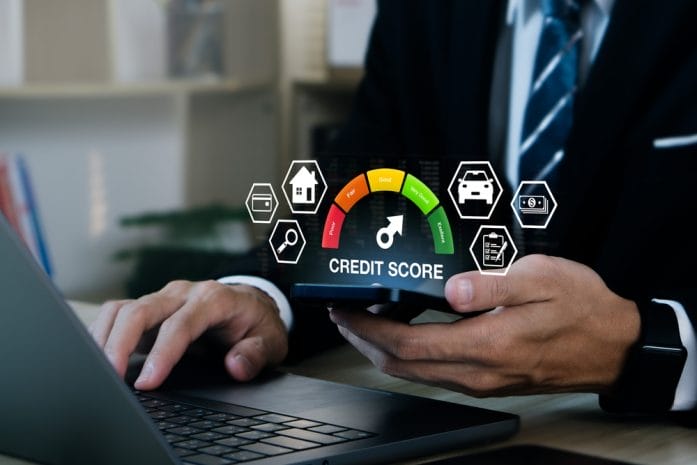
Image source: shutterstock.com

You did everything right. You paid your bills on time. You kept your balances under control. You worked your way into the “good credit” range with a score between 670 and 739, expecting better rates, better offers, and better financial breathing room. And then 2026 shows up… and your APR offers land between 21% and 24%.

Here’s the truth most lenders won’t say out loud: “good credit” doesn’t mean “cheap money.” It means “less risky than average,” and in today’s financial environment, that distinction matters more than ever. This isn’t about you messing up — it’s about how modern lending, inflation pressure, and risk models collide in a world where money simply costs more to borrow.

The Economy Changed the Game, Not Your Credit Score

APR doesn’t exist in a vacuum. It’s tied to broader interest rates, inflation trends, and how expensive it is for lenders themselves to access capital. When base rates stay elevated, everything built on top of them rises too, including credit card APRs, personal loan rates, and revolving credit costs.

In 2026, lenders aren’t pricing loans based on how responsible you feel, they’re pricing them based on systemic risk and funding costs. Even borrowers with solid histories now live in a higher-rate ecosystem where “cheap debt” is no longer the default. A 670–739 score still signals reliability, but it doesn’t override macroeconomic reality.

Risk Models Don’t See “Good,” They See “Probability”

Lenders don’t think in emotional categories like “good” or “bad.” They think in probabilities, data sets, and default risk curves. A 670–739 score still statistically carries more risk than a 760+ borrower, even if you’re financially responsible in real life.

That gap matters because lending algorithms price risk in percentages, not personalities. You might be a stable earner with great habits, but models look at aggregated behavior across millions of borrowers. If people in your score range default more often during economic pressure cycles, rates rise accordingly.

“Good Credit” Is a Marketing Term, Not a Pricing Tier

Always remember that credit categories are designed for consumers, not for lenders. Labels like “fair,” “good,” and “excellent” simplify complexity, but lenders use internal tiers that are far more granular. Your 710 score might look great on an app, but in underwriting systems, it’s often grouped into mid-risk pricing brackets.

That’s why you can work hard for “good credit” and still see 22% APR offers. From a lender’s perspective, the premium rates are attached to ultra-low-risk profiles — long credit history, high income stability, low utilization, diverse credit mix, and top-tier scores. Everyone else pays the risk tax. The label feels flattering, but the pricing tells the real story.

Inflation Didn’t Just Raise Prices — It Repriced Borrowing

Inflation doesn’t just hit groceries and rent, it changes the entire cost structure of money. When inflation stays elevated, lenders build protection into their APRs to preserve profitability and manage default exposure.

Therefore, even responsible borrowers feel squeezed. In 2026, APR inflation is less about borrower behavior and more about systemic financial caution. The lending industry is in defensive mode, and “good credit” borrowers are no longer shielded the way they once were.

Why 21%–24% APR Is the New “Normal Good”

A decade ago, 21% APR felt punitive. Today, it’s increasingly standard for mid-tier borrowers. Lenders know demand for credit still exists, even at higher rates, and consumer borrowing behavior hasn’t slowed enough to force widespread repricing.

As long as people keep using credit, offers stay elevated. The system responds to behavior, not outrage. And because most borrowers in the 670–739 range still qualify — even at higher rates — the pricing structure holds. Accessibility doesn’t equal affordability, and that gap defines modern credit markets.

Smart Borrower Moves in a High-APR World

If 21%–24% APR is the environment, strategy matters more than ever. Carrying balances becomes expensive fast, so utilization discipline isn’t optional anymore. Paying your statements in full, avoiding long-term revolving debt, and using credit cards as tools instead of funding sources becomes crucial.

It also means shopping aggressively for offers, using pre-qualification tools, and leveraging competition between lenders. Credit unions, relationship banking, and secured products often offer better terms than national issuers. You’re not powerless, but you do need to be intentional.

Image source: shutterstock.com

The Emotional Side of “Good Credit” in 2026

There’s a psychological hit that comes with doing everything right and still feeling punished by the system. That frustration is real. The promise of credit scoring was fairness: better behavior equals better outcomes. But modern lending blends behavior with macroeconomics, and the result feels less personal and more mechanical.

Understanding that shift matters, because it reframes the story. You didn’t fail. The system evolved. And adapting to it means changing expectations, not just chasing numbers. Financial literacy now includes understanding the environment, not just your score.

Good Credit Still Matters — Just Not the Way You Think It Does

Good credit in 2026 doesn’t buy you low rates — it buys you entry into the system. And that distinction changes everything. APRs are shaped by economic forces bigger than any single borrower, but smart decisions still shape outcomes.

Give us your thoughts! Should “good credit” still mean affordable credit, or is the entire system due for a rethink? Drop your thoughts in the comments, and let’s talk about it.

You May Also Like…

The Credit Score That Adds $2,000/Year to Florida Homeowner’s Insurance Premiums

The Quiet Credit Score Rule Change That’s Raising Borrowing Costs for Older Americans

Why Credit Card APRs Only Dropped 0.35% Even After Three Fed Rate Cuts in 2025

Why Major Banks Are Quietly Lowering Credit Limits for Customers With Holiday Debt

Retail Store Credit Cards Now Charging 30% APR on Average

The post Why Good Credit (670–739 Score) Gets You 21%–24% APR in 2026 appeared first on The Free Financial Advisor.

Sign up to read this article
Read news from 100’s of titles, curated specifically for you.
Already a member? Sign in here
Related Stories
Top stories on inkl right now
One subscription that gives you access to news from hundreds of sites
Already a member? Sign in here
Our Picks
Fourteen days free
Download the app
One app. One membership.
100+ trusted global sources.