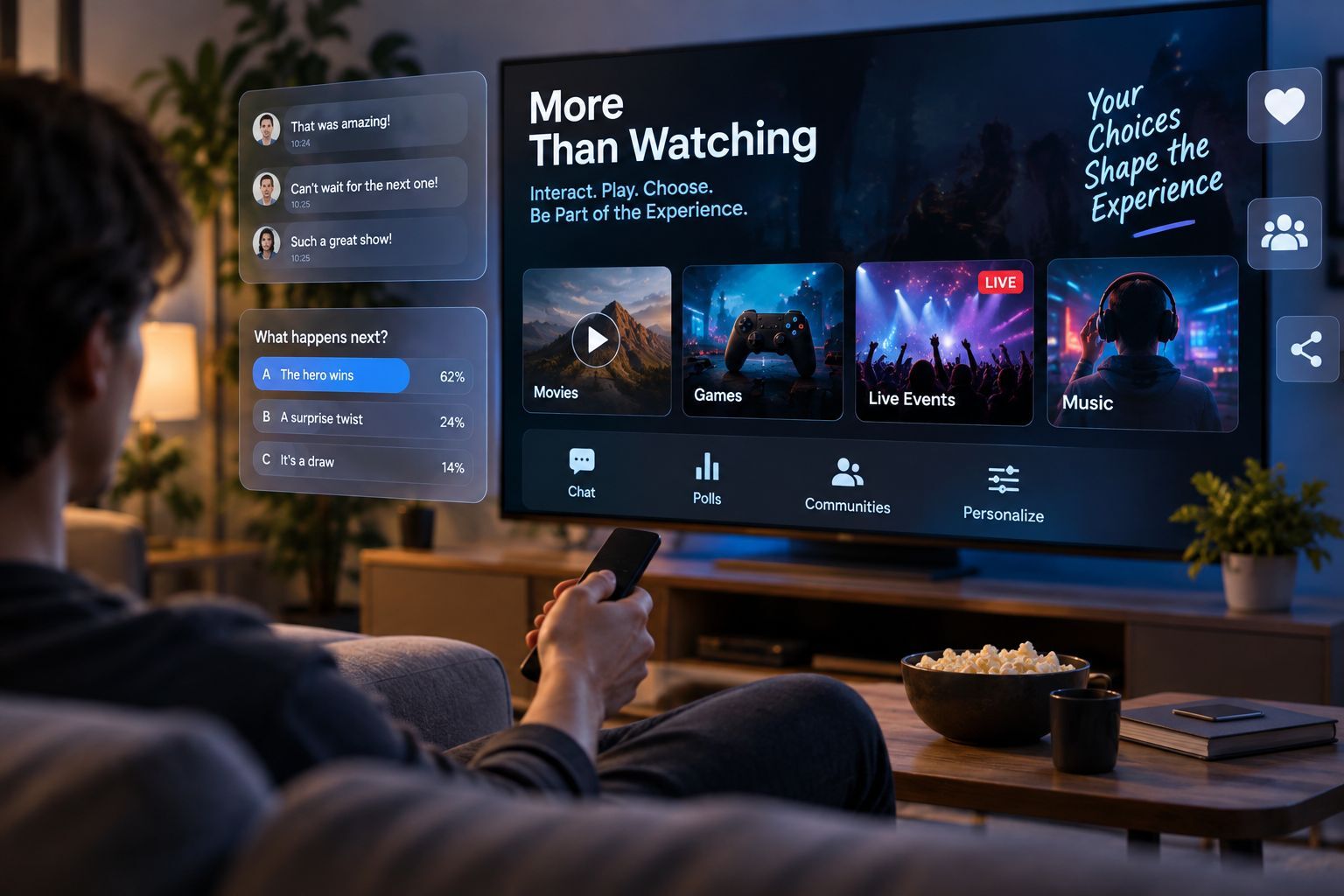
Digital entertainment no longer asks people to sit back and simply consume what appears on a screen. Many platforms now invite users to make choices, react to events, communicate with other participants, adjust what they see, and influence how an experience develops. This shift affects gaming, streaming, social media, live broadcasts, online events, and other forms of web-based leisure. Faster connections and stronger mobile devices support the change, but technology alone does not explain it. People have also changed how they use digital services. They increasingly expect direct control and quick responses from the platforms that occupy their free time.
Online casino services show this change clearly. A visitor to thorfortune , for example, enters a category of digital entertainment where interaction forms a central part of the experience. Users choose games, adjust settings, move between formats, manage sessions, and respond to events on the screen instead of consuming a fixed sequence of content. The same principle appears far beyond casino services. Streaming interfaces invite viewers to react, games connect players in shared spaces, and live platforms combine broadcasts with polls, chats, and other participation tools. These features reflect a broader move toward entertainment that responds to individual actions.
Audiences Want More Control
Traditional media usually followed a fixed structure. Television channels decided when programs started. Radio stations chose the order of songs and discussions. Cinemas set screening times. Newspapers selected what appeared on each page. Audiences could choose between available options, but they had limited control over the experience itself.
Digital services changed that relationship. Users can now decide when to start, stop, skip, replay, switch, or continue content. Many services also let people adjust subtitles, playback speed, difficulty settings, audio options, notifications, and other elements.
These controls may seem ordinary today, but they represent a major change in entertainment habits. People no longer separate content from the interface that delivers it. The controls form part of the experience.
This expectation also affects new services. When a platform requires too many steps or limits user control without a clear reason, people notice quickly. They already know that digital systems can respond instantly. As a result, developers increasingly design services around active input rather than fixed consumption.
Participation Keeps Users Involved
Interactivity gives people something to do beyond watching or listening. A viewer can answer a poll during a live broadcast. A player can communicate with teammates. A music listener can create a queue. A sports fan can check statistics while watching an event.
These actions require attention. That matters because entertainment services compete with messages, social feeds, games, videos, and countless other distractions on the same device.
Several common interactive features now support active participation:
-
Live chats connect viewers during broadcasts and events.
-
Polls let audiences respond to questions immediately.
-
Reaction tools give users a quick way to express a response.
-
Custom settings let people adjust an experience to their preferences.
-
Multiplayer functions turn individual activity into shared participation.
-
User-created content allows audiences to contribute material rather than only consume it.
Not every service needs every feature. In fact, adding unnecessary controls can make an interface harder to use. Platforms need to match interaction with the activity itself.
A film does not necessarily need constant audience input. A live quiz does. A music service benefits from playlist controls, while a multiplayer game requires much deeper communication systems. The level of interaction depends on what users actually want to accomplish.
Mobile Devices Changed Expectations
Smartphones played a major role in this shift. Touchscreens encourage direct action. People tap, swipe, scroll, drag, zoom, type, and respond throughout the day. These habits influence what users expect from entertainment services.
A static interface can feel unusual on a device built around constant input.
Mobile use also creates short entertainment sessions. Someone might watch a short video while waiting for a train, play for ten minutes during a break, or check a live event while travelling. Platforms need to respond quickly because users may only have a few minutes available.
Developers therefore focus on controls that work well on smaller screens. Large buttons, simple menus, clear gestures, quick loading, and easy switching between sections all help people interact without spending much time learning the interface.
Mobile devices also combine several functions in one place. A person can watch a live event, send messages, check statistics, and communicate with friends without changing devices. Entertainment services increasingly account for this behaviour.
Personalization Makes Interaction More Relevant
Interactivity does not always require visible actions such as clicking a button or writing a comment. Platforms also respond to choices that users make over time.
A person who repeatedly watches certain types of programs gives the system information about their interests. Someone who skips particular content sends another signal. Search activity, viewing history, saved items, session length, and direct preferences can all influence what a service displays.
Personalization can reduce the amount of time people spend searching. Instead of presenting every available item in the same way, a service can arrange options according to previous behaviour.
Users still need meaningful control, however. A recommendation system should not replace active choice. People often want to explore something outside their usual habits, clear previous activity, or change preferences.
The growing interest in personalization therefore creates two parallel goals: services want to make content easier to find, while users want to retain control over what appears on their screens.
Live Content Creates Natural Interaction
Live entertainment gives platforms a strong reason to add participation tools because everyone experiences the event at roughly the same time.
Sports broadcasts can include live statistics, audience questions, predictions, and discussion areas. Online concerts can support reactions and chat. Gaming broadcasts can connect viewers with hosts and other audience members.
Timing makes these functions useful. A comment about an event carries more relevance while that event takes place. A poll works differently when participants respond before they know the result.
Live interaction can also create technical challenges. Platforms must process large numbers of actions quickly while keeping the main content running smoothly. Delays can weaken the experience, especially when viewers communicate about events that happen in real time.
Better network infrastructure helps services manage these demands. Faster connections reduce delays, while cloud-based systems can handle changing levels of traffic. Developers can therefore support forms of participation that earlier internet services struggled to manage.
Games Helped Establish Interactive Habits
Video games have always required input, so the gaming sector established many behaviours that now appear across other entertainment categories. Players expect immediate responses to their actions. They also expect menus, progress systems, adjustable settings, communication tools, and clear feedback.
Other digital services have adopted parts of this structure without turning themselves into games.
Streaming platforms use progress indicators and viewing histories. Fitness entertainment services track completed sessions. Educational media may include quizzes and progress records. Live broadcasts use audience voting and reaction systems.
The connection does not mean that every digital service needs points, badges, or rewards. Those elements can distract users when they do not fit the activity. The broader lesson concerns responsiveness. People value systems that acknowledge what they do and show a clear result.
Services such as thorfortuine also sit within this wider development in online entertainment, where interfaces respond continuously to user choices. The relevant change concerns interaction itself: users increasingly expect digital systems to register their actions immediately and let them control how they move through available content.
Social Features Turn Entertainment Into a Shared Activity
Digital entertainment often combines media consumption with communication. People discuss television episodes while watching them, send clips to friends, comment on live broadcasts, and play online games with people in different locations.
Platforms increasingly build these behaviours directly into their services rather than forcing users to move elsewhere.
Social tools can extend an entertainment session because conversation continues around the main activity. A viewer may finish a video and then read comments. A player may stay online to speak with teammates. Someone watching a live event may follow audience reactions after the event ends.
However, social functions also require careful management. Open communication systems can attract spam, harassment, misleading information, and disruptive behaviour. Services therefore need reporting systems, moderation controls, privacy settings, and clear rules.
Adding a chat box takes little effort compared with maintaining a useful community around it. Successful interaction depends on structure as much as technology.
Technology Allows Faster Responses
Modern hardware and network infrastructure let platforms respond to users with much less delay than earlier digital systems could manage.
Several developments support interactive entertainment:
|
Technology |
Role in interactive entertainment |
|
Faster broadband |
Supports high-quality live content and rapid data exchange |
|
Modern mobile processors |
Handle complex interfaces and media on handheld devices |
|
Cloud computing |
Manages large numbers of simultaneous user actions |
|
Touchscreens |
Enable direct control through taps and gestures |
|
Data analysis |
Helps services respond to usage patterns |
|
Cross-device accounts |
Let users continue activities across different screens |
These technologies work together. A live platform may process video remotely, collect reactions from thousands of users, update statistics, and deliver everything to a phone within seconds.
Users rarely think about the infrastructure behind these actions. They notice the result: whether a service responds quickly and behaves as expected.
Interaction Can Produce Useful Feedback
Interactive platforms receive direct information about how people use their services. Traditional media companies often relied on audience surveys, ratings, sales figures, and research panels. Digital services can observe actions as they happen.
They can see where users stop watching, which controls they use, what they search for, and which features they ignore. Direct feedback tools can add further information.
This data can help developers identify practical problems. If users repeatedly abandon a process at the same point, the interface may create confusion. If almost nobody uses a feature, the service can examine whether that function serves a clear purpose.
Privacy remains an important issue. Entertainment services need clear policies for data collection and should give people appropriate controls over personal information. Interaction generates useful signals, but platforms should not treat every possible data point as necessary.
Too Much Interaction Can Become a Problem
More interaction does not automatically improve entertainment. Constant prompts, notifications, pop-ups, reactions, and requests for input can interrupt the activity that attracted the user in the first place.
Designers therefore need to decide when interaction adds practical value.
A good control helps someone complete an action or shape an experience. A poor one creates another task. This distinction becomes especially important on mobile devices, where screen space remains limited.
Some people also prefer passive entertainment at certain times. They may want to watch a film without answering questions or listen to music without adjusting settings. Platforms need to respect that preference.