Get all your news in one place.
100's of premium titles.
One app.
Start reading
MyLifeXP
MyLifeXP
Noopur Kumari

Why Does Ganesha Have the Name Vighneshwar? The Hidden Story

सुख करता दुखहर्ता, वार्ता विघ्नाची

नूर्वी पूर्वी प्रेम कृपा जयाची

सर्वांगी सुन्दर उटी शेंदु राची

कंठी झलके माल मुकताफळांची

जय देव जय देव, जय मंगल मूर्ति

दर्शनमात्रे मनःकामना पूर्ति

जय देव जय देव

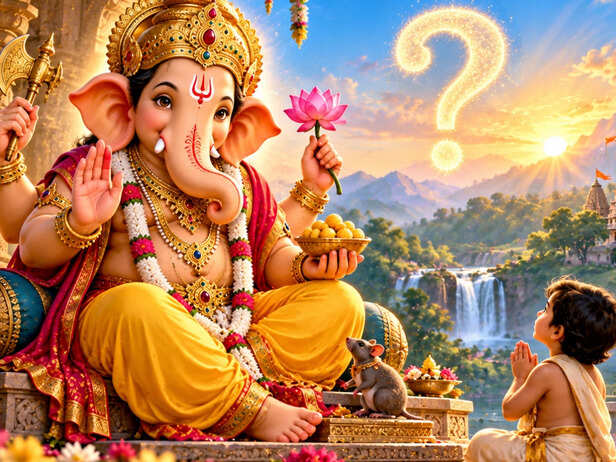
What if the demon who created obstacles everywhere was not destroyed by Lord Ganesha, but given a new purpose? The story of Vighnasur and Ganesha begins with two very human mistakes: a king's ignorance and Indra's wounded ego. What follows is a battle, but its ending is far more interesting than the fight itself. Instead of simply killing Vighnasur, Ganesha changes his direction and turns the force of obstacles into a reminder of why wisdom, humility and a good beginning matter.

A Forgotten Invitation Starts The Trouble

young boy saw Lord Ganesha in a simple stone
A young boy saw Lord Ganesha in a simple stone while everyone else saw only a rock.

Long ago, King Abhinandan performed a yajna for the prosperity of his kingdom. According to the traditional story, he forgot to invite Indra, the king of the devas, to the ceremony. The mistake was not presented as deliberate disrespect. It came from ignorance or carelessness. But Indra saw the omission differently. His pride was hurt, and instead of letting the mistake pass, he used his powers to summon Kala and ordered him to destroy the king's yajna. A small mistake had now become something much larger because ego entered the situation.

Kala Becomes Vighnasur

Morya Gosavi is known to be a devout follower of Lord Ganesha and has lived
believed that every year during Ganesh Chaturthi, Morya Gosavi used to undertake a tough journey from Chinchwad to Morgaon to pay homage to Lord Ganesha.

Kala carried out Indra's command, but the story did not end with the destruction of one yajna. He became known as Vighnasur, a force that created obstacles in people's actions. Ceremonies were disturbed, plans were interrupted and good work became difficult to complete. Soon, the devas and sages realised that ordinary efforts were not enough to control the problem. They approached Brahma for guidance. The answer was unexpected: they were told to worship Ganesha, the deity associated with wisdom, intellect and auspicious beginnings. The story now shifted from anger and punishment toward intelligence and balance.

Ganesha Faces The Demon

The devas and sages prayed to Ganesha, and their devotion pleased him. Ganesha then confronted Vighnasur, leading to a fierce battle. Vighnasur was powerful, but he could not overcome Ganesha. When Ganesha was about to defeat him, Vighnasur asked for forgiveness and explained how he had become what he was. His existence had begun because of Abhinandan's ignorance and Indra's ego. Instead of seeing only an enemy, Ganesha recognised that Vighnasur's direction could be changed. This is where the story takes its most meaningful turn.

The Demon Is Given A New Purpose

Ganesha forgave Vighnasur but did not simply release him to continue causing trouble. He gave him a new purpose. Vighnasur agreed that wherever Ganesha was sincerely remembered before an auspicious undertaking, he would not create obstacles. The idea carries a clear message. Remembering Ganesha is not about trying to control life through a ritual. It symbolises beginning important work with clarity, wisdom and humility. When the mind is less controlled by ignorance and ego, many avoidable obstacles can already be prevented through better decisions and greater awareness.

Why Ganesha Became Vighneshwar

Vighnasur then made one final request. He asked Ganesha to be known as his Lord. From this episode comes the association of Ganesha with the name Vighneshwar, meaning the Lord of obstacles. This does not simply mean that Ganesha removes every difficulty from life. Obstacles can also teach us where we are unprepared, careless or driven by ego. Ganesha's role in the story is therefore deeper. He does not only defeat a problem. He brings order to it and gives it a proper place. That is why the ending matters more than the battle itself.

The Real Problem Was Ego

The story begins with ignorance and ego, and that combination remains relevant even today. Someone forgets an important detail. Another person takes it personally. Anger follows, and soon a small mistake becomes a major conflict. The story of Vighnasur gives a different response: correct the mistake, control the ego and use wisdom before reacting. This is also why Ganesha is remembered before many auspicious beginnings. The tradition points toward a mindset of preparation and clarity. Before starting something important, pause, think carefully and remove the obstacles created by your own carelessness.

Vighnaharta Means More Than Removing Problems

The story of Vighnasur gives the name Vighnaharta a deeper meaning. Ganesha's victory was not simply about destroying a demon. He changed the direction of a force that had been causing disorder. That makes the story powerful even outside its religious setting. Sometimes the biggest obstacle is not another person or an outside problem. It can be our own pride, impatience, poor planning or refusal to learn from a mistake. The next time you begin something important, remember the lesson of Vighnasur: a clear mind can prevent obstacles before they become bigger problems.

Unlock insightful tips and inspiration on personal growth, productivity, and well-being. Stay motivated and updated with the latest at My Life XP

Sign up to read this article
Read news from 100's of titles, curated specifically for you.
Already a member? Sign in here
Related Stories
Top stories on inkl right now
One subscription that gives you access to news from hundreds of sites
Already a member? Sign in here
Our Picks
Fourteen days free
Download the app
One app. One membership.
100+ trusted global sources.