
Owning a BMW may initially feel exhilarating and confident; however, it will soon turn into confusion due to unclear warning lights. The car's internal logic contains coded messages, one of which is a very simple reminder. This is not a case of unreliability; rather, it is the peculiar way BMWs have been crafted that makes them difficult to understand in the same way as other brands.
Rather than using simple modular systems, BMW has a software-heavy, interconnected setup where the sensors and control units communicate all the time. This makes having to do repairs as if the system were on a different logic; thus, it is not bad reliability but complexity that is felt here.
However, the right tools can make that complexity manageable. The Foxwell NT710 and other Foxwell scanners, for instance, are capable of uncovering BMW’s system logic, performing active tests, and making adaptations correctly, thus helping the car to make sense again.
Article Objective
Why Does BMW Maintenance and Repair Feel More Complicated?
The purpose of this article is to explain why BMW vehicles cannot be diagnosed or repaired using a traditional “fix-the-part” approach. Instead, BMW requires a system-level diagnostic mindset, where mechanical repairs must be paired with software communication, adaptations, and resets.
By the end of this article, BMW owners will understand:
- Why generic scanners fail on BMWs
- Why warning lights persist after repairs
- Why diagnostics, not parts, drive maintenance costs
Target Audience
This article is written for:
- BMW owners, especially post-warranty
- Everyday drivers are confused by BMW repair bills-
- Readers without technical or mechanical backgrounds
The explanations are simplified, but technically accurate.
The Key Difference Between BMW and Other Brands:

The majority of automobiles are manufactured based on a fundamental principle: the broken part is changed for a new one, and the trouble is gone. The BMW technology does not function in this way. The logic of the entire system determines how the car is operated. The entire car comprises an interconnected network of sensors, software, and control units. If one part is changed, the whole system is expected to be updated so that eventually everything is synchronized.
The BMWs are always checking the sensor readings, the digital settings, and the power distribution. This is the reason why an actual repair may be done right, and yet the warnings still show on the dashboard. The vehicle is not malfunctioning; it has just not been digitally updated to recognize what has changed.
Why BMW Maintenance Requires More Than Mechanical Repairs?

New BMWs are systems that blend digital and mechanical. Therefore, the major problem is not having broken parts but system misalignment resulting from repairs. Such cases are highly common:
- The battery is replaced but not registered, leading to IBS and charging faults
- New brake parts were installed without a service reset, causing pad wear or DSC warnings
- Sensors changed with no calibration, resulting in wrong readings or the vehicle being in limp mode
In such instances, the car keeps showing faults, not because the mechanical work was done poorly, but because the software-related part of the repair was never concluded. Updating, registering, and aligning both the part and the system is a must for BMWs.
BMW vs Other Brands: Maintenance Philosophy Comparison
|
Aspects |
BMW |
Most Other Brands |
|
Design philosophy |
System-based, software-driven |
Component-based |
|
Repair Completion |
Mechanical + digital adaptation |
Mechanical only |
|
Battery Replacement |
Requires Registration |
Plug-and-play |
|
Diagnostic depth needed |
Manufacturer-level |
Generic OBD |
|
Warning light behavior |
Persistent until system reset |
Clears automatically |
|
Tool requirement |
Advanced diagnostic platform |
Basic scan tool |
Why Generic Diagnostic Tools Fall Short on BMW?
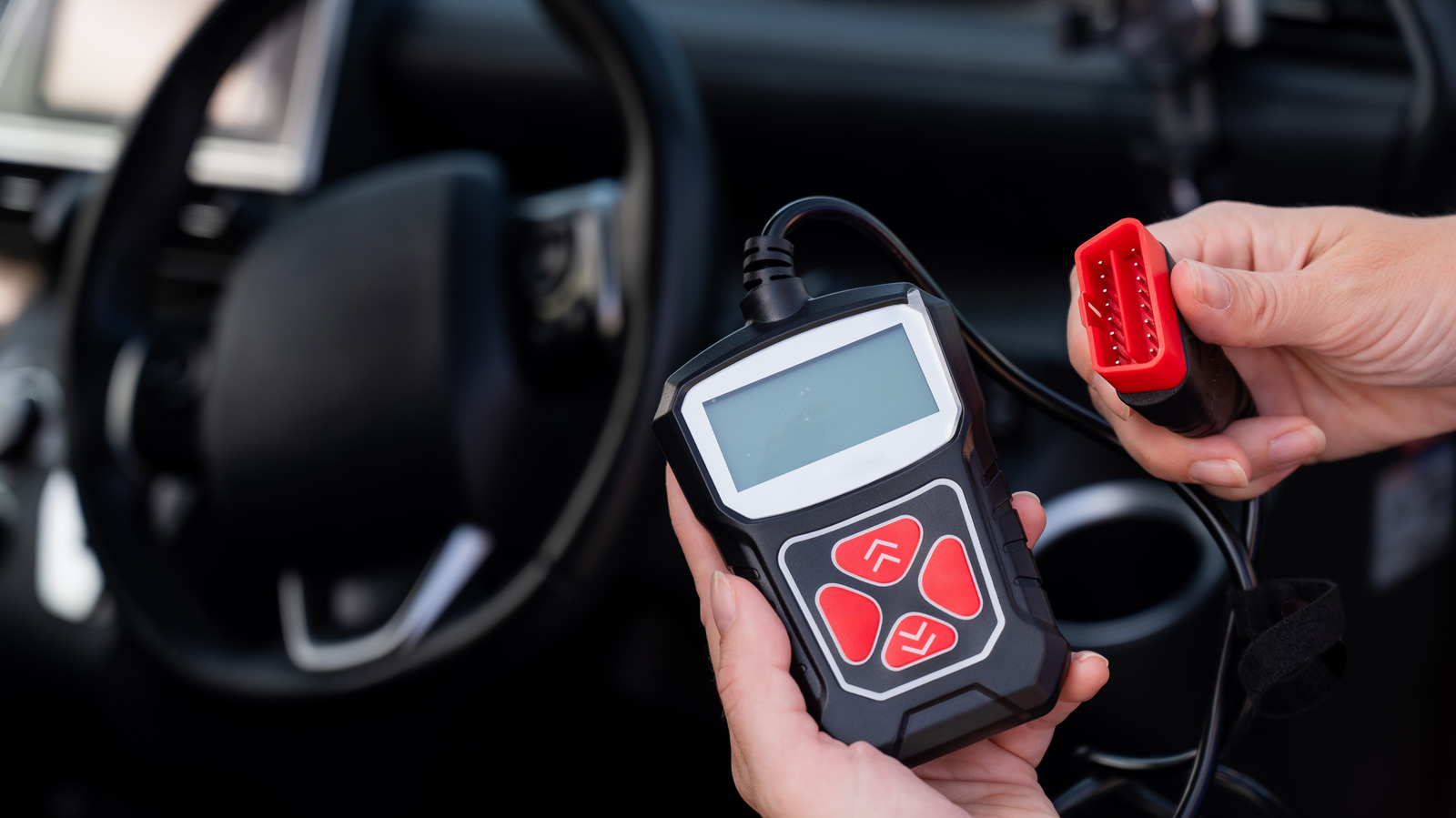
Generic OBD scanners can:
- Read emission-related codes
- Clear basic fault lights
They cannot:
- Access BMW-specific control modules
- Perform service resets
- Execute adaptations or calibrations
- Communicate with advanced subsystems
As a result, BMW owners receive incomplete information, leading to repeat repairs and unnecessary expenses.
What BMW-Oriented Diagnostic Tools Actually Do Differently
Tools designed specifically for BMW, such as the Foxwell NT710 (commonly used by independent BMW shops and advanced DIY owners), don’t just “read codes.” They communicate directly with BMW control modules, allowing the vehicle to confirm that a repair has been completed both mechanically and digitally.
For example, after replacing a battery or throttle body, the NT710 can register the new component, reset learned values, and perform required adaptations—steps that generic scanners simply cannot access. This is often the missing link between a correct repair and a warning light that refuses to disappear.
The Role of Advanced Diagnostics in BMW Ownership:
BMW vehicles rely on:
- Learned values
- Software dependencies
- Module synchronization
Without a diagnostic tool capable of bi-directional communication, owners and technicians are effectively working blind.
This is why many BMW owners eventually move from generic scanners to BMW-oriented diagnostic platforms like the Foxwell NT710, once they realize diagnostics—not parts—drive repair outcomes.
Why Choose Foxwell NT710?
The Foxwell NT710 is a clever option for both technicians and BMW owners who seek cost-effectiveness and performance at the same time. It offers full bi-directional control over the central systems of BMW, allowing the user to activate parts, perform adaptations, and verify repairs without going to high-end shop tools.
Besides, the scanner is supported by lifetime free updates from Foxwell, a well-known diagnostic tool manufacturer. Such updates ensure the NT710 is compatible, precise, and still a helpful tool for today's BMW diagnosis.
For official specifications, supported vehicles, and software details, visit the Foxwell NT710 product page directly:
The Foxwell NT710 Makes BMW Diagnostics Easier:
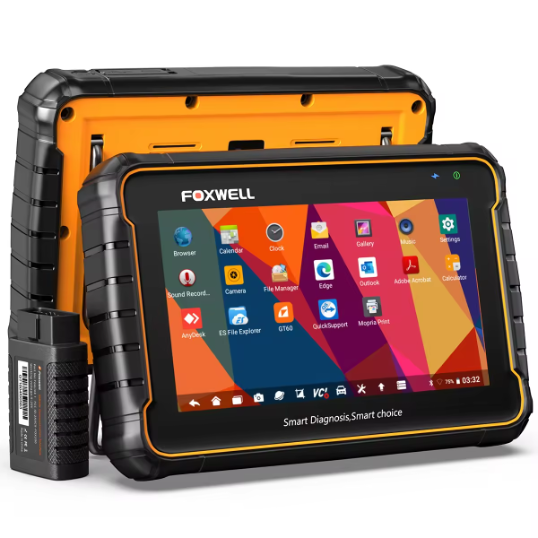
- Direct communication with BMW control modules through the Foxwell NT710 allows users to access system-level data instead of basic OBD information.
- It empowers users to diagnose faults at a system level, thus viewing the interaction of engine, transmission, and chassis modules.
- It can perform service and maintenance resets, thereby keeping digital service history and condition monitoring accurate.
- It provides support for post-repair adaptations, which is very important when changing components such as throttle bodies, sensors, or transmission parts.
- It can confirm repairs before fault memory clearing, thereby eliminating guesswork and minimizing unnecessary part exchanging.
Why BMW Maintenance Costs Feel Higher Than They Should?

The costs associated with BMW repairs are not merely limited to the price of the parts; they also include the complexity of the repairs, as diagnosing systems that are always communicating with each other requires a high level of skill and time. In most cases, labor costs become the most significant factor because the technicians have to do the following:
- Trace networked faults, which takes a lot of time
- Use very expensive tools and software made just for diagnostics
- Do the testing and adjusting after the repairs
If a shop does not have the right equipment, it may end up taking out and replacing several parts in an attempt to clear a warning light, thus driving up costs. With the help of Foxwell's professional-grade diagnostic equipment, a technician can pinpoint the exact problem more quickly, thereby properly confirming the repair and eliminating the need for any waiting, resulting in faster, cleaner, and finally more economical BMW maintenance.
Independent BMW Owners and the Diagnostic Gap:
Usually, independent repair shops and DIY BMW owners suffer not because the cars have bad reliability, but because they do not have to apply the appropriate diagnostic procedure. The majority of independent shops:
- Use universal OBD scanners that only read the basic engine codes and nothing more
- Do not have access to the BMW-specific software that modules like DSC, EGS, FEM/BDC, IBS, and KOMBI require
- Do not perform adaptation and calibration procedures after replacing parts, even when it is required
Thus, the problem is misdiagnosis, warning lights coming back repeatedly, and parts being replaced unnecessarily. Therefore, BMWs get labeled as unreliable, while in fact, the problem is a lack of diagnostic depth, not the vehicle itself. The tools that are designed for BMW logic will now help to avoid this gap.
BMW Complexity Is Intentional, Not Accidental:

BMW engineering is based on proactive intelligence rather than unnecessary complication. Such vehicles are engineered to:
- Continuously monitor themselves via sensors(i.e. Map Sensor, Crankshaft Sensor etc.) and shadow faults
- Safeguard their parts through software measures, like torque limits or prohibiting charging during certain conditions
- Signal the drivers beforehand when a failure develops, thus preventing eventual damage to the vehicle
The degree of complexity involved brings about a longer life span and fewer unnoticed failures, but this is only provided that the proper diagnostic tools that are capable of interpreting BMW logic are in place. If not, the intelligence becomes a source of confusion instead of help.
The Smart BMW Ownership Mindset:
To effectively own or service a BMW, it is mandatory to change your point of view. Contemporary BMWs require the presence of both technicians and owners who:
- Understand system logic rather than guessing
- Invest in capable diagnostics instead of basic code readers
- Treat maintenance as a digital-mechanical process, not purely mechanical work
The conservative approach turns BMW maintenance into predictable, logical, and less expensive, thus transforming the ownership experience from intimidating to rewarding.
Conclusion:
The complexity of BMW is not an accident but rather a result of deliberate engineering. The modern BMWs are always self-monitoring, employing software protections for their parts, and letting the drivers know before the failures escalate to serious levels. This smartness not only prolongs the life of the components but also eradicates the need for diagnostics that can only interpret what the system is reporting.
The owners and technicians have to change their attitude from purely mechanical to digital-mechanical thinking. The perfect BMW service means knowing the system logic, having the right diagnostic equipment, and doing the software part of repairs, not only putting in parts. If one is quick in adapting, he/she will find BMW ownership much more predictable and way less expensive.
Should you desire a smoother repair experience, fewer shocks, and diagnostics based on data, check out the BMW-compatible tools from Foxwell. They assist in overcoming the diagnostic challenge while taking full advantage of BMW's smart design.