Get all your news in one place.
100’s of premium titles.
One app.
Start reading
International Business Times
Business
Mathew Keyser

Why Do Precious Metals Prices Rise During Economic Uncertainty?

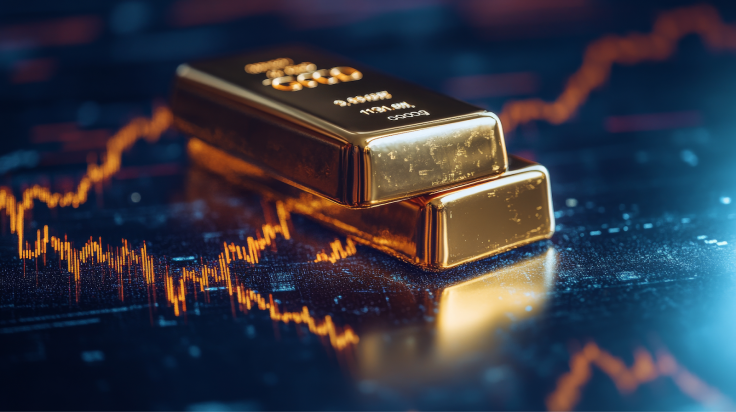
Throughout financial history, precious metals have demonstrated distinctive behavior during periods of economic stress. Understanding the mechanisms driving this relationship helps investors evaluate whether and how precious metals might fit within their broader financial strategies.
Defining Economic Uncertainty

Economic uncertainty encompasses various conditions that create unpredictability about future financial outcomes. This includes concerns about inflation rates, currency stability, government debt levels, geopolitical tensions, financial system stability, and economic growth trajectories.

Unlike routine market volatility, which represents normal price fluctuations, economic uncertainty involves fundamental questions about the sustainability of current economic arrangements or the potential for significant structural changes.

Historical Patterns During Crises

Examining past periods of economic stress reveals consistent patterns in precious metals behavior. During the 1970s stagflation era, when high inflation combined with slow economic growth, gold prices increased dramatically as investors sought protection against eroding purchasing power.

The 2008 financial crisis provided another example. As major financial institutions faced collapse and stock markets plummeted over 50%, gold prices rose, demonstrating the potential diversification benefits precious metals can provide.

More recently, during the early stages of the COVID-19 pandemic when markets experienced severe disruption, gold again served as a relative safe haven. This pattern of providing stability during heightened uncertainty has repeated across various crisis types throughout modern financial history.

The Mechanism Behind Safe-Haven Demand

Several factors explain why precious metals attract investment during uncertain times:

Tangible asset characteristics mean precious metals exist as physical objects outside the financial system. Unlike stocks, bonds, or bank deposits that depend on counterparty performance, physical metal ownership carries no default risk.

Limited supply creates scarcity value. While governments can print additional currency, precious metals supply increases only through mining at rates that typically lag demand during crisis periods.

Historical precedent establishes trust. For millennia, gold and silver have served as stores of value across diverse civilizations.

Currency alternative properties become particularly relevant when confidence in fiat currencies declines.

Current Economic Factors

Contemporary economic conditions present several dynamics that are potentially supportive of precious metals valuations:

National debt levels have reached unprecedented absolute levels. In the United States, total debt has surpassed $38 trillion. When combined with unfunded liabilities for programs like Social Security and Medicare, some estimates place total commitments substantially higher. According to Lear Capital's market analysis, total U.S. debt and unfunded liabilities reach approximately $325 trillion.

Interest payments on accumulated debt continue growing, consuming increasing portions of government budgets. As these payments rise, they crowd out other spending or necessitate additional borrowing, creating concerns about long-term fiscal sustainability.

Central bank policy decisions significantly influence precious metals markets. Interest rate changes affect the opportunity cost of holding non-yielding assets like gold and silver. Interestingly, despite relatively elevated interest rates in recent periods, precious metals have performed well, suggesting other factors are influencing decision-making.

In 2025, the World Gold Council found that central bank gold purchases have reached levels not observed since 1999, indicating institutional confidence in precious metals regardless of interest rate environments.

Geopolitical developments continue creating uncertainty. International tensions, trade disputes, and shifting alliances all contribute to an environment where investors seek assets perceived as politically neutral and globally recognized.

The BRICS Factor and Currency Dynamics

The expansion of the BRICS coalition—Brazil, Russia, India, China, and South Africa, with additional nations expressing interest—has the potential to substantially affect currency markets and precious metals demand.

These nations collectively represent a large portion of global population and economic output. Discussions within BRICS about alternative settlement systems for international trade and reducing dollar dependence could have long-term implications for currency dynamics.

Inflation Dynamics

Inflation, the decline in currency purchasing power over time, creates an environment where precious metals often thrive. When consumer prices rise persistently, investments that don't keep pace with that inflation lose real value.

Precious metals, particularly gold, have historically maintained purchasing power over very long periods.

Industrial Demand for Silver

While gold serves primarily as a monetary metal, silver's industrial applications create additional demand dynamics. Renewable energy expansion, particularly solar panel production, has become a significant silver demand driver. Electronics manufacturing demand driven by the construction of AI data centers could also increase silver demand.

Market data reflect this shift. As of mid-2025, silver prices were up roughly 35–40% year-to-date, with spot prices around $39 per ounce. By November, the prices had climbed more than 75% year-to-date, eclipsing the $50 range.

Analysts attribute some of that momentum to industrial use cases, especially photovoltaic cell production and the electrification of infrastructure. The Silver Institute reported that solar panel manufacturing alone accounts for roughly 30% of total silver demand, a record share. Meanwhile, new computing infrastructure and electric-vehicle components are tightening supply even further.

Together, these forces make silver more sensitive than gold to real-economy trends such as manufacturing expansion and green-energy investment. That dual nature—industrial and monetary—can amplify price swings, but it can also explain why silver's 2025 gains outpaced those of gold.

Consumer Debt Levels

Household debt, particularly credit card balances, has reached elevated levels. According to Lear Capital's market analysis, the U.S. faces record-high credit card debt. High consumer debt burdens can constrain spending and economic growth, potentially leading to slower economic activity or recession concerns.

Portfolio Context

Rather than attempting to predict when economic uncertainty will escalate, many long-term investors maintain steady precious metals allocations as ongoing portfolio components. This approach treats precious metals as insurance or diversification tools that provide value through their low correlation with other assets.

The appropriate allocation level varies by individual circumstances, but financial advisors commonly suggest limiting precious metals to 5-15% of portfolios. This sizing provides meaningful diversification benefits while maintaining primary focus on traditional growth assets.

Recent portfolio research has reinforced the diversification thesis. At Morgan Stanley, CIO Mike Wilson now recommends a 60/20/20 portfolio — 60% equities, 20% fixed income and 20% gold — arguing that gold offers a more robust hedge than Treasuries in the current market backdrop of low equity upside and elevated bond yields.

While this doesn't replace individualized planning, the larger weighting to gold underscores that precious metals may be treated increasingly as a structural portfolio component.

Evaluating Information Sources

Given precious metals' role during uncertain times, considerable information and analysis circulates about factors affecting their valuations. Investors benefit from seeking high-quality information sources that provide objective analysis.

Reputable precious metals firms often publish research examining economic factors relevant to metals markets. Companies like Lear Capital, which has facilitated over $3 billion in precious metals transactions since 1997, frequently release market analysis detailing various economic headwinds and tailwinds affecting precious metals valuations.

Integration Within Financial Plans

Understanding the relationship between economic uncertainty and precious metals prices provides context for evaluating whether these assets merit inclusion in personal financial strategies. Thoughtful integration considers how precious metals exposure fits within total portfolio construction, what allocation level balances diversification benefits against costs, and which implementation methods best suit individual circumstances.

Sign up to read this article
Read news from 100’s of titles, curated specifically for you.
Already a member? Sign in here
Related Stories
Top stories on inkl right now
Our Picks
Fourteen days free
Download the app
One app. One membership.
100+ trusted global sources.