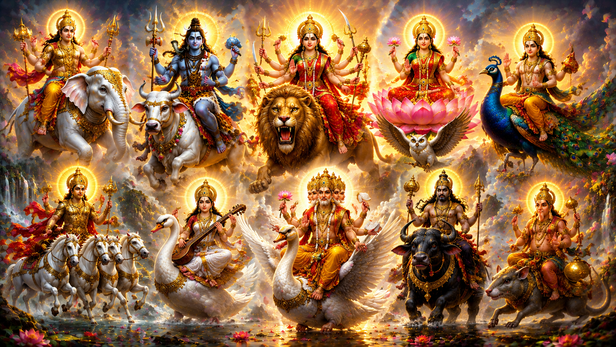
Have you ever wondered why Lord Ganesha rides a tiny mouse, Goddess Durga rides a lion, and Lord Shiva is always seen with Nandi the bull? If gods possess limitless divine power, why would they need any vehicle at all? The answer is far deeper than mythology. Every divine vehicle, or Vahana, carries a powerful spiritual message about human nature, self-control, and our relationship with the natural world. Once you understand their symbolism, you'll never look at these sacred animals the same way again.

Gods Never Needed Transportation
Every sacred animal reflects a unique spiritual teaching.
Hindu scriptures describe gods as beings with limitless divine powers who can travel instantly across the universe. Their vehicles are not meant for transportation but for symbolism. Every Vahana represents a deeper spiritual truth that helps devotees understand the deity's qualities. Just as every profession depends on a specific skill, each deity's vehicle reflects the values and mindset needed to walk the spiritual path.
Every Vehicle Represents a Way of Life
Every sacred animal reflects a unique spiritual teaching.
A teacher's true vehicle is knowledge because it carries them through life. Similarly, each deity's vehicle symbolizes the qualities that support spiritual growth. Lord Shiva's Nandi represents patience, strength, and unwavering devotion. Goddess Saraswati's swan symbolizes wisdom and the ability to distinguish truth from illusion. These animals are living symbols that help devotees understand the deeper philosophy behind every deity's teachings.
Why Lord Ganesha Chose a Mouse
At first glance, a tiny mouse may seem like an unusual companion for Lord Ganesha. Yet the symbolism is profound. A mouse can enter the smallest spaces and gnaw through even the strongest barriers. Spiritually, it represents the restless human mind and endless desires. By riding the mouse, Lord Ganesha teaches that true wisdom comes when intelligence controls desires rather than allowing desires to control the mind.
Animals Became Sacred Through Symbolism
The connection between gods and animals also carried an important social message. By associating every deity with a specific animal, ancient Indian traditions encouraged people to treat animals with kindness and reverence. Rather than seeing them as inferior beings, they became symbols of divine qualities. This cultural practice helped promote compassion, reduce unnecessary harm, and strengthen humanity's bond with nature.
The Hidden Lesson About Nature
Every divine vehicle reminds us that humans are not separate from nature but part of it. Lions, bulls, mice, swans, peacocks, owls, and eagles all have unique roles in maintaining ecological balance. By honoring these animals through spiritual symbolism, Hindu philosophy teaches that protecting nature is itself an act of devotion. Caring for living beings becomes another way of honoring the Creator.
The Symbolism Still Matters Today
Although centuries have passed, the message behind divine vehicles remains meaningful. Every person carries strengths, weaknesses, desires, and responsibilities. The sacred animals remind us to master our instincts instead of being controlled by them. They teach humility, discipline, courage, wisdom, and compassion qualities that remain essential for living a balanced and purposeful life in the modern world.
Unlock insightful tips and inspiration on personal growth, productivity, and well-being. Stay motivated and updated with the latest at My Life XP.
Frequently Asked Questions (FAQs)
1. Why do Hindu gods have animal vehicles?According to Hindu tradition, the vehicles (Vahanas) symbolize the qualities, virtues, and spiritual teachings associated with each deity rather than serving as physical transportation.
2. What does Lord Ganesha's mouse represent?
The mouse symbolizes desires, curiosity, and the restless mind. Lord Ganesha riding it represents wisdom and self-control overcoming uncontrolled desires.
3. What is the meaning of the word Vahana?
A Vahana is the sacred vehicle or companion of a deity. In Hindu philosophy, it represents symbolic and spiritual qualities rather than literal transport.
4. Why are animals considered sacred in Hinduism?
Many animals are associated with different deities, encouraging compassion, respect for nature, and recognition of the divine presence in all living beings.