What if even a god could lose control? We often hear about divine power, protection, and justice. But very rarely do we talk about what happens when that power crosses its limit. The story of Lord Vishnu’s Narasimha avatar is not just about defeating evil it’s about what happens after the victory. Because sometimes, the real danger begins when anger refuses to stop.

When Victory Turns Into Danger
Narasimha appeared to protect dharma and destroy Hiranyakashipu. He succeeded but something unexpected happened. His anger didn’t fade. Instead, it grew stronger. The same power that saved the world now began to shake it. This is the part most people ignore: winning doesn’t always bring peace. Sometimes, it amplifies emotions. The story shows that even righteous anger, if not controlled, can turn destructive. And when power combines with uncontrolled rage, even gods can become a danger to the very balance they came to protect.
When Even Lakshmi Couldn’t Calm Him
Goddess Lakshmi, the symbol of peace and compassion, tried to calm Narasimha. But even her presence had no effect. This reveals something deeply human sometimes anger reaches a point where logic, love, and care stop working. It becomes uncontrollable. This moment in the story is not about failure it’s about reality. There are phases where emotions overpower everything. And when that happens, it requires a different kind of force to restore balance. That’s when the gods realized they needed someone who understands destruction itself.
The Rise of Shiva’s Sarabha Form
To stop Narasimha, Lord Shiva took the form of Sarabha a fierce, multi-dimensional being. This wasn’t just about power; it was about control. Sarabha represents a higher level of awareness one that can face chaos without becoming chaotic. Shiva didn’t destroy Narasimha; he absorbed and neutralized his rage. This is the real lesson: you cannot fight anger with anger. You need something greater control, awareness, and detachment. Sarabha wasn’t just a form; it was a symbol of mastering the uncontrollable.
Why Shiva Wore Narasimha’s Skin
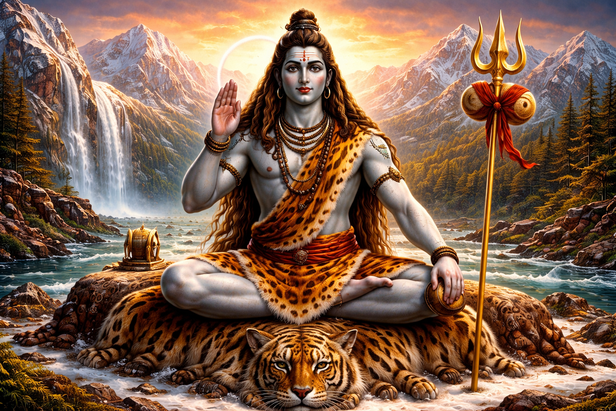
After calming Narasimha, Shiva is believed to have worn his skin. But this isn’t about dominance it’s symbolic. It represents complete control over ego, anger, and power. Wearing the skin means the energy is no longer wild it is mastered. In deeper meaning, it tells us: don’t suppress your anger, transform it. Channel it. Control it. Because power is not dangerous lack of control is. Shiva wearing the skin is a reminder that true strength lies in mastering what could destroy you.
The Hidden Lesson Nobody Talks About
This story isn’t just mythology it’s a mirror. We all experience anger. Sometimes it feels justified. But this tale shows a hard truth: even justified anger can become dangerous if it goes unchecked. The solution is not to eliminate anger but to understand and control it. Just like Shiva, we need awareness to handle our strongest emotions. Because in the end, it’s not your anger that defines you it’s how you control it. And that’s what separates destruction from wisdom.
Unlock insightful tips and inspiration on personal growth, productivity, and well-being. Stay motivated and updated with the latest at My Life XP.
Frequently Asked Questions (FAQs)
1. Why did Lord Shiva wear Narasimha’s skin?According to certain Puranic traditions, it symbolizes control over extreme anger and power. Shiva wearing the skin represents mastery over ego and destructive energy not dominance, but transformation.
2. Did Lord Shiva really fight Narasimha?
Some texts describe Shiva taking the Sarabha form to calm Narasimha’s uncontrollable rage. However, interpretations vary many traditions see this as symbolic rather than a literal conflict between gods.
3. Why couldn’t Goddess Lakshmi calm Narasimha?
The story suggests that Narasimha’s anger had reached an intense level where even compassion couldn’t immediately calm it. It highlights how extreme emotions sometimes require stronger intervention.
4. What is the Sarabha avatar of Shiva?
Sarabha is described as a powerful, composite form of Shiva part lion, part bird created to neutralize overwhelming force. It represents higher awareness and control over chaos.
5. Is this story mentioned in all Hindu scriptures?
No. This narrative appears mainly in certain Shaivite texts like the Shiva Purana and regional traditions. Vaishnavite traditions often present different interpretations.