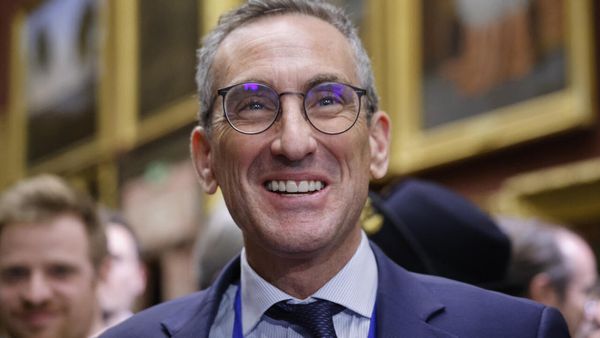
Has the election of David Farley as the new member for Farrer injected a rare and desperately needed dose of economic realism into Pauline Hanson's One Nation, a political movement heavy on populist rhetoric and light on policy substance?
His considered and timely remarks detailing the absolute necessity of migrant labour for regional communities suggest he is willing to be pragmatic and willing to put the economic survival of his constituents above the ideological demands of his party leadership.

While the focus has been on the discrepancy between the "official" PHON immigration target of about 130,000 net annual intake of migrants and Mr Farley's commentary that Labor's target may not be that dissimilar to One Nation's when everything is added up, this misses the point that while migration is seen as problematic in Australia's congested capital cities, it is playing a key role in keeping many regional industries and smaller rural communities viable.
Regional and rural population centres need migrant labour, including the backpacker cohort essential to getting the harvest home but also longer-term arrivals who work in sectors like hospitality and aged care.
Without this influx of workers some small towns would wither on the vine, and their already stretched essential services would suffer. Farmers, miners and tourism operators have all sounded the alarm over workforce shortages in parts of the country if visa approvals are slashed.
The Australian Industry Group has described skilled migration as "essential" for industries such as construction and aged care, with chief executive Innes Willox saying "Australia cannot meet current and future workforce needs through domestic training alone".
One Nation's migration rhetoric and its stated intake target may have political appeal in some parts of the community but its policies also need to address economic reality.
Mr Farley, as a former managing director and CEO of the Australian Agricultural Company, might have the kind of expertise and experience the party needs if it is to be taken seriously as an alternative to the two major parties.
It is telling that his comments came at the same time as he was in discussions with the Prime Minister about a rescue package for the SunRice operation at Leeton - which is on the cusp of axing 78 jobs.
Yes, Mr Farley may only be in the House of Representatives because he stood as One Nation's candidate, but choosing to put the interests of his electorate first is unlikely to hurt him locally. Indeed, he may be betting that speaking up and helping to deliver a deal on the Leeton jobs will be seen by many Farrer constituents as a positive.
Barnaby Joyce seemed quick to lower the boom on his fellow One Nation MP, but it's worth remembering that not long after defecting to Senator Hanson's cause the former Nationals leader was himself at odds with the party when he turned out not to be across its housing policy. Like Mr Farley, Mr Joyce may also come to realise that advocating for One Nation policies that don't benefit his electorate may not be the road to re-election.
While it is premature to suggest that Mr Farley might end up in the Liberal or National camps, as some have suggested, the possibility he could recontest Farrer as an independent, modelling his trajectory on that of Mr Joyce's predecessor in the seat of New England, Tony Windsor, cannot be ruled out.
It should be noted that since 1999, 11 people elected to state and federal parliaments under the One Nation banner have defected. If Mr Farley were to choose to put his constituents ahead of his party and leave, he would be treading a very well-worn path.