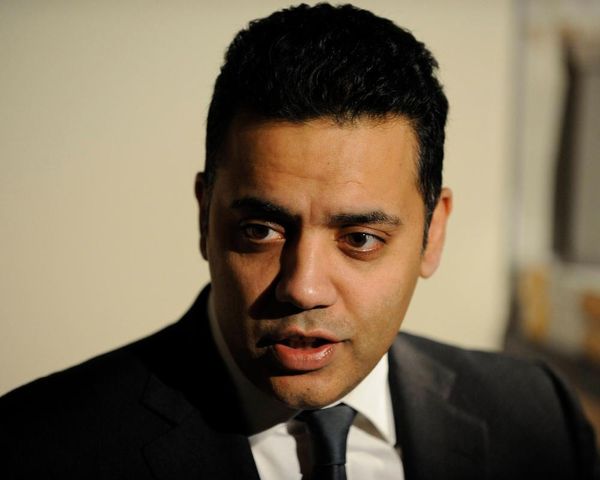
Every year, an estimated 10 to 40 million metric tons of mismanaged microplastics are released into the ocean, and that number is anticipated to double by 2040. Dan Turner, founder of Blue Whale Technologies and a veteran environmental engineer with over 40 years in advanced wastewater treatment, stresses that, without real change, the rapid accumulation of plastic waste is not expected to change any time soon.
"There's more than 8 million metric tons of inert plastic already circulating through ocean gyres, along with fishing gear, rope, and degraded debris that continuously photodegrades into microplastics," Turner explains, emphasizing that these particles, now ubiquitous, can create a toxic medium that penetrates every level of the marine ecosystem.

He notes that zooplankton and phytoplankton, the foundation of the oceanic food chain and the planet's most significant natural carbon dioxide-to-oxygen converter, are being exposed to microplastics contaminated with PFAS, also known as "forever chemicals." Turner emphasizes that this contamination creates what he describes as a "toxic soup," one that fish and marine mammals ingest, affecting the health of all aquatic life, and ultimately enters human food systems, paving the path for numerous health complications.
Furthermore, he highlights that PFAS, PFOA, and organic contaminants can leach from the microplastics into aquatic organisms, which would result in structural changes in some fish species. "If we weaken the plankton system," he says, "the largest natural CO2-to-oxygen conversion pump of the planet can begin to falter."
Yet despite the scale of the issue, Turner believes that ocean microplastic contamination is not receiving sufficient global attention or funding. In his view, environmental spending has tilted disproportionately toward climate-centric initiatives, leaving water issues, including groundwater depletion, PFAS contamination, endocrine-disrupting compounds, and microplastics, underfunded by comparison. He argues that because microplastic remediation from oceans, lakes, and rivers lacks immediate profitability, it may fall outside institutional priorities. "As a society," he says, "we rarely make decisions that aren't financially beneficial. Until ocean cleanup carries a financial imperative, progress will lag."
This belief forms the foundation of his upcoming book, The Two Elements of Global Sustainability, to be published in 2026. Turner outlines a framework in which global trade must be evaluated by two criteria: environmental integrity and human rights. He proposes that nations with poor records in either area should not receive economic advantage in international trade.
"Setting trading blocks on the evolution of these two elements can restructure the funds so capital could be generated to restore oceans, protect rainforests, and build essential environmental infrastructure," Turner explains, emphasizing that global sustainability will accelerate when the economics support it.
Turner also brings his own solutions through Blue Whale Technology, informed by his decades in industrial wastewater treatment. The company offers conscientious innovations spanning membrane separation, ion exchange, biological treatment, nanobubble technology, and advanced oxidation. Through Blue Whale Ocean Filtration, he engineered a patented microplastics removal process designed to work in oceans, lakes, rivers, and treatment plants.
His system uses negatively charged nanobubbles that attach to hydrophobic plastic particles. Larger bubbles then bond to the nanobubbles, creating agglomerations that float to the surface where they can be skimmed and removed. Turner envisions deploying fleets of filtration vessels on our oceans, lakes, and rivers, including autonomous units that continuously filter water and capture microplastics at scale.
Once collected, Turner believes the plastic waste can be repurposed into fuel for vessels, construction materials, or polymer-based road surfaces, particularly for developing regions. Blue Whale Technologies is also adapting its patented system for municipal and industrial facilities to intercept microplastics before they reach waterways, addressing what Turner sees as a major global gap in wastewater infrastructure.

His conviction is rooted not only in engineering but in lived responsibility. "I'm a father and a grandfather," he says. "I don't want to leave a planet to my grandchildren that's unsustainable when we already have the technology and the knowledge to change course."
Turner emphasizes that persistent inaction is not due to a lack of capability but a misalignment of incentives. He believes that with proper funding, coordinated trade-based sustainability frameworks, and strategic policy shifts, nations can restore oceans, protect vulnerable ecosystems, and uplift communities simultaneously. The urgency, he says, cannot be overstated.
The numbers reflecting ocean contamination are escalating, and without structural change, the impacts will compound. Turner hopes that by reinforcing the financial logic behind ocean conservation and demonstrating viable technologies, he can help shift public and institutional mindsets.
For investors and partners who recognize both the environmental necessity and the long-term value of sustainable innovation, Turner welcomes collaboration. "We can build the future we want," he says, "but we have to start funding the right problems." Ultimately, in Dan Turner's view, the path forward begins with acknowledging the scale of the crisis and acting before the oceans reach a tipping point.