Get all your news in one place.
100's of premium titles.
One app.
Start reading
Cycling News
Cycling News
Sport
Andy Turner

Why cycling glasses are so expensive - Do you get what you pay for, or is it all marketing hype?

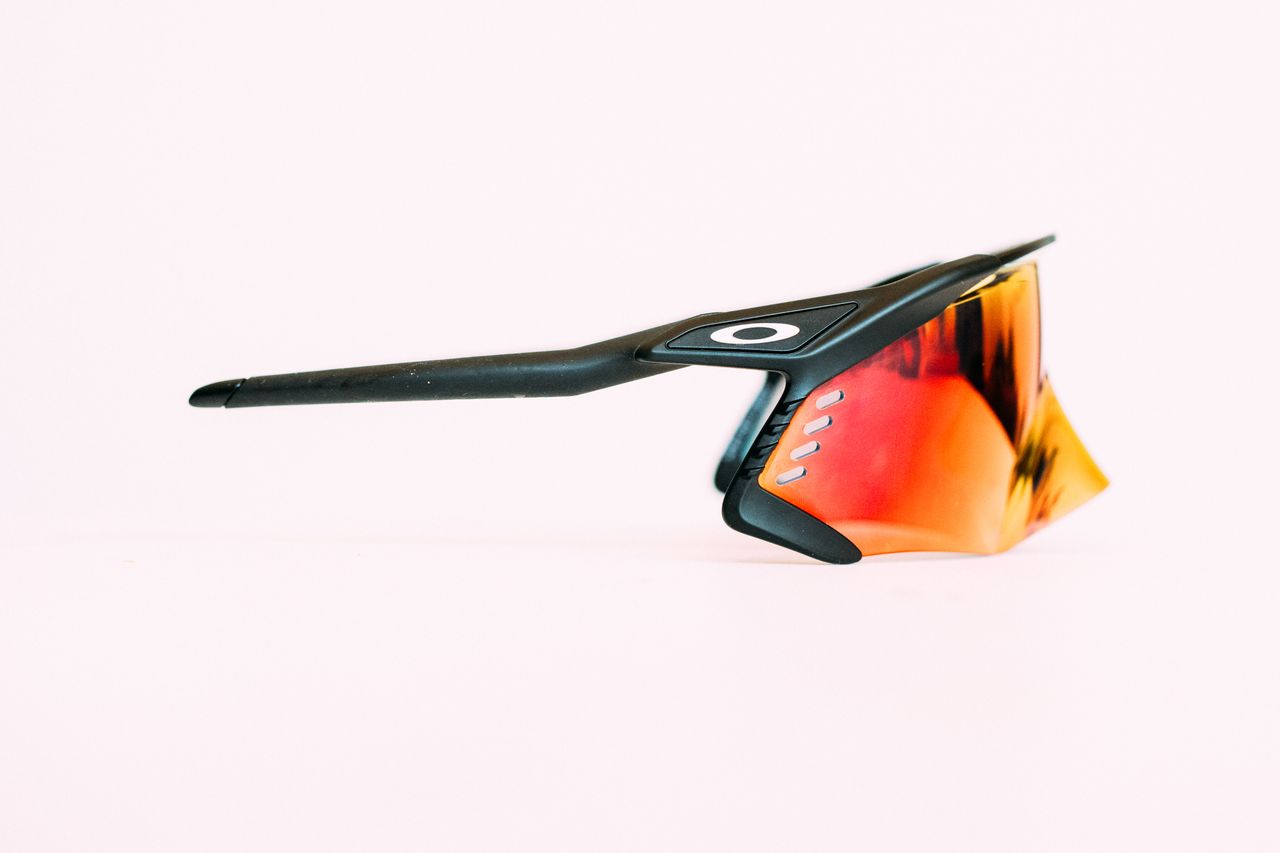
Oakley Velo Kato.

Cycling sunglasses are a key part of a cycling wardrobe, and as much about style as they are function for the most of us. But when you look at the market, the price of them varies dramatically, almost more than bikes between different models. A pair of Madison Crypto glasses for example can be £39.99, while a set of Oakley Velo Katos will set you back £271.

But what is the reason for this huge difference in price, and in reality, how much do you really need to be spending to get a good pair of glasses? Let’s have a look at why those prices can vary so much.

Four different options, all very different prices (Image credit: Future - Andy Turner)

Materials

The first element of glasses that dictates the price somewhat is to do with the materials used in the glasses frames. Taking those Madison Crypto Air glasses as a very good value baseline, they use a TR-90 plastic material. These are lightweight, hypoallergenic, and feature a memory effect in that they return to their original shape. They also offer impact resistance in the event of a crash.

This is actually fairly standard across the industry, but some options like the POC Propel use a different process to make the glasses. The Biogrilamid material POC uses features a lot of renewable sources to make it, with environmentally friendly plastic processes often costing more.

Rudy Project have quite an outlier in this regard with the Performance 40 celebratory pair that are limited to 100 units, are made of 3D printed Titanium, and cost €950 (no £ or $). But these are not representative of the normal range of cycling sunglasses.

Lenses

This is one of the big differentiators when it comes to the price of glasses. The Madison glasses use a polycarbonate lens, again, as most glasses do regardless of price. It is how these lenses are crafted and treated that changes the price substantially.

Two examples here, the POC Propel, and the Oakley Velo Kato. Both of these glasses feature spherical, or non-cylindrical, lenses. Cylindrical lenses are cut from a cylinder, they curve across the vertical plane of the face from ear to ear. These are cheaper to make as you can use one large cylinder of material to cut the lenses from.

Spherical however, require more manufacturing processes, as they curve around the vertical and horizontal plane; ear to ear and forehead to chin. This means they are cut from a spherical shape, which inherently means a more complex manufacturing process.

The benefit to this is great coverage of the face, as cylindrical lenses can leave a gap at the top or bottom of the lens for air or particles to enter. Oakley actually takes this a step further with PhysioMorphic™ lenses which are shapes around the nose as well as two planes. Again, this comes at a greater cost to manufacture and engineer.

Next we have the lens treatments. All lenses need to be UV-A and UV-B protective to protect the eyes from sunlight, but some glasses manufactures take it further. Oakley has Prizm or Polarized lenses to highlight road textures and reduce glare, while POC has Clarity. These features vary how light is processed through the lenses to alter how we see the terrain. Oakley’s Prizm road for example highlights the colours around the road to better show imperfections in the tarmac and any debris present on it. The same goes for POC to an extent with the lenses sharpening the details.

There are also longevity features. Madison lenses are scratch and impact resistant, but Oakley lenses feature impact protection levels that they can be used as safety goggles in a work environment. In fact editor Will Jones told me one of his old pairs of Oakleys is now a pair of workshop goggles.

Other special treatments which drive the price up are hydrophobic and oleophobic treatments so that finger prints don’t stick and water rolls off the lenses when riding. POC has its own RI-PEL treatment again water, dirt, sweat, oil and dust. Indeed, they are my go to glasses when it rains for this reason.

As a side note, and not a brand dependent one, photochromic lenses also drive prices up. These lenses change their tint according to the light conditions. Less light, lighter lenses that allow more light through, more light and the lenses darken to filter more light. The Madison Crypto Photochromic glasses for example jump up to £79.99, doubling in price.

Additional features

Additional features also contribute heavily to differences in price. Cooling features is a big one, as the likes of Madison feature cut outs on the top of the lens and into the frame to allow some air in. However, Oakley with the Velo Kato, and Alba Optics with the Jumbo, feature cut outs within the lens itself for what, in real-world testing, has proven to be a more effective placement for cooling in the case of the Alba Optics Jumbo.

Interestingly, the Oakley ones have another intended feature, and that is enhanced aerodynamics. Oakley claims when paired with the Velo Mach helmet, that the glasses actually reduce drag slightly. POC also claims to have aero benefits with the Propel glasses, which feature an extension of the lens beyond the frame to direct air over and around the ears to apparently reduce drag by a watt or so. Small savings, but enough for some marginal gain seekers. We also have the 'Aerobeak' from Scicon that surfaced a few years ago, although this is yet to hit retail.

A big feature though is adjustability. Interestingly, this is an area where the Oakley glasses do not perform well, as the arms are often not adjustable, potentially as part of the high impact protection ratings they carry. POC however, and Alba Optics, allows for temple adjustments to lengthen or shorten the arms. A benefit here is getting the arms out of the way of the helmet cradle, or adjusting how far the lens sits away from your face as everybody has a different facial structure. Alba Optics takes this a step further with fit features such as Asian specific nose pads for better fit around different face geometries. Interchangeability of nose-pieces and lenses can often be exclusive to more expensive glasses. Oakley does offer specific Asian fit versions in some key models too.

There are of course some specific outliers when it comes to disparity in glasses pricing, mainly due to additional features. So far I’ve focused on just glasses, but the new Oakley Meta Vanguard are a penny shy of £500, but they can capture photos and videos, as well as featuring speakers which goes a long way to explaining that price tag.

Spares

There is also the inclusion of spares. Oakley is a bad example here, as although a spare nose piece and soft and hard case are provided, the lenses can’t be changed in many new models. The Madison Crypto Air however, offers exceptionally good value and admittedly an outlier, comes with spare lenses, a hard case, and a soft case for a fraction of the price. Normally this is not the case, and cheaper options will come with fewer spares, protection cases, or options for spares. If anything this just highlights how exceptionally good value the Madison glasses are.

Marketing and brand names

Finally we have the big player, and that is marketing. This takes up a huge amount of brand budget sometimes, and that cost has to get passed on somewhere down the line. We all likely know about Oakley in part because of teams and individuals that it sponsors. Remco Evenepoel and his Sutros are like cheese and crackers, although his team move comes with a switch to 100% glasses, while Mathieu Van der Poel is Oakley’s big player in cycling, and Mark Cavendish flew the flag for the Big O for almost his entire career, and even into retirement.

Examples of how this has worked before include Peter Sagan with 100%, now far less common on the group ride since his retirement, and the rise of Scicon with Tadej Pogacar donning them to every victory of his professional career.

SunGod used to be more known in Britain specifically with the WiV SunGod UK UCI cycling team, but are now international successes on the faces of SD-Worx and the Ineos Grenadiers.

Madison by comparison doesn't sponsor a professional team anymore, and never at a Pro Team or WorldTour level. It does not put as much money into marketing which is what can make the difference between people opting for one brand because they’ve heard of it and it looks cool on their favourite rider, and then not hearing about a brand. Gore Wear makes great cycle clothing, but is unfortunately shutting it’s clothing division down later this year. But it is not a brand that has marketed heavily, even with great performance for the cost.

This also plays into an element of designer, or brand names. Big brands with big marketing expenditure hold higher prestige, which allows them to charge a premium over other brands. We all know the name Oakley and it has an air of coolness around it. Meanwhile we don’t all know BBB, yet the Valor Flux are a far better value pair of glasses and almost as good performing as any Oakleys I’ve tested.

The famous 'O' holds a level or premium that gets reflected in the price (Image credit: Will Jones)

Conclusion

When it comes to the price of glasses, there are valid reasons for the variations in cost between them. There is certainly an element of diminishing returns on investment as the price goes up, and there are also premiums put upon specific brands due to the names they have. But there are also plenty of exceptionally performing glasses that offer great value.

With my own money on the line, the Madison Crypto Air as an example are a superb pair of glasses for most conditions and will protect your eyes and face. But features such as hydrophobic lenses and greater fit options and face coverage mean that the likes of the POC Propel do offer if anything a similar level of value for the cost, even if the cost aspect is higher.

A lot of it really depends on what you want and need from glasses. Do you need greater glare protection, spare lenses, water resistance, enhanced definition, or even just want a brand name because you like it? If the answer is no, then there are plenty of cheaper options that will do exactly what you need. If the answer to those is yes, then the cost will go up. But look outside of the big name brands if you want to find something that offers the best value of performance to cost, as those marketing budgets really bolster up the cost to consumers.

Sign up to read this article
Read news from 100's of titles, curated specifically for you.
Already a member? Sign in here
Related Stories
Top stories on inkl right now
One subscription that gives you access to news from hundreds of sites
Already a member? Sign in here
Our Picks
Fourteen days free
Download the app
One app. One membership.
100+ trusted global sources.