Get all your news in one place.
100's of premium titles.
One app.
Start reading
The Economic Times
The Economic Times
Trending Desk

Why chocolates are wrapped in foil instead of paper might surprise you

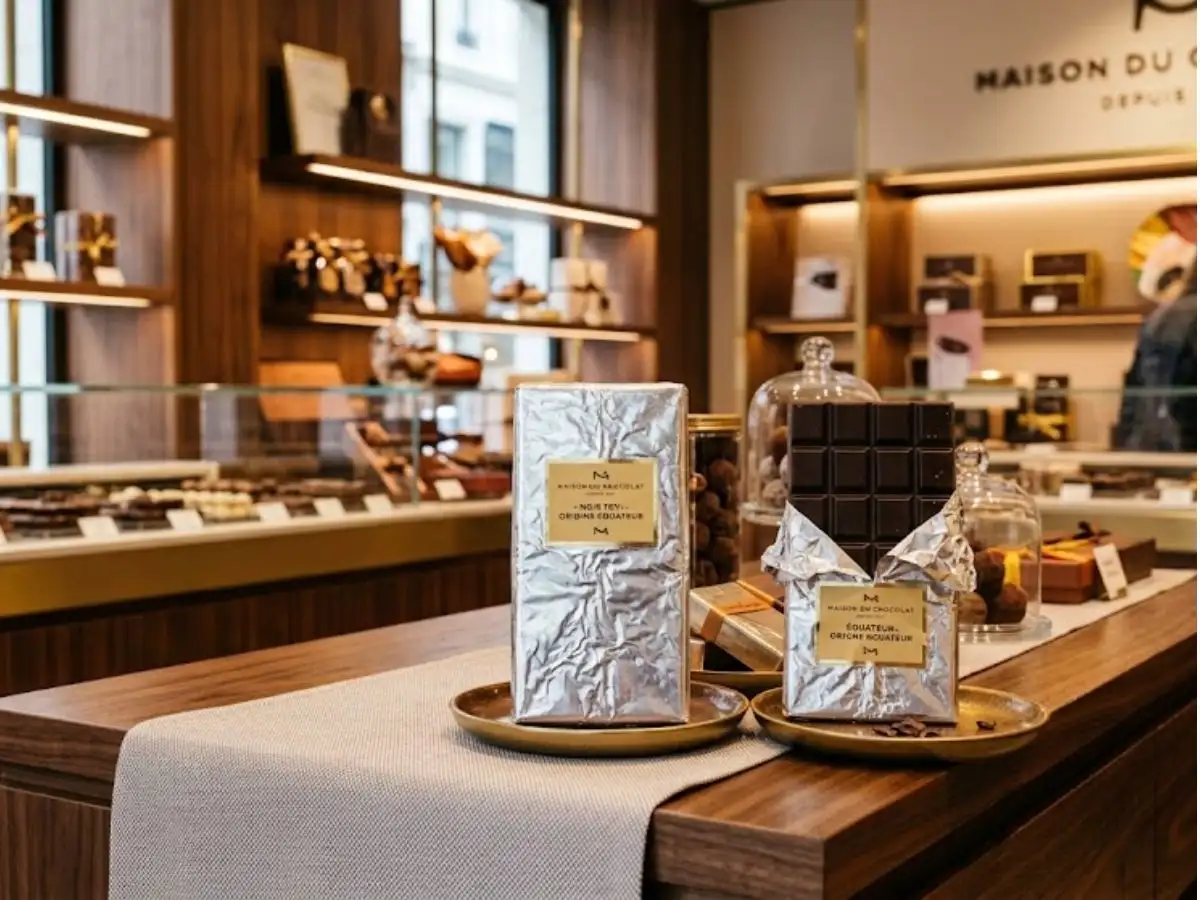
The shiny foil used to wrap chocolate is more than just decorative packaging. It serves as a protective barrier against heat, moisture, oxygen, light and strong odours, helping preserve the chocolate's flavour, texture and shelf life from production until consumption.

Although many modern chocolate products now use layered packaging that combines aluminium foil with paper or plastic, the basic function remains unchanged. Foil continues to play a key role in maintaining product quality.

Aluminium foil became the industry standard

According to Henan Tandelli Metallurgical Materials, chocolate manufacturers began adopting aluminium foil in the early twentieth century because it provided significantly better protection than paper while remaining lightweight, flexible and easy to wrap around delicate chocolate bars, reports TOI.

Unlike paper, aluminium creates a near-impermeable barrier against air, moisture and light, helping retain chocolate's flavour, aroma and smooth texture for longer. Its metallic finish also gave chocolates a premium appearance, making them more attractive as gifts and luxury confectionery.

Manufacturers often paired aluminium foil with an outer paper wrapper, which provided space for branding, product information and decorative designs while adding another layer of protection.

Before aluminium foil became widely available, chocolatiers used waxed paper, parchment and tin foil. While these materials offered some protection, they were less effective at preventing oxidation, moisture loss and contamination from external odours.

As aluminium production expanded and costs declined during the twentieth century, it gradually replaced older packaging materials because it was lightweight, non-toxic, corrosion resistant and offered superior barrier properties. These advantages helped preserve chocolate's taste and quality while extending its shelf life.

Foil helps prevent spoilage

According to Jiangsu Hanlin Pharmaceutical Packaging Technology, aluminium foil forms an effective barrier against oxygen, moisture and light, reports TOI.

Exposure to oxygen causes fats in chocolate to oxidise over time, leading to stale flavours. Moisture can alter the chocolate's texture and contribute to sugar bloom, a condition in which sugar crystals rise to the surface and form a white, grainy coating.

Foil also blocks ultraviolet light, which can damage flavour compounds and reduce product quality during storage. By limiting exposure to air and humidity, it helps chocolate maintain its smooth texture, rich aroma and characteristic snap.

Chocolate is highly sensitive to heat and odours

Chocolate contains cocoa butter, a natural fat that melts at approximately body temperature. While this gives chocolate its smooth texture, it also makes it susceptible to warm conditions.

Foil helps minimise rapid temperature changes by reflecting radiant heat, although it cannot stop chocolate from melting if exposed to high temperatures for prolonged periods.

Aluminium foil also prevents chocolate from absorbing surrounding odours. Because cocoa butter readily takes in strong smells from foods such as onions, spices and coffee, the foil barrier helps preserve the chocolate's original aroma and flavour during storage and transport.

Modern packaging combines multiple materials

Many chocolate manufacturers now use packaging that combines aluminium foil with paper, cardboard or recyclable plastic films.

In these designs, the foil provides protection against air, moisture and light, while the outer layer improves durability, branding, tamper resistance and space for product information.

Manufacturers are also developing thinner foil layers and recyclable packaging materials to reduce environmental impact while maintaining the protective qualities required for food preservation.

Foil remains an essential part of chocolate packaging

For more than a century, aluminium foil has remained one of the most effective materials for chocolate packaging because of its flexibility, durability and barrier properties.

Even as the confectionery industry adopts more sustainable packaging solutions, foil continues to play a crucial role in preserving chocolate's freshness, flavour and texture until it reaches consumers.

Sign up to read this article
Read news from 100's of titles, curated specifically for you.
Already a member? Sign in here
Related Stories
Top stories on inkl right now
One subscription that gives you access to news from hundreds of sites
Already a member? Sign in here
Our Picks
Fourteen days free
Download the app
One app. One membership.
100+ trusted global sources.