
Get all your news in one place.
100's of premium titles.
One app.
Start reading
The Conversation
The Conversation
Politics
Samson Mwin Sôg Mé Dabiré, Postdoctoral Research Fellow, Institute for International and Comparative Law in Africa, University of Pretoria

Why Burkina Faso's transition offers lessons in how to manage a constitutional crisis

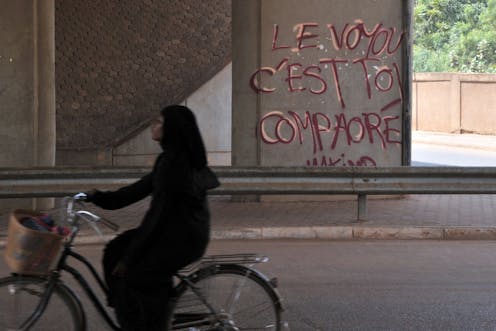
Graffiti in Ouagadougou reads "Compaore, you're the thug!" It appeared a few days after President Blaise Compaore stepped down. Photo by Sia Kambou/AFP via Getty Images

Constitutional government in Burkina Faso can be said to have begun with the proclamation of independence on 5 August 1960. This was soon followed by the constitutional referendum of 27 November 1960 which paved the way for the adoption of the new constitution.

This First Republic (1960-1966) was a presidential regime with aspects of a parliamentary system. There was also a strict separation of powers between the executive and the parliament. All subsequent republics, including the current Fourth Republic, have embraced, more or less, the same arrangement.

Sign up to read this article
Read news from 100's of titles, curated specifically for you.
Already a member? Sign in here
Related Stories
Top stories on inkl right now
One subscription that gives you access to news from hundreds of sites
Already a member? Sign in here
Our Picks
Fourteen days free
Download the app
One app. One membership.
100+ trusted global sources.







