Get all your news in one place.
100's of premium titles.
One app.
Start reading
Marie Claire
Marie Claire
Lifestyle
Sara Holzman

Why Boucheron Is Putting Real Support Behind Women Artists

Her Art Prize.

At Art Paris this April, the Her Art Prize returned for its second edition—an initiative by Marie Claire and Maison Boucheron designed to do something deceptively simple: offer women artists not just visibility, but meaningful, structural support. In an art world where recognition still doesn’t scale evenly, the prize focuses on artists whose work has already begun to shift the conversation. This year, that honor went to French artist Elsa Sahal, represented by Galerie Papillon, who was awarded the 2026 Her Art Prize along with €30,000 and a domestic and international promotional campaign organized by Marie Claire and Art Paris.

This year’s edition unfolded under the theme of Language and Care, a fitting lens for a shortlist of artists grappling with memory, identity, and the fragility of the present moment. Ahead of the announcement, we spoke with Hélène Poulit-Duquesnes, CEO of Boucheron, about why backing women in the arts still requires urgency—and what it really means to “move the lines.”


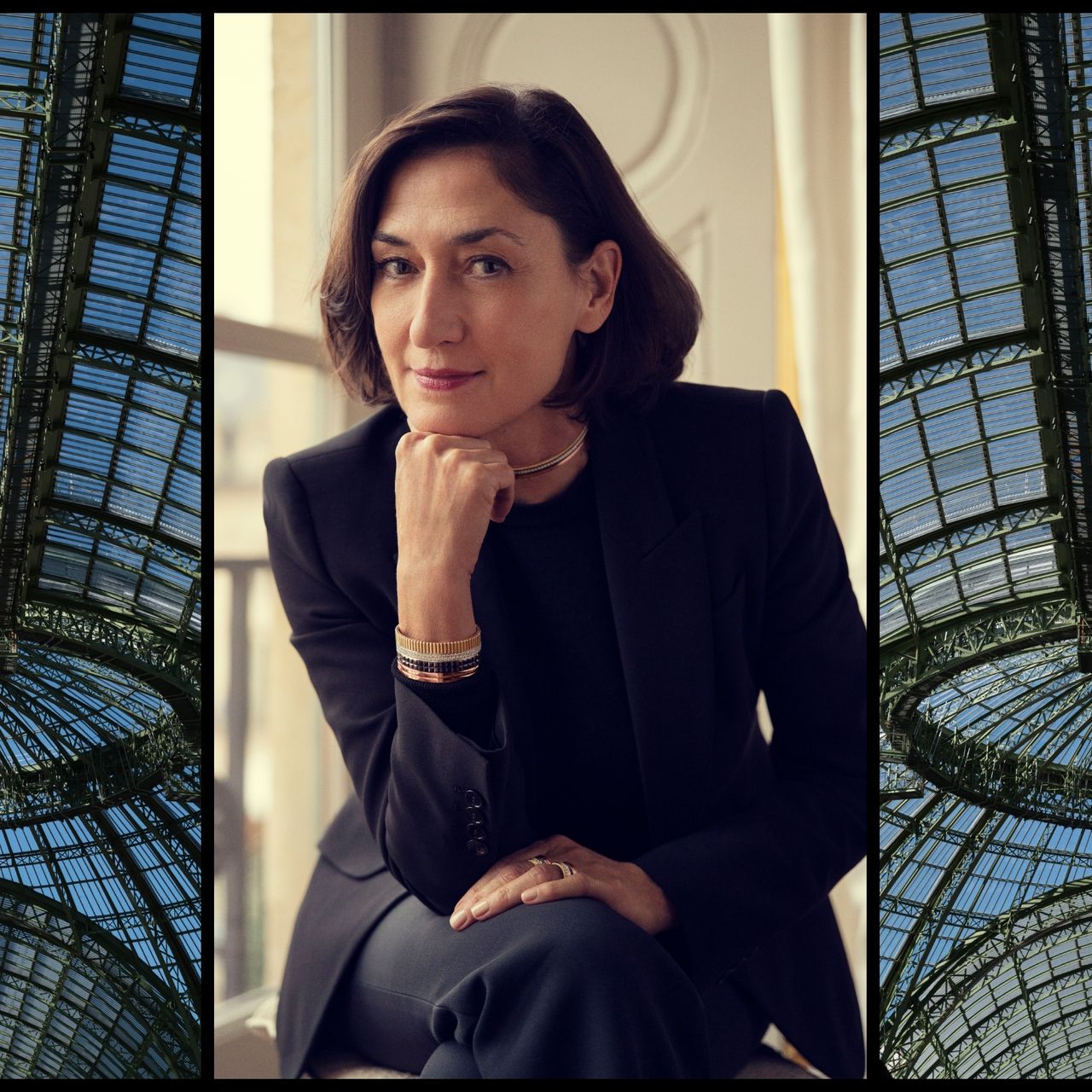
What made it feel important for Boucheron to support a prize specifically dedicated to women artists right now?


While progress has been made, women artists remain underrepresented and insufficiently recognized in the contemporary art scene. It felt important to act in a concrete way. This prize embodies our values and our commitment to creativity—we want to celebrate women artists who bring a strong voice and a new perspective to the world. Gender diversity enriches how we see, think, and create, and this is one way to contribute to a more equitable future.

The prize honors an artist whose work has helped “move the lines.” What does that phrase mean in real terms?


It means challenging established codes and opening up new possibilities in the way we see and think. It’s about questioning conventions rather than reproducing what already exists—carrying a message and offering a perspective on the world around us.

Why was it important to reward not just emerging promise, but a real body of work and a career already in motion?


We wanted to recognize the singularity of a body of work and the strength of an artistic vision. Some artists may already have a career in motion, but one that has remained more discreet. This prize is about acknowledging the depth, consistency, and courage it takes to build a practice over time.

This year’s finalists span generations and geographies. What does that range say about where women’s art practice is right now globally?


It shows there is no single way of being a woman artist today. There’s a real plurality of voices, experiences, and forms of expression—and that’s powerful. It also highlights a key truth: talent is everywhere, but visibility is not distributed equally.

So many of the shortlisted artists engage with memory, injustice, violence, the environment, and identity. Why do those themes feel especially urgent now?


They reflect the tensions and questions defining the world today. Artists make these issues visible and tangible—they don’t just document reality, they challenge us and invite us to reflect differently on it.

When you look at this year’s finalists, what stands out most?

That their practices are deeply connected to the world around them. There’s often a strong awareness of transmission—of memory, and of the social and environmental realities that will shape the future.

Was there anything about this year’s list that surprised you?


The presence of Janet Laurence, who is 79, was very powerful. She’s well known in Australia but less so in Europe. It’s a reminder that visibility is uneven—and that a prize like this can help shift that.

What responsibility do luxury houses have to materially support women in the arts?


We have visibility, and with that comes responsibility. If we can use our platform to bring an artist’s work into the light, we should. This prize allows us to do that in a concrete way.

Beyond the €30,000 award, what do you hope the winner walks away with?


A sense that her perspective matters—that her work resonates, and that she should continue moving the lines through her creation.

Do you see a natural dialogue between contemporary women artists and a house like Boucheron?


Absolutely. At Boucheron, we approach High Jewelry with an artistic vision—there are no rules, only emotion. Like artists, we begin with a message or a dream, and craftsmanship brings it to life. There’s a shared commitment to storytelling, to challenging form, and to offering a perspective on the world.

Has being close to this prize changed the way you think about creativity at Boucheron?

It has reinforced my belief in protecting singular voices and creating space for bold perspectives. Creativity is always richer when it’s shaped by diverse experiences and ways of seeing.

At a moment when women’s voices are highly visible but not always structurally supported, what does it mean to put real resources behind a female artist?


It makes a tangible difference. Talent alone is not always enough—recognition, financial support, and visibility are essential. This prize is one way to actively support women’s creative expression.

Sign up to read this article
Read news from 100's of titles, curated specifically for you.
Already a member? Sign in here
Related Stories
Top stories on inkl right now
One subscription that gives you access to news from hundreds of sites
Already a member? Sign in here
Our Picks
Fourteen days free
Download the app
One app. One membership.
100+ trusted global sources.