
Get all your news in one place.
100's of premium titles.
One app.
Start reading
Golf Monthly
Golf Monthly
Sport
Gianni Magliocco

Why Bigger Is Not Always Better When It Comes To Driver Forgiveness

Why Bigger Is Not Always Better When It Comes To Driver Forgiveness.

When it comes to forgiveness in a driver head, a common assumption among golfers is that bigger is often better. However, one senior fitter says otherwise.

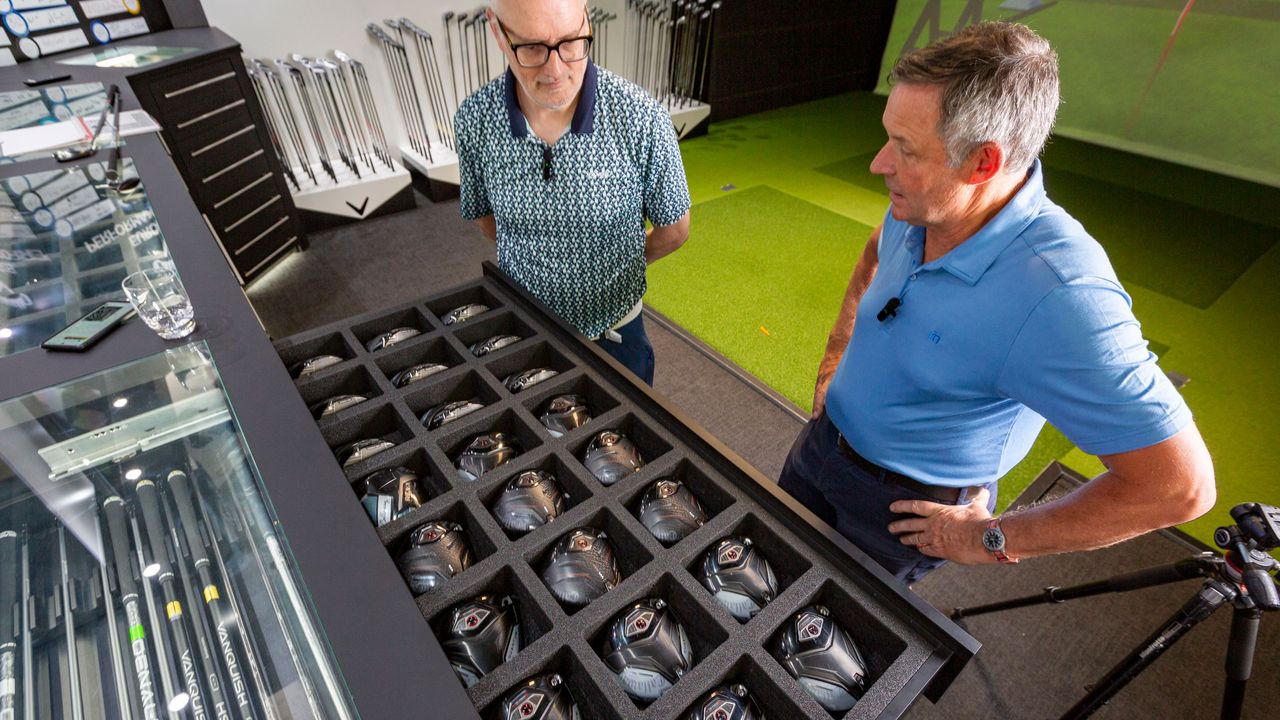
Callaway launched its Quantum lineup of drivers at the beginning of the year and in a conversation with Golf Monthly, Callaway’s Senior Custom Fitter, Luke Verney, explained how the versatility and adjustability of the lineup of drivers impact its target golfer in a unique way.

(Image credit: Andrew Sydenham)

“In the fitting bay, you're always trying to avoid bias,” said Verney. “It's such a hard thing because you see so many golfers and you see numbers that correlate to other golfers you fit, and your mind goes to like, this model of driver.”

“But this year, Callaway drivers don't tend to bias themselves to a certain player,” explained Verney. “I always say in the fitting world, I call forgiveness in a driver model relative.”

While the Quantum Max D driver, with its high MOI and larger head, is a forgiving option for a whole host of golfers, Verney revealed that the model is not a good fit for his profile in terms of forgiveness.

“The least forgiving head I could actually play would be a Max D, because the ball going left is my big issue. If I hit it left, that's all my shots gone,” said Verney.

“So you kind of look at it and go, actually, yes, in theory, it's a higher MOI and a bigger head size, but playing on the course and numbers aren't always correlated.”

(Image credit: Andrew Sydenham)

Verney added: “Just because a head has a higher MOI or is a larger head size or whatever doesn't necessarily mean it actually is going to be a more forgiving model for you.”

While spec sheets offering the comfort of a larger head and higher MOI will appeal to many golfers seeking that extra touch of forgiveness, Verney states that it is a common source of confusion among golfers looking for the perfect club fit.

“That's something I think that people get really muddied when they come in, and they're looking at their numbers so much,” said Verney. “You're kind of like, ‘Yeah, but how does that actually transform onto the golf course when you're trying to play your golf and find the fairway?’”

So when you’re looking for added forgiveness off the tee, don’t assume that bigger is better for your specific game. Misses and individual characteristics play a pivotal role in club fitting.

While a larger profile can certainly inspire confidence and offer stability, it’s a senior fitter's proof that forgiveness is not one-size-fits-all. Your common misses, delivery patterns, and even how you visually respond to a club at address can all influence what actually performs best.

Sign up to read this article
Read news from 100's of titles, curated specifically for you.
Already a member? Sign in here
Related Stories
Top stories on inkl right now
One subscription that gives you access to news from hundreds of sites
Already a member? Sign in here
Our Picks
Fourteen days free
Download the app
One app. One membership.
100+ trusted global sources.