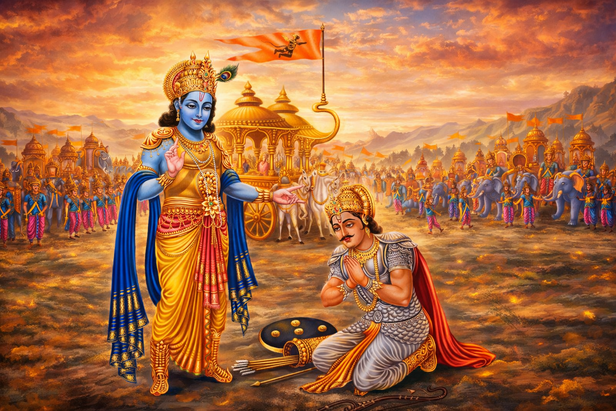
There was a moment on the battlefield where everything paused. A warrior, known for his courage, suddenly refused to fight. Arjuna stood still confused, emotional, and ready to walk away. Not because he lacked strength, but because his mind was overwhelmed. It felt like wisdom like choosing peace over conflict. But what if that feeling wasn’t wisdom at all? What if it was something far more dangerous something we all face today? Because this moment wasn’t just about war. It was about the silent battle within where emotions cloud clarity, and the hardest fight becomes the one inside your own mind.

When the Mind Creates False Wisdom
Arjuna’s thoughts felt right to him. He believed walking away from war was a wise and peaceful choice. After all, why fight your own people? Why create destruction? But here’s the truth his decision was not coming from wisdom. It was coming from emotional overload. Sometimes, when life feels too heavy, the mind tries to protect us by avoiding the situation. It disguises fear as logic. And that’s the danger. Because what feels like clarity in that moment is often just confusion wearing a mask.
The Difference Between Detachment and Escape
Arjuna thought he was choosing detachment. But Krishna made it clear this was not true detachment. It was escape. Detachment means doing your duty without being emotionally controlled by outcomes. Escape means avoiding responsibility because it feels uncomfortable.
This is where most people get it wrong. They think stepping away from problems is strength. But in reality, it’s often fear in disguise. True strength is staying, facing, and acting with clarity even when it’s difficult.
Why Running Away Feels So Easy
Running away gives instant relief. No pressure. No conflict. No responsibility. That’s why it feels so attractive. Arjuna experienced the same pull. He wanted peace but without facing the pain required to achieve it. This is something we all do. We avoid tough conversations. Delay difficult decisions. Step back when things get uncomfortable. But every time we escape, we weaken our ability to grow. Because growth only happens when you stay present even when everything inside you wants to run.
The Turning Point That Changed Everything
The moment Krishna spoke, everything shifted. He didn’t motivate Arjuna with emotion. He gave him clarity. He explained that life will always bring difficult situations. Avoiding them doesn’t solve anything it only delays growth. Arjuna realized something powerful. His fear was not about the battle. It was about his attachment, his confusion, and his inner resistance. Once he understood this, his mindset changed. And that change was more important than the war itself.
How to Apply This Lesson Today
You don’t need a battlefield to experience this truth. It shows up in everyday life. When things feel difficult, pause and ask yourself are you choosing wisdom or avoiding discomfort? Face situations with awareness, not fear. Take action, even if it feels uncomfortable. Stay committed to your responsibilities. And most importantly, don’t confuse temporary peace with real growth. Because real strength is not about avoiding life’s challenges It’s about standing firm and moving through them with clarity.
Unlock insightful tips and inspiration on personal growth, productivity, and well-being. Stay motivated and updated with the latest at My Life XP.
Frequently Asked Questions (FAQs)
1. Why did Arjuna refuse to fight?He was overwhelmed by emotion, attachment, and moral confusion. Seeing his own family on the battlefield made him question his duty, leading him to want to step away.
2. What did Krishna teach Arjuna in that moment?
Krishna explained that avoiding responsibility is not wisdom. He taught Arjuna to act with clarity, without attachment to results, and to follow his duty with courage.
3. Is choosing peace always the right decision?
Not always. Sometimes what feels like peace is actually avoidance. True peace comes from facing challenges with understanding, not escaping them.
4. What is the difference between detachment and escape?
Detachment means doing your duty without emotional disturbance. Escape means avoiding responsibility due to fear or discomfort.
5. How is this lesson relevant today?
In modern life, people often avoid difficult situations—career decisions, relationships, responsibilities. This lesson reminds us to face them with clarity and strength.
6. What is the main message of this teaching?
The core message is to act wisely, stay strong in difficult moments, and not let emotions push you into avoidance.