
Ahead of the Uefa Nations League draw in Brussels back in February, the Football Association of Ireland (FAI) were already preparing themselves for the worst. With the Republic of Ireland sitting in Pot 3 of the League B draw, they knew one of their four potential opponents from Pot 1 posed a far greater political and logistical headache than the others – the true scale of which the FAI are facing now. The Republic landed in Group B3 along with top seeds Israel, as well as Austria and Kosovo. Within minutes, the FAI confirmed they would fulfil both home and away fixtures against Israel, neither of which will take place in Ireland, or in Israel.
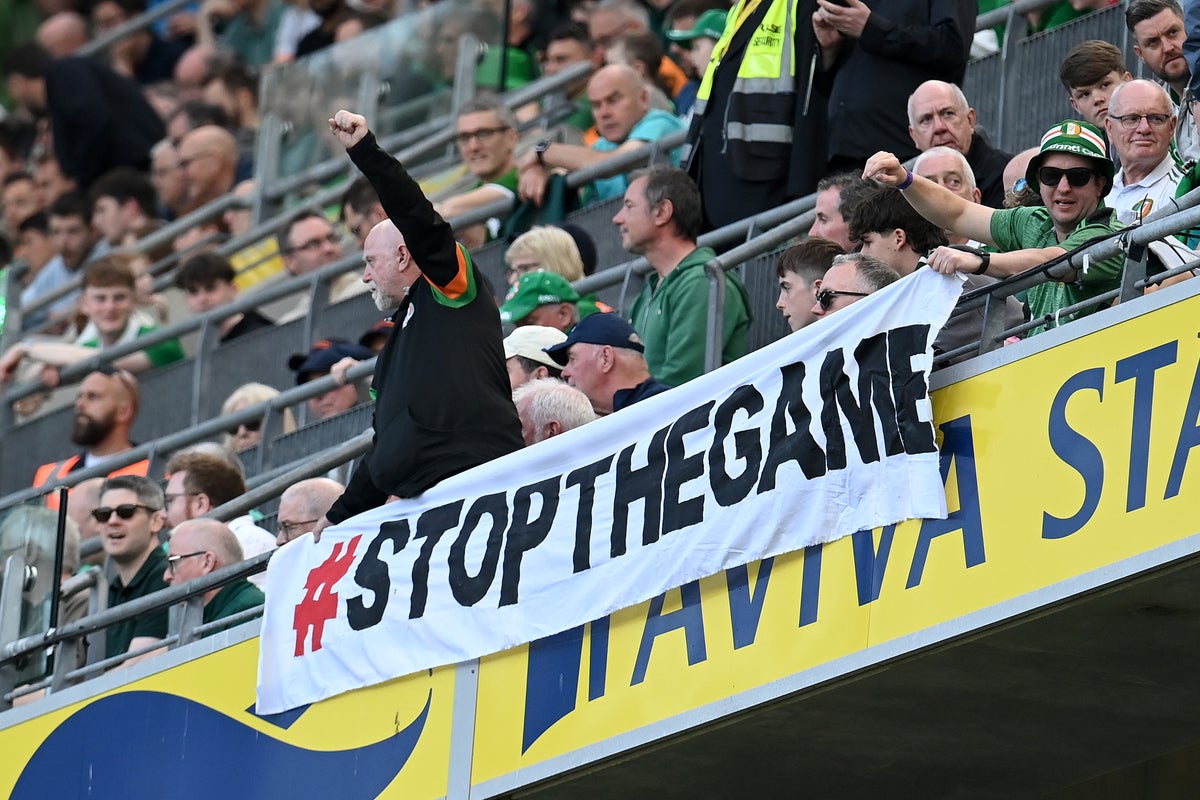
Instead, Ireland will head to Debrecen, Hungary for their away game against Israel on 27 September, followed by their ‘home’ game against Israel behind closed doors in the small Serbian town of Backa Topola on 4 October. But while the FAI may have hoped that moving the fixture from Dublin to a neutral site in the Serbian countryside, 1,500 miles away, without spectators, removed the issue from the Irish consciousness, the question that has raged since February has been why Ireland are playing Israel at all. Calls to boycott both fixtures against a country found by the United Nations independent international commission of committing of genocide in Gaza have grown to the point that the upcoming double-header may be the most-discussed set of football matches involving the Republic of Ireland in recent memory.













