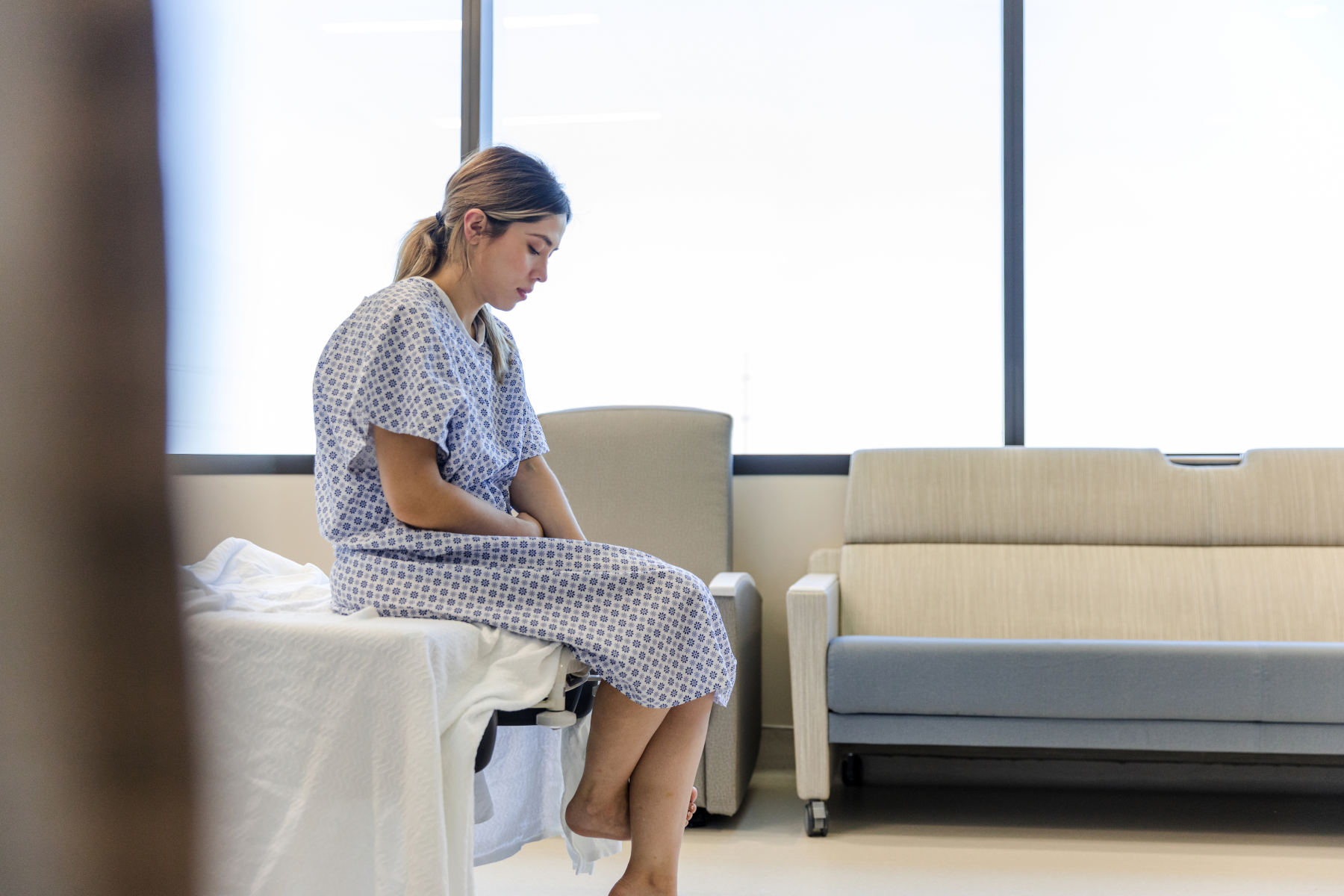
In October 2017, twenty-nine-year-old Meagan Schwenk-Gattey was living her dream life near Coronation, a small town in central Alberta. She loved working with animals on her family farm, had recently finished building her first home with her husband, and was trying for a baby. But she was concerned about her deteriorating health; she had difficulty breathing, was losing weight, and often felt extremely fatigued and cold. She’d had some blood work done the year before when her symptoms were milder, but the tests hadn’t revealed anything. Her doctor recommended a CT scan.
The results were life changing: Schwenk-Gattey had stage 4 Hodgkin’s lymphoma, the most advanced form of this type of blood cancer. Her prognosis wasn’t good—about one in three people with the diagnosis she had die within five years—and she would have to undergo chemotherapy and radiation to try to overcome the disease. Suddenly, none of her plans mattered; the next few years would be all about fighting to survive.