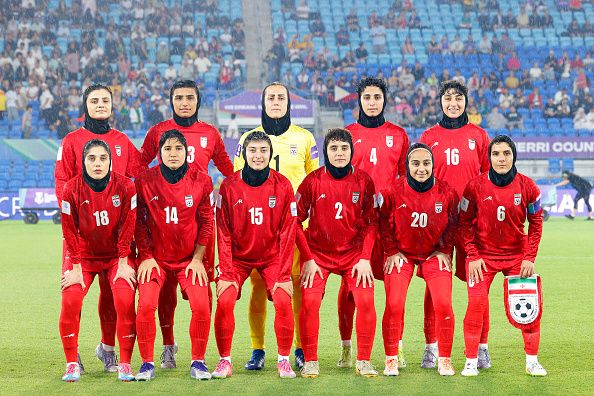
Iran’s women’s national football team have been competing in the AFC Women’s Asian Cup, which began earlier this month, days after the war in their home country began.
After losing all three of their group matches, the team have been eliminated from the tournament.
However, over concerns for their safety after refusing to sing the national anthem, some players have chosen to remain in Australia, with help from the government.
Why didn’t Iranian players sing the national anthem?

On March 2, just two days after the United States and Israel launched airstrikes on Iran, Iran opened their Asian Cup campaign with a match against South Korea.
When the national anthem was played ahead of kick off, players remained silent, in a mark of protest against the Iranian government.
The incident led the players to be criticised by Iranian TV outlets and journalists. One commentator said that remaining silent during the anthem ahead of their match on 2 March was the “pinnacle of dishonour”, while another said “traitors during wartime must be dealt with more severely”.
Following this brave gesture, fears for their safety began to grow. The team proceeded to sing the anthem and salute in their second and third fixtures, increasing worries that they felt pressured.
Why did Donald Trump get involved?

The situation gained international attention, with many demanding the Iranian players be allowed to stay in Australia for their safety.
US President Donald Trump said Australia should "give asylum" to the women or "the US will take them if you won't."
Trump said he had been in contact with Australian Prime Minister Anthony Albanese, and received confirmation that "five have already been taken care of, and the rest are on their way".
"In any event, the Prime Minister is doing a very good job having to do with this rather delicate situation. God bless Australia!"
While five players have now been granted humanitarian visas and moved to a safe location, some players wanted to return home for fear of what might happen to their families. Immigration Immigration Minister Tony Burke said other squad members had been made aware they were welcome to stay in Australia too.