Get all your news in one place.
100’s of premium titles.
One app.
Start reading
Kiplinger
Kiplinger
Business
John Miley

Why AI Superiority is Measured in Gigawatts

(Image credit: Getty Images)

To help you understand the trends surrounding AI and other new technologies and what we expect to happen in the future, our highly experienced Kiplinger Letter team will keep you abreast of the latest developments and forecasts. (Get a free issue of The Kiplinger Letter or subscribe.) You'll get all the latest news first by subscribing, but we will publish many (but not all) of the forecasts a few days afterward online. Here’s the latest…

Meta’s recent blockbuster deal with AMD highlighted a key number: Six gigawatts. The dollar figure (up to an estimated $100 billion) and the number of chips (at least a few million) were less important than the staggering amount of electricity required to run the incredibly power-hungry AI chips.

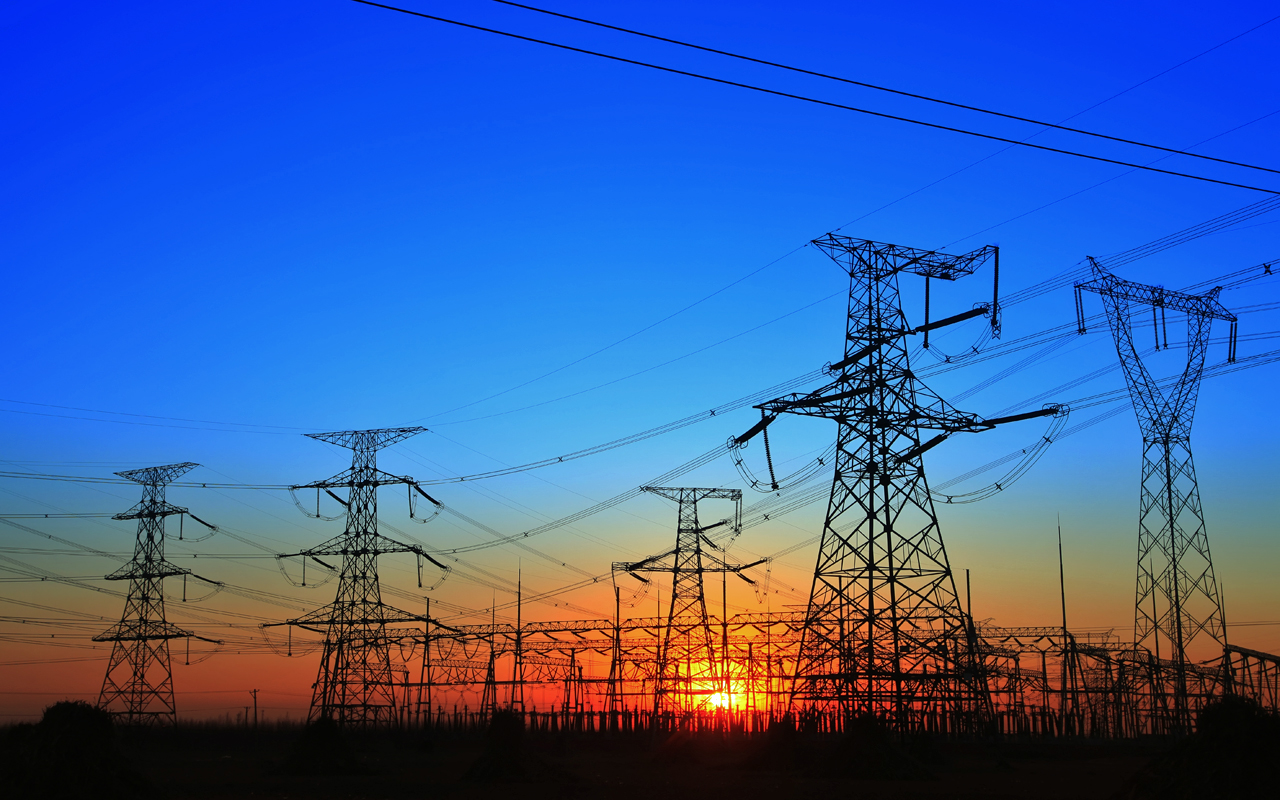
Meta’s not alone. Other tech giants boast about gigawatts as a sign of AI leadership. Advanced AI tech is dependent on large data centers that are huge energy hogs. But why, and will that always be the case?

The underlying reason has to do with a foundational rule of thumb for top AI models. “One of the most reliable and enduring ways you can improve the model is by scaling,” noted David Crawford, a partner at Bain, in a presentation last year. “If you're a competitor in the space and you want to remain in the lead, you invest.”

Leading-edge AI improves by training large language models, the brains behind tools such as ChatGPT, on mountains of data. Three factors need to be scaled up:

  • The training data, which comes from public websites, documents, videos, text and other information.
  • The parameters, which are the billions of tiny internal settings that help AI decide which words to say next.
  • And the computing power, which comes from the millions of AI chips in data centers.

Leading companies are dutifully following these scaling laws: The observation being that only by increasing all three factors do you build more powerful AI. Doing so requires massive sums of money, with Alphabet, Amazon, Meta and Microsoft planning to spend nearly $700 billion this year on capital expenditures.

There are possible scenarios that could change the “insatiable demand for compute power,” according to Bain’s Technology Report 2025. Computer chips could get vastly more energy-efficient, which could cut down on the expected power demands. Algorithm improvements could make the AI models work with less computing power. Quantum computing, if truly viable and widely adopted, could reduce computing and energy needs. Or a series of breakthroughs in AI chips, memory chips and software could add up to a big reduction in power and computing demand.

Another potential change would be the economics becoming unaffordable at some point (as we outlined in an earlier article on the potential for an AI bubble). Tech giants say that their spending is already paying off. Meta, for example, recently pointed to strong sales growth and improved ad tech, with $60 billion in sales in its recent fourth quarter. Yearly revenue is set to jump 25% this year versus 2025, according to Morningstar. Still, another year of gargantuan AI spending in 2026 brings plenty of risks, as Wall Street scrutinizes whether AI is paying off and when spending could cool off.

Don’t expect tech advances or economic issues to disrupt the status quo in the near term. However, over a longer time horizon of, say, the next five to 10 years, tech breakthroughs or other business shifts are possible.

Investors and analysts will be closely watching for any new AI tools and chips that are more efficient, including cheaper Chinese AI tech. And scrutinizing any sign that scaling is slowing down or hitting a wall.

This forecast first appeared in The Kiplinger Letter, which has been running since 1923 and is a collection of concise weekly forecasts on business and economic trends, as well as what to expect from Washington, to help you understand what’s coming up to make the most of your investments and your money. Subscribe to The Kiplinger Letter.

Related Content

Sign up to read this article
Read news from 100’s of titles, curated specifically for you.
Already a member? Sign in here
Related Stories
Top stories on inkl right now
Our Picks
Fourteen days free
Download the app
One app. One membership.
100+ trusted global sources.