Get all your news in one place.
100's of premium titles.
One app.
Start reading
The Conversation
The Conversation
Charles J. Russo, Joseph Panzer Chair in Education and Research Professor of Law, University of Dayton

Why a Supreme Court case over a haircut could be a setback for religious liberty

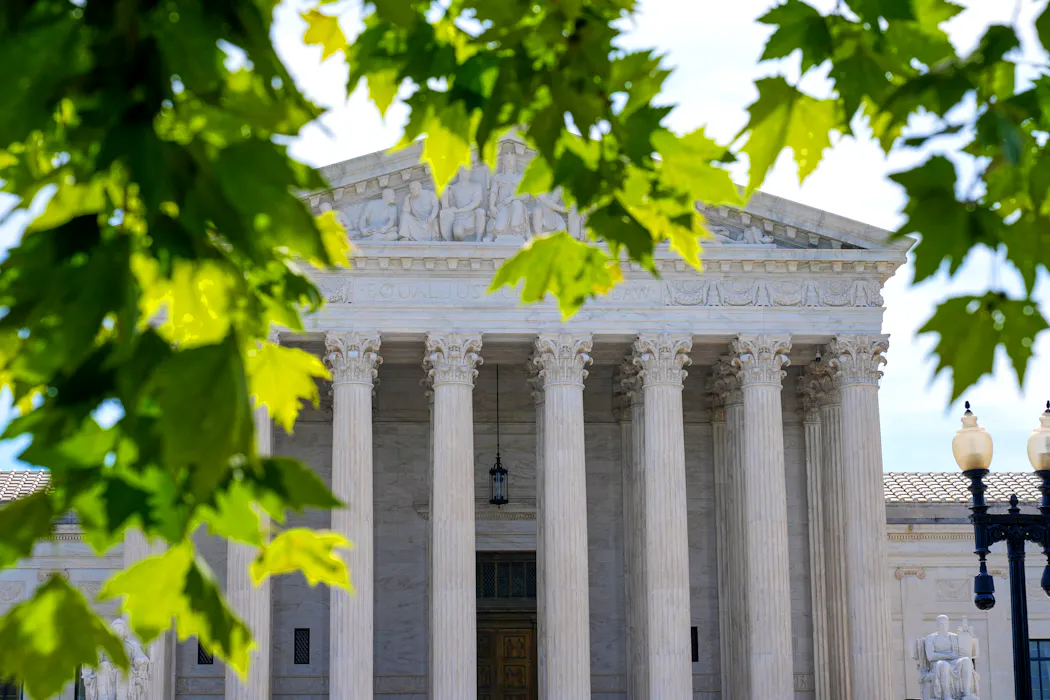
The Supreme Court ruled that a federal law protecting prisoners' religious rights does not allow lawsuits for money damages. AP Photo/Mariam Zuhaibv

For more than two decades, the Supreme Court has issued a long series of wins for plaintiffs seeking to protect their religious practices. On June 23, 2026, though, the majority delivered an uncommon defeat in this contentious area.

Landor v. Louisiana Department of Public Education and Safety, a 6-3 judgment, rejected the claim of Damon Landor, a Rastafarian whose hair was forcibly shaved in prison. Landor had worn long dreadlocks for almost 20 years as an expression of his beliefs – part of a biblical practice known as the “Nazarite vow.” Like lower court judges, the Supreme Court did not dispute that officials violated Landor’s rights. However, the high court’s majority ruled that he could not sue individual officials at the prison.
The case stands out for at least three other reasons.

First, Landor v. Louisiana underscores the complexity and far-reaching nature of religious freedom laws in the United States and the increasingly diverse faith traditions to which they apply. Christians now represent 62% of the American population, down from 78% in 2007, while 29% have no religious affiliation and 7% belong to other faith traditions.

Second, Landor’s case gained support from many groups typically at odds over how to protect religious freedoms – groups disappointed with this week’s decision.

Finally, the case highlights the religious rights of the nearly 2 million people in U.S. prisons, jails and detention and correctional facilities – and the challenge of holding their public employees accountable when those rights are violated.

Religious vow

Landor was incarcerated in Louisiana in 2020 for possessing methamphetamine, cocaine, amphetamine and marijuana.

At first, officials respected his religious practice. Just three years earlier, a federal appeals court affirmed that Rastafarian inmates must be allowed to keep their dreadlocks under a federal law passed in 2000: the Religious Land Use and Institutionalized Persons Act.

A man in a plaid shirt, whose long hair is tucked into a green and orange knit cap, walks along the street.
As a sign of faith, many Rastafarians do not cut their hair. Mattstone911/Wikimedia Commons, CC BY-SA

Toward the end of his sentence, Landor was transferred to a different correctional facility in the state. There – with three weeks left for Landor to serve – the warden ignored the judicial order, directing guards to shackle Landor and forcibly shave his head.

After finishing his sentence, Landor filed suit for money damages under the Religious Land Use and Institutionalized Persons Act. The act forbids the government and its officials from imposing “substantial burden(s)” on incarcerated people’s First Amendment right to the free exercise of religion. It also protects religious groups from discrimination through zoning restrictions.

Journey through the courts

In 2022, a federal trial court in Louisiana condemned Landor’s treatment but rejected his claim, concluding that money damages were not an appropriate remedy under the act.

The following year, the 5th U.S. Circuit Court of Appeals “emphatically condemn(ed) the treatment that Landor endured.” However, the panel unanimously affirmed the lower court’s decision, based on its earlier ruling that plaintiffs cannot sue government officials in their individual capacities for monetary damages – only the institution.

Landor’s attorneys then sought an “en banc” hearing. In this uncommon procedure, parties seek further review by all of the judges in a federal circuit. The court denied this request, as a majority of judges in the circuit wrote that this was a question for the Supreme Court.

The Supreme Court agreed to hear an appeal after a variety of organizations, including the federal government, submitted amicus curiae, or “friend of the court,” briefs in favor of Landor. These included Americans United for Separation of Church and State, for example, which typically supports plaintiffs wishing to keep religion out of public life. They also included the Becket Fund, which usually represents people seeking to increase faith’s role in public life, and the Trump administration.

At issue was not whether Landor’s rights had been violated but whether he could sue an individual official, namely the warden, for monetary damages. During oral arguments on Nov. 10, 2025, the Supreme Court seemed skeptical.

Legal dilemma

That skepticism was reflected in the court’s ultimate ruling. It was essentially a procedural ruling about the Religious Land Use and Institutionalized Persons Act rather than a judgment on the merits of Landor’s religious freedom claim.

Justice Neil Gorsuch wrote the majority opinion, joined by Chief Justice John Roberts and Justices Clarence Thomas, Samuel Alito, Brett Kavanaugh and Amy Coney Barrett. Justice Ketanji Brown Jackson’s dissent was joined by Justices Sonia Sotomayor and Elena Kagan.

Several rows of seated men and women, many of whom are wearing long black robes.
U.S. Supreme Court justices attend inauguration ceremonies in the rotunda of the U.S. Capitol on Jan. 20, 2025. Chip Somodevilla/Getty Images

The majority’s argument that Landor could not sue centered on the spending clause of the U.S. Constitution – the source of Congress’ authority to create the Religious Land Use and Institutionalized Persons Act. The spending clause allows the legislature to spend money to provide for the “general Welfare of the United States.” If a state or institution uses federal funds, their officials agree to certain conditions; if they violate those conditions, Congress can remove funding.

But the spending clause does not give Congress authority to hold individual employees accountable, Gorsuch argued in his 18-page opinion. Prison officials had not “voluntarily and knowingly consented to answer private suits” under the act, and so they could not be held directly liable for monetary damages. Otherwise, Congress would have “effectively unbridled police power.”

Jackson’s 29-page dissent disagreed with the majority’s interpretation of the spending clause. The ruling, she contended, “jettisons ‘a long line of this Court’s precedents’” under which “Congress has been able to use its spending power to reach beyond direct recipients of federal funds.” As such, she worried that the court’s order imposed a “novel consent requirement.”

Jackson also lamented the decision’s potential consequences for inmates. Although the goal of the Religious Land Use and Institutionalized Persons Act was to protect prisoners’ faith practices, she worried that people “like Landor who suffer violations of their religious freedom in state prisons – no matter how blatant – will often be left remediless.”

Bigger picture

At a glance, the Landor case appears to be a procedural disagreement rather than one over religious freedom.

However, I argue Landor v. Louisiana must be viewed as a setback for religious liberty, raising a serious question about whether minority faiths have as much protection under the First Amendment as larger religions. The decision is also something of a surprise to me, because the Supreme Court has recently upheld free exercise rights in multiple high-profile cases, almost all of which involve Christianity – such as a football coach’s ability to pray on the field after public school games.

Portions of this article originally appeared in a previous article published on Nov. 6, 2025.

This article was originally published on The Conversation. Read the original article.

Sign up to read this article
Read news from 100's of titles, curated specifically for you.
Already a member? Sign in here
Related Stories
Top stories on inkl right now
One subscription that gives you access to news from hundreds of sites
Already a member? Sign in here
Our Picks
Fourteen days free
Download the app
One app. One membership.
100+ trusted global sources.