
Get all your news in one place.
100’s of premium titles.
One app.
Start reading
Barchart
Barchart
Justin Estes

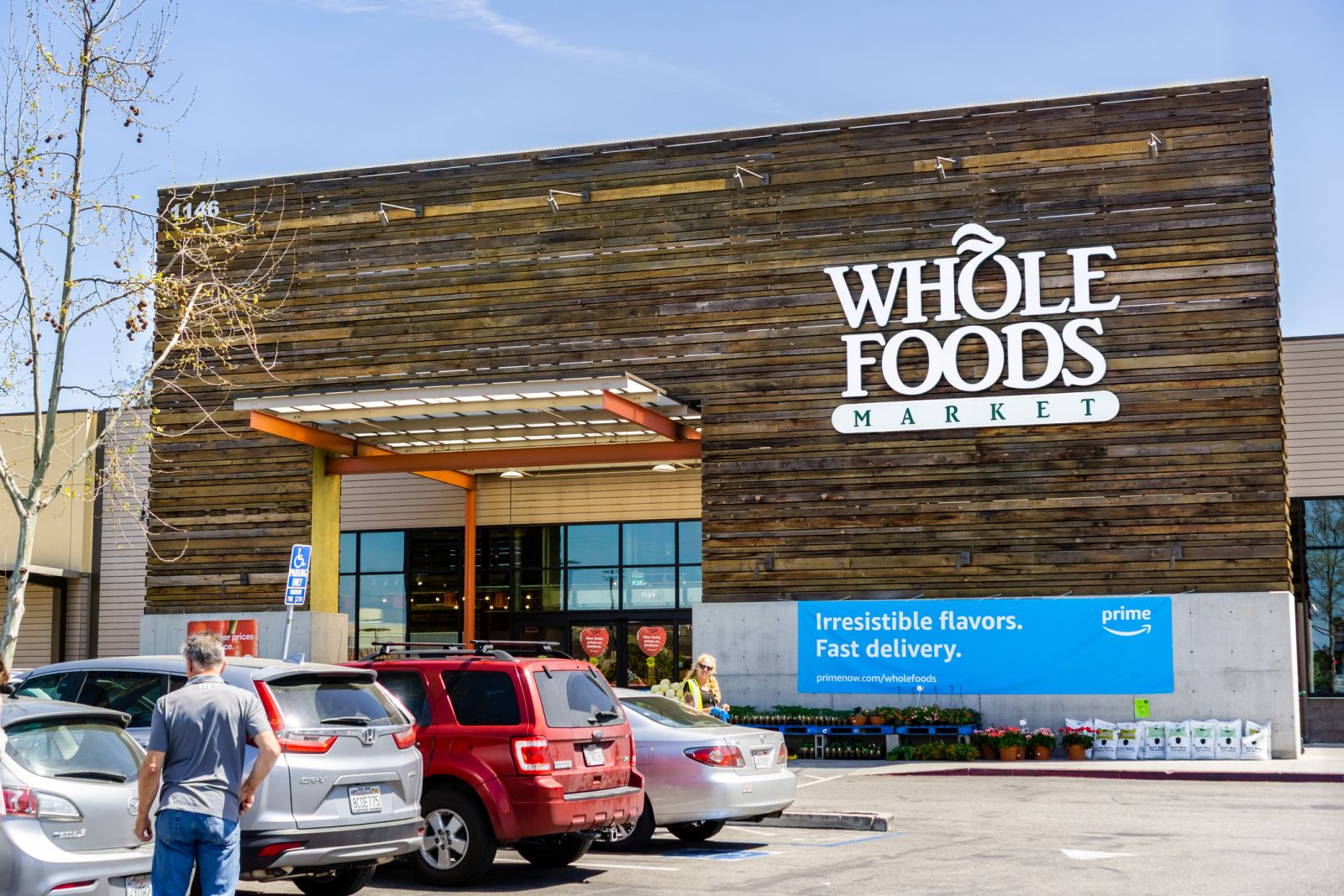
Whole Foods Founder Calls Jeff Bezos a ‘Genius’ Who Killed the ‘Whole Paycheck’ Stigma

When Walmart ( WMT) entered the grocery business in 1988, it sent shockwaves through the supermarket industry. Traditional grocers scrambled to cut costs, slashed labor, and turned their stores into warehouse-like environments with harsh lighting and minimal service. But according to Whole Foods co-founder John Mackey, that panic created an unexpected gift.

"Walmart was like this giant distraction, and we were running downfield wide open for the touchdown pass," Mackey told podcast host David Senra in a recent episode of the Founders Podcast. "They were so obsessed with stopping Walmart that it allowed Whole Foods to compete on a different framework, a different competitive strategy."

 

Whole Foods Grew Without Major Competition for 20 Years

From 1980, when the first Whole Foods opened in Austin, Texas, until 2004 when the chain opened its Columbus Circle location in New York City, Mackey says his company operated virtually unnoticed by major competitors. "We had 20 to 25 years where nobody paid any attention to us," he explained. "That allowed us to scale and compound."

While conventional supermarkets made what Mackey calls "the drastic mistake of trying to compete on price" with retail giant Walmart, Whole Foods pursued an entirely different playbook. "We're like, we can't compete with Walmart on price. We're not even going to try to," Mackey said. "We're going to compete on quality. We're going to compete on service. We're going to have a differentiated product mix."

The strategy worked brilliantly. As traditional grocers cut costs to the bone—reducing labor, cheapening store design, and eliminating customer service—they inadvertently drove their most valuable customers away. "Middle-class, upper-middle-class women who do most of the food shopping wanted to come into a store that was pretty, that was beautiful, that had people that gave them good service, that took their groceries to their car," Mackey recalled.

Mackey Avoided Venture Capital to Maintain Long-Term Control

Central to Whole Foods' success was Mackey's refusal to cede control to venture capitalists, whom he colorfully refers to in his memoir as "hitchhikers with credit cards." While grateful for early VC funding that helped expand into Northern California, Mackey understood the fundamental misalignment between builder entrepreneurs and venture investors.

"The VCs are playing a different kind of game," he explained. "They're looking for exponential growth... They have seven years. They want 100x return if they can get it, and they're prepared to crash your business prematurely if that's what it takes."

This insight proved crucial. By taking Whole Foods public in 1992—just four years after receiving VC funding—Mackey maintained control and pursued patient, sustainable growth. "You have to let a business compound over many years," he said. "It's sort of like investing."

Amazon Cut Prices Four Times After the 2017 Acquisition to Beat the “Whole Paycheck” Stigma

Fast forward to June 16, 2017, when Amazon (AMZN) announced it would acquire Whole Foods for $13.7 billion. Many wondered if the deal would destroy what made Whole Foods special. Instead, according to Mackey, it amplified it.

"Jeff's a brilliant man; he's a genius," Mackey told Fortune in 2024. "What I like about Jeff [Bezos] the most, besides he's creative and entrepreneurial, is he thinks really long term."

That long-term thinking manifested in a counterintuitive move: Amazon let Whole Foods drop prices four times. "I hardly ever hear the 'whole paycheck' narrative any longer—that's due to Amazon," Mackey said. The strategy sacrificed short-term revenue for long-term market position—exactly the kind of play that venture capitalists, with their seven-year time horizons, rarely support.

The results speak for themselves. While Whole Foods commands just under 2% of U.S. grocery sales according to research firm Numerator—compared to Walmart's commanding 20%—the two companies represent vastly different value propositions and stock trajectories.

Walmart Stock Up 150%, Amazon Up 42% Over Five Years

Over the past five years, WMT stock has surged 150%, driven by its massive scale and successful e-commerce integration. AMZN, meanwhile, has climbed 42% over the same period, reflecting its diverse business model that extends far beyond retail into cloud computing, streaming, and logistics.

As of January 14, 2026, Amazon trades at $239.56 with a market capitalization of $2.59 trillion, while Walmart sits at $120.21 with a market cap of $959 billion. The comparison illustrates what Harvard Business School's Jose Alvarez predicted in 2017: "This will be a great deal for Amazon but an even better one for consumers."

Whole Foods Built a Different Business Model While Competitors Focused on Price

Looking back, Mackey's football analogy captures a profound business truth: sometimes the best competitive advantage comes from playing a different game entirely. While Walmart and traditional grocers battled over price-conscious shoppers, Whole Foods quietly built a cult following among customers who valued quality, experience, and health—even if it cost more.

"The first 20 years we existed, when people would first walk into Whole Foods Market, you could see their jaw would drop," Mackey recalled. "It was like, I've never been in a store like this."

That differentiation, protected by patient capital and long-term thinking, created something rare in retail: a brand that customers evangelized rather than simply tolerated. And when Amazon's Bezos came calling, he recognized what Mackey had built—not a grocery chain to be strip-mined for quick returns, but a platform for reimagining how Americans shop for food.

"They didn't try to change Whole Foods," Mackey said of Amazon. A fitting tribute from one long-term thinker to another.

Sign up to read this article
Read news from 100’s of titles, curated specifically for you.
Already a member? Sign in here
Related Stories
Top stories on inkl right now
Our Picks
Fourteen days free
Download the app
One app. One membership.
100+ trusted global sources.







